





 Portuguese
  English
  Spanish
  4 min of reading
  0 comments


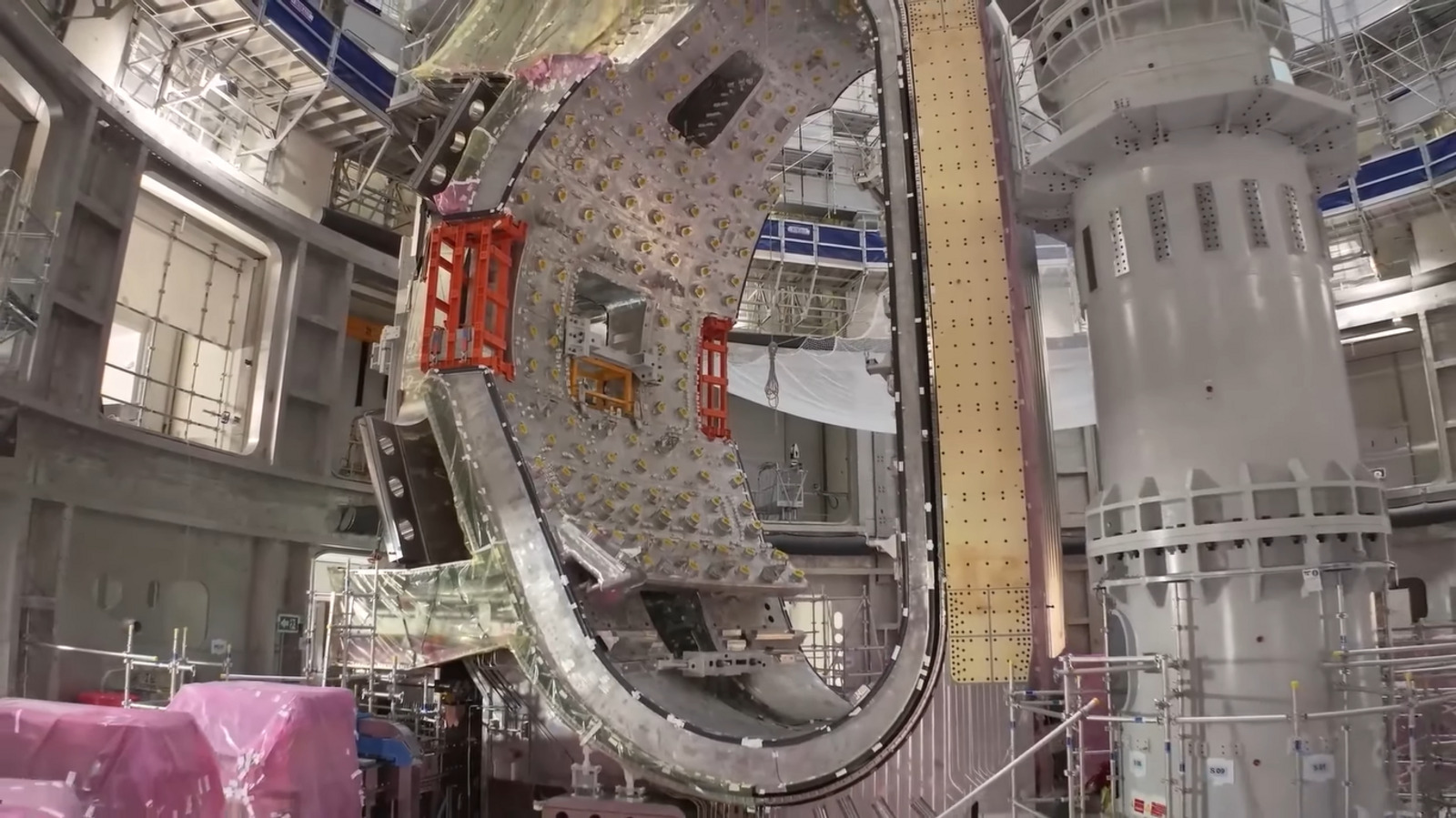
ITER, Experimental Nuclear Fusion Reactor in France, Uses Colossal Solenoid to Attempt to Reproduce the Energy of the Sun and Transform the Energy Future
It is necessary to overcome a fundamental barrier of physics to unlock new forms of energy. Positively charged atomic nuclei naturally resist any attempt to approach. Only the interior of stars can break through this barrier.
But a monumental project promises to challenge this limit here on Earth: ITER, the International Thermonuclear Experimental Reactor. The heart of this undertaking is a colossal solenoid awaiting its first pulse.
An Unprecedented Scale Project
ITER has been under construction since 2007 in Cadarache, in southern France. Unlike small test benches scattered around the world, it is the first large-scale facility dedicated to nuclear fusion.
-
Fukushima Marks A Turning Point In Japan’s Energy Policy: After The Disaster, The Country Shut Down Its 54 Nuclear Reactors And, 15 Years Later, Only A Small Portion Have Returned To Operation

-
How Japan Overcame The Nuclear Bomb And Now Houses Millions In Hiroshima, While Ukraine Lost Chernobyl?

-
Bill Gates Receives Historic Approval to Build Giant 345 MW Nuclear Plant in the U.S. and Promises to Generate Up to 500 MW of Energy with Innovative Technology

-
India Opens Nuclear Energy to Private Capital to Accelerate Projects and Attract Billions, While Brazil Remains Stalled at Angra 3 and Discusses Who Will Foot the Bill for Completion
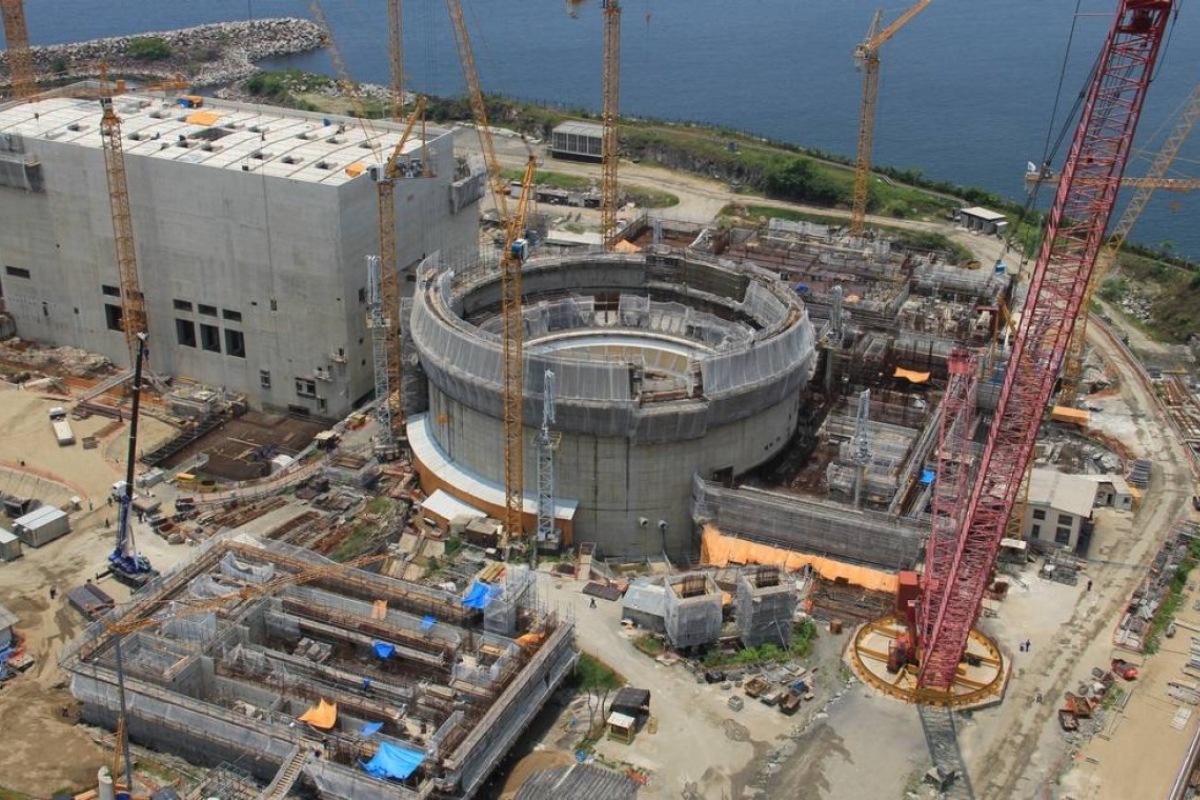
The reactor is the result of a rare international cooperation. Thirty-three countries participate in the initiative, along with dozens of companies across three continents.
According to Bernard Bigot, director-general of the ITER Organization, this is the most complex scientific collaboration ever undertaken.
Unprecedented components are being manufactured in various regions, requiring high-level engineering solutions.

The Magnetic Heart of ITER
The solenoid is the magnetic core that supports the project. It measures 18 meters in height, has a diameter of 4.25 meters, and weighs over a thousand tons.
According to the project leads, this magnet generates a magnetic field 280,000 times stronger than Earth’s. The force would be enough to lift an aircraft carrier two meters off the ground.
The component was built with the participation of eight companies from the United States. Its support withstands 100 meganeutons, equivalent to double the thrust of NASA’s space shuttle.
How the Plasma is Maintained
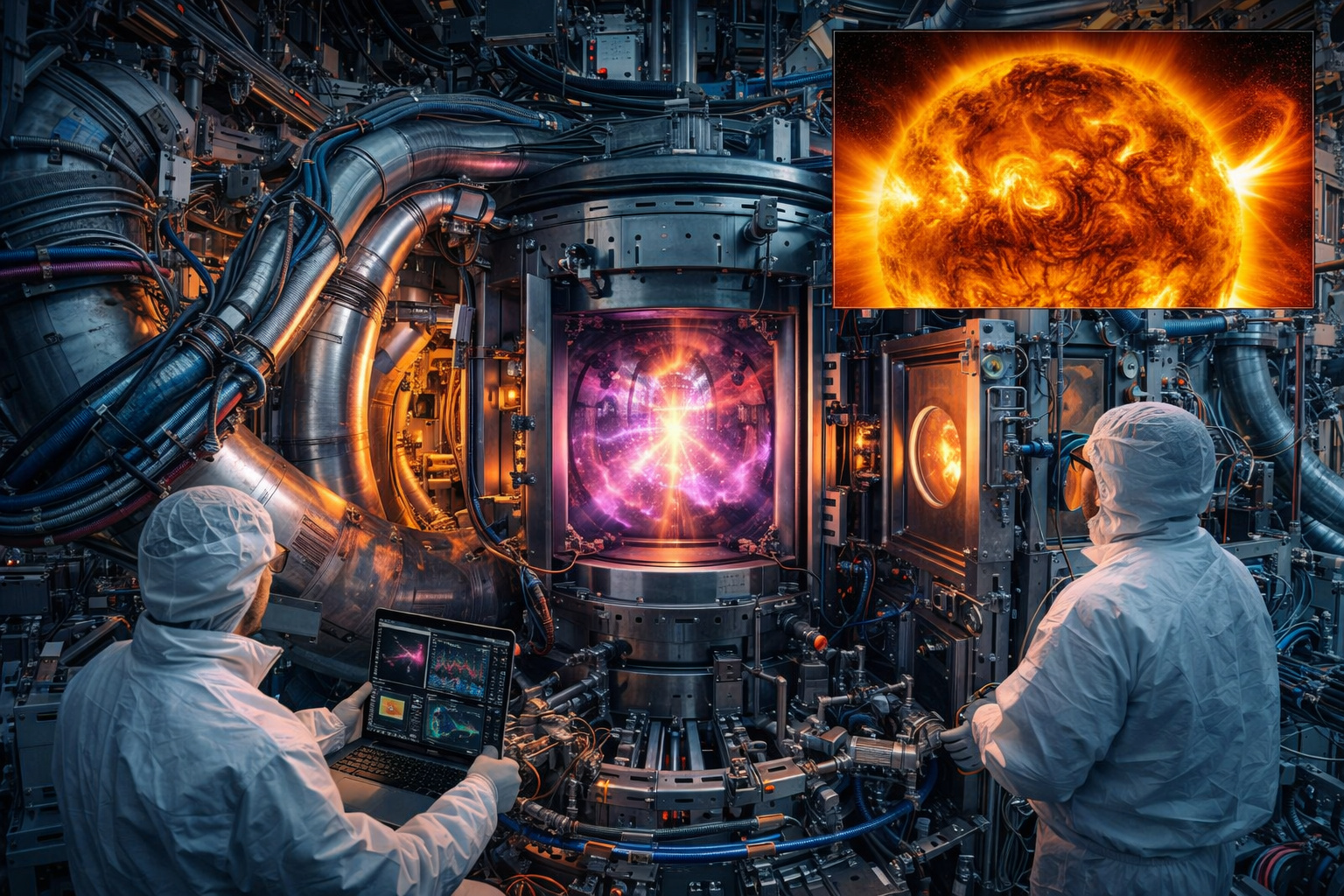
Inside the donut-shaped ring, the solenoid surrounds the plasma along with other external coils. It also provides electrical impulses that help heat and shape the mixture of hydrogen and deuterium.
To achieve fusion, the plasma needs to reach extreme temperatures: about 150 million degrees Celsius. This heating is ensured not only by the solenoid but also by microwaves and neutron beams.
The complete set of magnets – 18 toroidal and 6 poloidal – will have an approximate weight of 3,000 tons, equivalent to six Airbus A380-800 airplanes.
Comparisons with the Sun
Inside the Sun, the temperature is “only” 15 million degrees. However, here on Earth we need to multiply that value by ten to keep the plasma stable.
Until now, we have only managed to reproduce this phenomenon for fractions of a second. The tokamak, a Soviet technology from the 1950s, has become the most consolidated model. However, it still presents significant limitations.
Pulses and Limitations
ITER will not be able to maintain continuous operation. The solenoid can only operate in pulses ranging from 300 to 500 seconds.
In advanced testing phases, this duration may reach up to 3,000 seconds, just over 50 minutes. Still, it is not the same as permanent operation.
The current schedule anticipates the reactor’s operation starting in 2035. The initial deadline was 2016, but delays have become common in this type of mega undertaking.
Energy of the Future? Between Hopes and Doubts
Nuclear fusion is seen as an energy hope for the future. However, expectations have accumulated decades without concrete results in energy generation.
Astrophysicist Josef M. Gaßner believes he will not see a fusion power plant operational during his lifetime. For him, the technical obstacles are still numerous.
It is worth noting that ITER does not aim to generate energy for the grid. Its role is to demonstrate that future reactors can be viable. The task of providing electricity will fall to subsequent projects, such as the DEMO plant.
The Next Step: DEMO
DEMO aims to succeed ITER and provide hundreds of megawatts to the grid by the middle of the century.
It will be a demonstration reactor, designed to show that nuclear fusion can become a practical source of energy.
Meanwhile, other pathways are being explored. Stellarators like the Wendelstein 7-X in Germany are showing promising potential. Private companies are also seeking alternatives to overcome the limitations of tokamaks.
Whether these efforts will result in success remains unclear. It may be that many promises still need decades.
Even so, ITER represents one of the greatest symbols of the scientific quest to mimic the Sun. It is the attempt to turn the impossible into reality, for only in this way can the possible be opened up.
With information from Xataka.





-

-

2 pessoas reagiram a isso.