





 Portuguese
  English
  Spanish
  2 min of reading
  0 comments


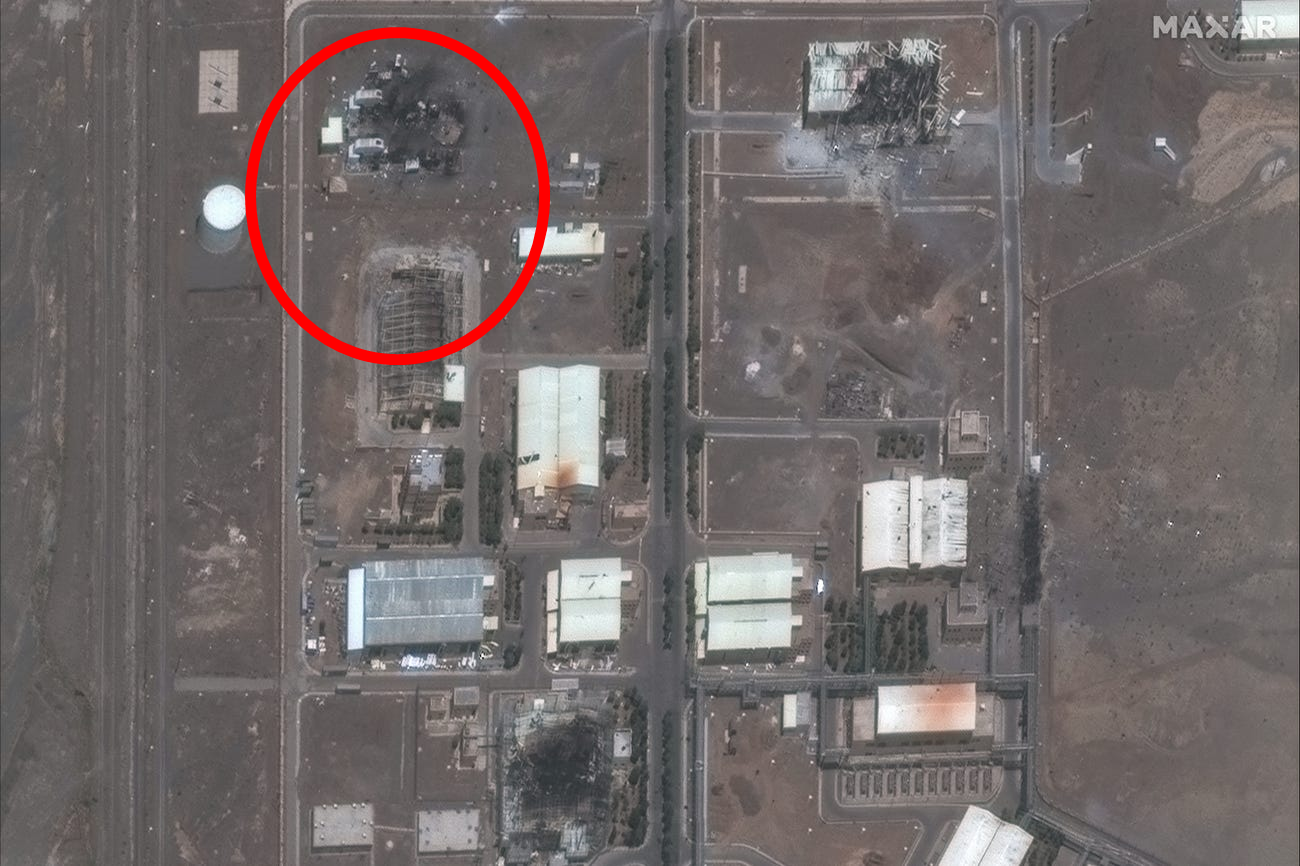
Images Show Destruction on the Surface of the Natanz Facility After Israeli Airstrike; Iran Responds With Missiles and Drones Against Israel
Satellite images released this Saturday (14) reveal the extent of the damage caused by Israeli bombings against one of Iran’s main nuclear facilities. The attack occurred on Friday (13) as part of the “Rising Lion” operation carried out by hundreds of Israeli aircraft.
Destruction in Natanz
The images, captured by the American company Maxar Technologies and obtained by Business Insider, show destroyed buildings at the top of the Natanz complex, about 230 km south of Tehran. The facility is Iran’s main uranium enrichment center.
According to Rafael Grossi, head of the UN nuclear agency, above-ground structures and electrical systems were hit. Despite this, there are no signs of direct damage to the underground facilities. However, he warned that power loss may affect these internal areas.
-
Motorola launched the Signature with a gold seal from DxOMark, tying with the iPhone 17 Pro in camera performance, Snapdragon 8 Gen 5 that surpassed 3 million in benchmarks, and a zoom that impresses even at night.

-
Satellites reveal beneath the Sahara a giant river buried for thousands of kilometers: study shows that the largest hot desert on the planet was once traversed by a river system comparable to the largest on Earth.

-
Scientists have captured something never seen in space: newly born stars are creating gigantic rings of light a thousand times larger than the distance between the Earth and the Sun, and this changes everything we knew about stellar birth.

-
Geologists find traces of a continent that disappeared 155 million years ago after separating from Australia and reveal that it did not sink, but broke into fragments scattered across Southeast Asia.

Grossi also reported radiological and chemical contamination within the complex but stated that no external leaks have been detected.
Other Targets and Limitations of the Weapons
Israel also confirmed attacks on other nuclear facilities, including the city of Isfahan, where there are three Chinese research reactors.
Additionally, bombings were reported in Fordow, another important Iranian enrichment center located about 100 km southwest of the capital.
Satellite images did not reveal visible damage to the main buildings in Fordow. Experts say that its structures are even more deeply buried than those in Natanz, which complicates attacks with conventional weapons.
The only known weapon capable of hitting these deeper structures is the American GBU-57 bomb, weighing 15 tons, which can only be released by B-2 bombers or the new B-21, still in development. The Israeli arsenal does not have this capability.
U.S. Involvement and Iranian Response
U.S. officials denied direct involvement in the bombings. However, they confirmed that American troops acted in the interception of missiles launched by Iran in retaliation for the Israeli attacks.
The Israeli government justified the operation as an action to weaken the Iranian nuclear program and prevent the country from developing nuclear weapons. Tehran, in turn, claims that its program is for civilian purposes.
Escalation in the Conflict
The attack is part of an escalation that includes targets such as nuclear scientists, military commanders, ballistic missiles, and Iranian military bases. In response, Iran launched missiles and drones against Israel, increasing the risk of a new cycle of violence in the region.
The offensive may also jeopardize attempts to negotiate a new nuclear agreement with Iran, according to political analysts.








Seja o primeiro a reagir!