





 Portuguese
  English
  Spanish
  4 min of reading
  3 comments


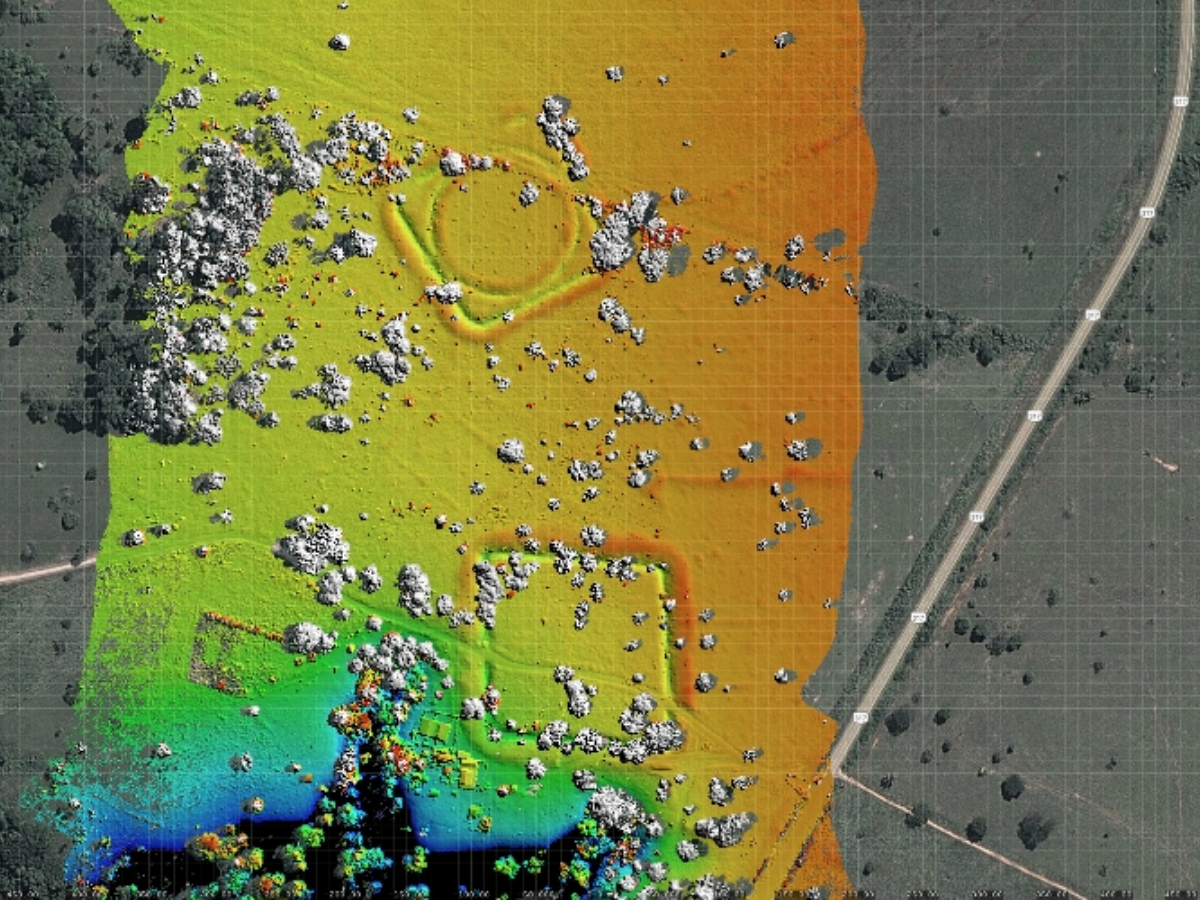

Discover How the Geoglyphs in the Amazon, Especially in Acre, Reveal Complex Ancient Societies, Their Possible Functions, and the Impact of These Discoveries.
The vast Amazon rainforest, for centuries seen as a “demographic void”, has revealed secrets of a complex past. Satellite images and new technologies have unveiled impressive geoglyphs in the Amazon, especially in the state of Acre. These massive geometric structures of earth, dating back up to 2,000 years, challenge old narratives and point to sophisticated civilizations.
Understand the discovery of these enigmatic monuments, who built them, their possible purposes, and how they are rewriting the history of human occupation in pre-Colombian Amazon.
The Surprising Discovery of the Geoglyphs in the Amazon of Acre
The rediscovery of the geoglyphs in the Amazon, mainly in Acre, began with the advancement of deforestation from the 1970s, which exposed the structures. The first formal investigations date back to 1977, but it was the aerial view, driven by professor Alceu Ranzi in 1986, and the use of satellite images starting in 2005, that revealed the magnitude of the phenomenon.
-
A forgotten cord on the floor of a basement in Vienna leads a plumber to a box containing 30 kilograms of gold with Mozart’s face, hidden before World War II. The treasure, worth 2.3 million euros, was just centimeters away from a worker who ignored the sign a day earlier.

-
A couple buys an old chalet, breaks the kitchen floor for renovation, and finds over a thousand coins of gold and silver hidden since the English Civil War over 4 centuries ago.

-
Rigid bags with their days numbered: new trend prioritizes comfort in 2026.

-
YouTuber creates an excavator equipped with a giant 4.5-meter sword to challenge his brother to a rematch, and the invention quickly goes viral on social media.


These structures exhibit precise geometric shapes such as circles, squares, and hexagons, with dimensions ranging from 100 to 300 meters in diameter or side. The trenches can be up to 5 meters deep and 20 meters wide. Carbon-14 dating indicates they were mainly constructed between 500 BC and 1000 AD. Notable sites include Jacó Sá (protected by IPHAN) and Tequinho. By March 2025, over a thousand geoglyphs have been identified in Acre.
Who Built the Geoglyphs in the Amazon and How Did These Societies Live?
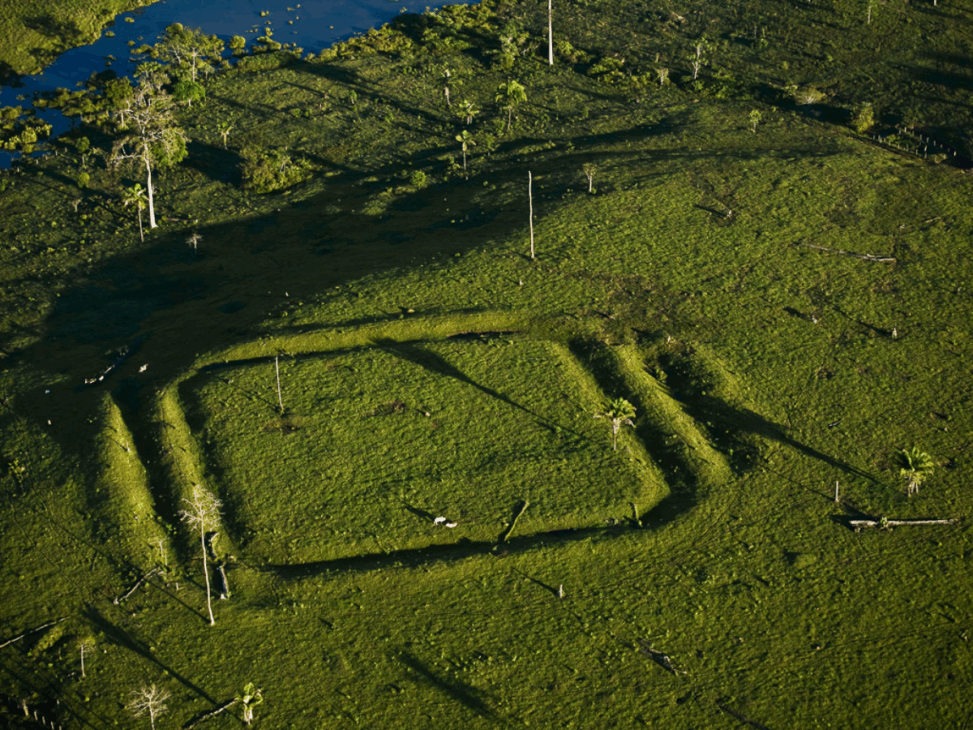
The exact ethnic identity of the builders of the geoglyphs in the Amazon remains a mystery, sometimes referred to as the “>Aquiry Civilization”. The most likely hypothesis is that it was a multi-ethnic civilization in network, sharing cultural traits. Constructing these monumental works required advanced social organization and technical knowledge, utilizing wooden and stone tools.
Archaeological evidence indicates a diversified economy, with corn and pumpkin cultivation, nut and fruit gathering, hunting, and fishing. These societies practiced active forest management, including controlled burning, for at least 4,000 years, shaping the landscape. Many geoglyphs were interconnected by a system of straight roads.
The Purpose of the Enigmatic Geoglyphs in the Amazon
The primary function of the geoglyphs in the Amazon is widely accepted as ceremonial and ritualistic. Their monumentality and geometric precision transcend purely utilitarian needs. They likely served as spaces for social gatherings and community aggregation, bringing together different groups for rituals, festivities, or deliberations.
The structures may also have served as territorial markers, imbuing the landscape with cultural significance – a “tattoo on the earth”, as described by the Huni Kuin ethnicity. For some contemporary Indigenous peoples, these sites are considered sacred. While secondary functions like defense or astronomical observation are speculated, the ritual interpretation predominates.
The Impact of the Geoglyphs in the Pre-Colombian Amazon
The discoveries of the geoglyphs in the Amazon categorically refuted the notion of a “demographic void” in the region during pre-Colombian times. They are testimonies to a dense, lasting, and socially organized human occupation, capable of transforming the landscape on a large scale.
These societies not only adapted to the forest but actively shaped it, demonstrating that social complexity in the Amazon also flourished in upland areas. This enriches Indigenous history and has implications for understanding Amazonian biodiversity, which may have been influenced by these ancestral practices.
The Future of Research and Preservation of the Geoglyphs in the Amazon


The LiDAR (Light Detection and Ranging) technology has revolutionized research, allowing mapping of structures beneath the dense forest. Projects like “Revealed Amazon” (USP) and “>Unveiling the Deep Past” (Amazon Geoglyph Institute) utilize LiDAR and integrate Indigenous traditional knowledge.
The main threat to the geoglyphs in the Amazon remains deforestation. The preservation of these sites is urgent, including registration by IPHAN and recognition as a World Heritage site by UNESCO. The tourism potential exists but must be developed responsibly. The geoglyphs are a vital link to the present, offering lessons on sustainability and the deep relationship between humans and the forest.









Faltou os créditos das fotos.
O CRÉDITO DA IMAGEM FOTOGRÁFICA do Geoglifo é meu: © Maurício de Paiva / Fotoarqueologia : onde a fotografia está oficialmente incluída. https://www.instagram.com/relatos_visuais/
Os 2 quadrados estão apontando para um centro. É só medir a curvatura entre eles .