





 Portuguese
  English
  Spanish
 5 min of reading
  0 comments



Property Valued at R$ 18 Million Undergoes Extrajudicial Usucaption in RJ, Involves 40 Heirs, and Becomes a Landmark in Asset Regularization Outside of Court.
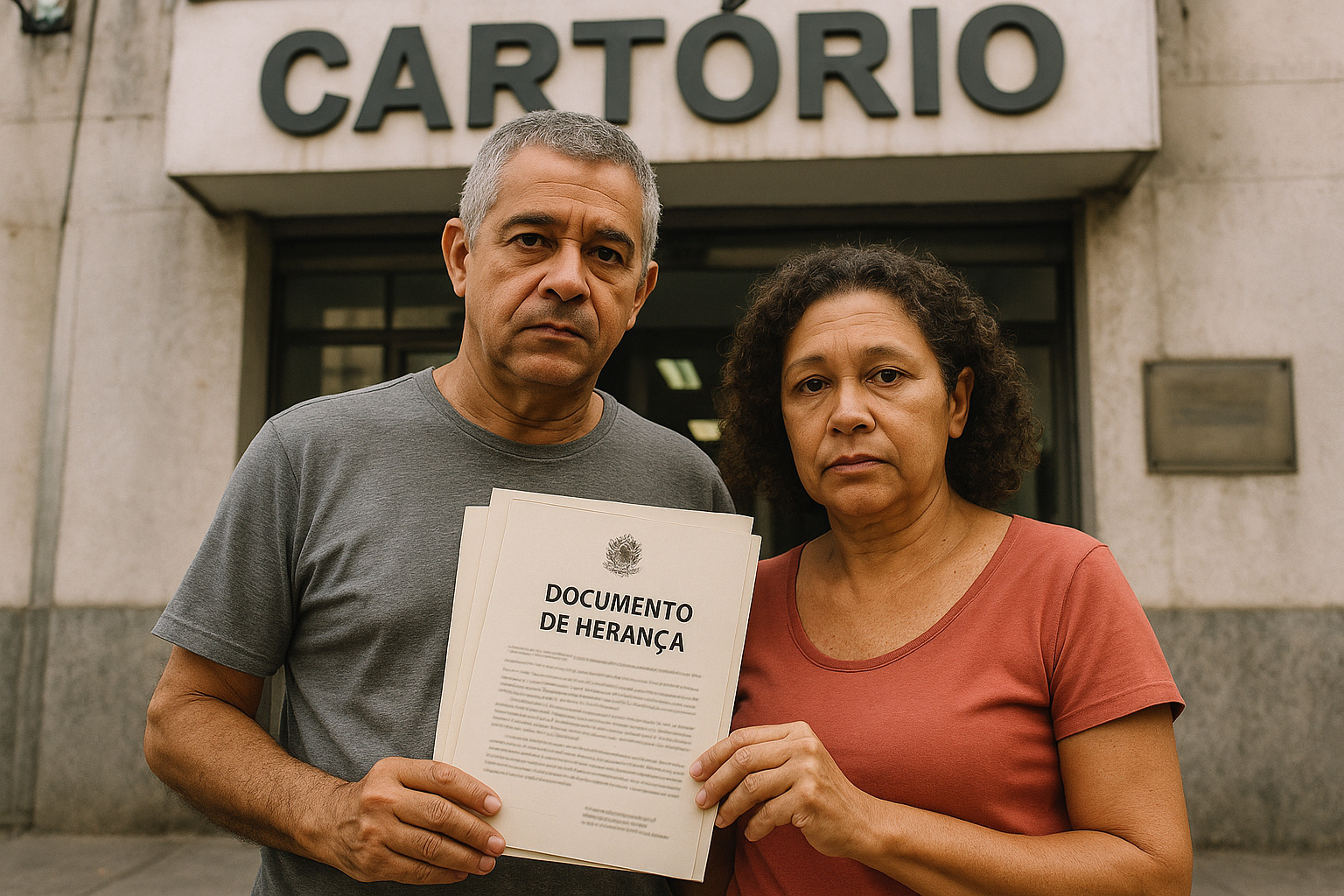
One of the most impactful cases ever recorded in Brazilian real estate law has just come to fruition and become a definitive registration in the notary office. In the state of Rio de Janeiro, a property valued at approximately R$ 18 million had its ownership recognized through extrajudicial usucaption, outside of the traditional Judiciary, via a direct procedure at the notary office. The repercussion is not only due to the high value of the asset but also the message that the case sends to the market: no one is immune to the loss of property when there is prolonged possession, documentary abandonment, and fragmented inheritance.
The procedure was initiated in 2021 and concluded in 2024, after three years of technical work, overcoming obstacles involving around 40 heirs, many of whom are already deceased, in addition to a complex notarial record, rigorous requirements of land registration, and successive documentary adjustments until the definitive consolidation of the new ownership at the Land Registration Office. Today, the building is already regularized in the names of the new owners and is progressing towards condominium normalization, with convention and internal regulations under preparation.
How a Property Worth R$ 18 Million Left the Previous Owner Without Going Through a Judge
Extrajudicial usucaption allows for the acquisition of property to occur directly at the notary office, without judicial process, as long as all legal requirements are fulfilled. In the case of this property in Rio de Janeiro, the modality of extraordinary usucaption was applied, which does not require title or good faith, only proof of continuous, peaceful, and unopposed possession for the legal period.
-
The noise law will no longer be in effect at 10 PM starting in June with a new rule valid during the 2026 World Cup.

-
The Chamber opens a debate on driver’s licenses at 16 years old as part of a reform that includes around 270 proposals to change the Brazilian Traffic Code and may redesign rules for licensing, enforcement, and circulation in the country.

-
The new Civil Code could revolutionize marriages in Brazil with “express divorce” and changes that could exclude spouses from inheritance.
-
Banco do Brasil sues famous influencer for million-dollar debt and intensifies debate on delinquency, risks of seizure, and direct impact on Gkay’s credibility.




The procedure was processed exclusively within the notarial and registration scope, under the analysis of the notary public and land registration official. Over three years, documentary evidence, declarations, historical surveys of the property, and the notarial record that officially consolidated the factual situation of possession were produced. Even with pulverized inheritance and successive deaths among the original heirs, the absence of valid opposition allowed the process to advance.
The final result was the definitive registration of the new property at the notary, with full effect of public deed, without any judicial sentence.
The Presence of 40 Deceased Heirs Exposed One of the Greatest Asset Risks in the Country
The case laid bare a structural fragility in the Brazilian real estate market: properties with fragmented ownership chains, disorganized heirs, and poorly resolved successions become natural targets for usucaption. With approximately 40 heirs involved, many of them deceased, the property remained in a sort of legal limbo for decades.
Without updated inventories, without continuous succession regulation, and without effective control exercised by any of the heirs, the consolidated possession by third parties found fertile ground to transform into formal ownership.
This type of situation is much more common than it seems — and it is not limited to low-value properties. The R$ 18 million case demonstrates that even million-dollar assets are not protected from loss due to documentary inertia.
The Direct Importance of the New CNJ Norms in This Type of Outcome
The advancement of extrajudicial usucaption in Brazil is directly linked to the recent regulations of the National Justice Council (CNJ), which strongly encouraged the dejudicialization of property conflicts. The central idea is to reduce the burden on the Judiciary and allow for situations of established fact to be resolved administratively, provided that all legal requirements are met.
In practice, the CNJ paved the way for notary offices to cease being mere bureaucratic bodies and become true instruments of asset pacification, even in cases of high economic value.

The case of the R$ 18 million property is one of the most emblematic examples of this new cycle of land regularization in the country.
The Technical Role of the Lawyer and the Complexity of Constructing the Notarial Record
The case was led by Professor Haroldo Lourenço, a lawyer with over 20 years of experience in high complexity civil and real estate litigation, post-doctorate in Arbitration from UERJ, and holds a PhD and master’s in Civil Procedural Law, in addition to being a professor at UFRJ, guest lecturer at FGV and EMERJ.
The preparation of the notarial record, the central piece of the extrajudicial usucaption procedure, was described as one of the most sensitive phases of the process. It was necessary to reconstruct decades of the property’s history, demonstrate continuous possession, prove the absence of valid opposition from the former titleholders, and show the material and legal abandonment of the property.
Moreover, complex requirements arose during the registration phase, all of which were overcome throughout the three years of processing.
High-Value Extrajudicial Usucaption Is Still an Exception, but It Is No Longer Impossible
Until recently, the idea of a property valued at tens of millions of reais undergoing usucaption outside of traditional court seemed impractical. That reality has changed. The case in Rio de Janeiro proves that the value of the asset does not prevent acquisition by usucaption, as long as all legal requirements are strictly met.
What distinguishes this process from many others is not only the price but the symbolic impact: the institute of usucaption has definitively ceased to be seen as a tool solely for popular housing. Today, it reaches the heart of major urban assets.
The Alert This Case Raises for Heirs, Investors, and Developers
The immediate effect of this case on the real estate market is one: maximum alert. Families with old assets, properties without inventories, poorly resolved disputes, or decades without effective use are now at concrete risk of losing assets due to usucaption.
Investors are now also looking more cautiously at properties with documental liabilities, as prolonged possession by third parties can quickly turn into regular ownership — without going through a single court hearing. Developers, for their part, are intensifying ownership audits before any strategic acquisition.
Condominium Regularization Closes a Historical Cycle of Legal Uncertainty
With the registration now transferred at the RGI, the property now enters a new phase: condominium regularization. The condominium convention, the internal regulations, and administrative adjustments are being prepared to permanently end decades of legal instability.
In practice, the building has moved from a condition of total insecurity to a state of full legal regularity, with defined owners and a condominium structure under formation.
When Possession Overcomes Abandonment, Even in Million-Dollar Properties
The case of the R$ 18 million property in Rio de Janeiro leaves a direct, harsh, and unequivocal lesson for the market: ownership is not just a deed. It is real exercise, legal vigilance, and continuous presence. Where there is abandonment, even when it is million-dollar, possession tends to prevail.
Extrajudicial usucaption is no longer a silent exception. It has become an active instrument for reorganizing Brazilian urban assets. And now, definitively, even high-end properties have entered this field of real risk.










-

-

-

-

9 pessoas reagiram a isso.