





 Portuguese
  English
  Spanish
 4 min of reading
  22 comments


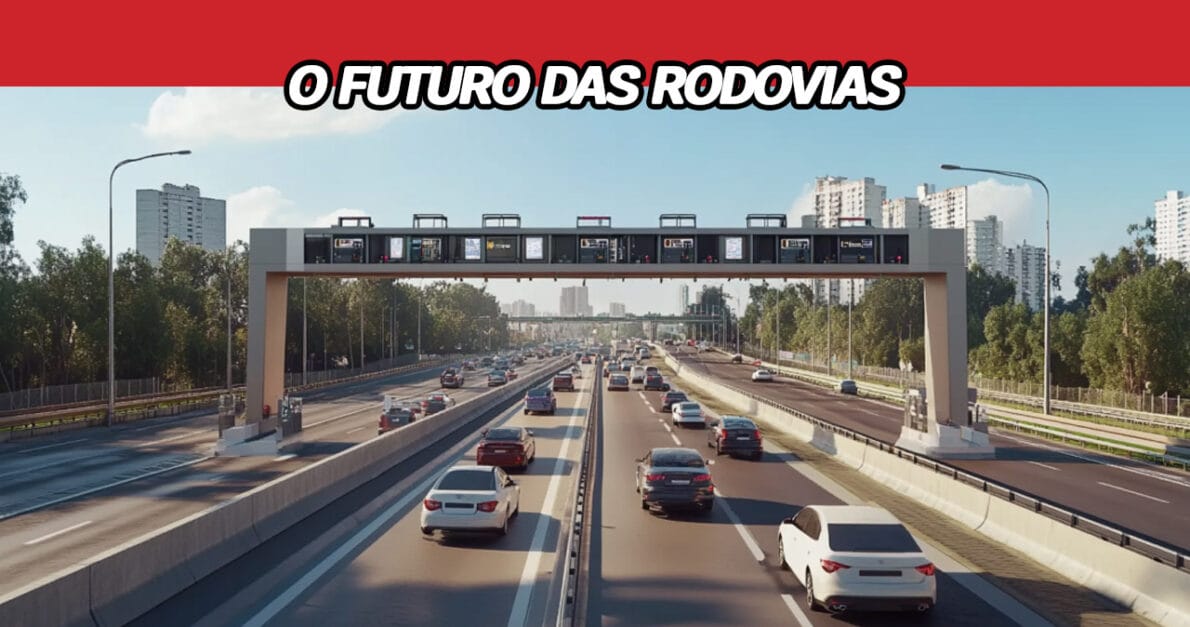

Get Ready for the End of Long Lines at Toll Booths! Starting in November, the Free Flow System Arrives at the Tamoios Highway, Eliminating Toll Booths and Revolutionizing Traffic. Will This Innovation Really Make Drivers’ Lives Easier?
The dream highway for those tired of lines at tolls is about to become a reality.
In a move that promises to revolutionize traffic along the São Paulo coast, traditional toll booths with barriers and attendants are numbered.
But will this new feature really make drivers’ lives easier, or are there hidden drawbacks to the new system? The answer may surprise those who rely on these roads.
-
A new Brazilian shopping center worth R$ 400 million will be built in an area equivalent to more than 4 football fields, featuring 90 stores, 5 cinemas, a supermarket, a college, and parking for 1,700 cars, potentially generating 3,000 jobs.

-
Larger than entire cities in Brazil: BYD is building a 4.6 km² complex in Bahia with a capacity for 600,000 vehicles per year, but the discovery of 163 workers in conditions analogous to slavery has shaken the entire project.

-
With an investment of R$ 612 million, a capacity to process 1.2 million liters of milk per day, Piracanjuba inaugurates a mega cheese factory that increases national production, reduces dependence on imports, and repositions Brazil on the global dairy map.

-
Brazilian city gains industrial hub for 85 companies that is equivalent to 55 football fields.


Starting in November, the Free Flow system will go into operation at kilometer 13.5 of the South Ring Road of the Tamoios Highway, marking the end of an era of conventional tolls.
With this new technology, it will no longer be necessary to stop the car, get change, or wait for the green light to continue your journey.
The idea is simple: keep traffic flowing continuously, eliminating once and for all the congestion that occurs at toll plazas.
The operation of this system is much more modern than it seems.
According to information from the responsible concessionaire, Free Flow operates with the help of a structure equipped with cameras, sensors, and antennas that span the roadway.
These devices identify vehicles through a TAG or the vehicle’s license plate, without the driver needing to stop.
This automatic identification allows the toll fee to be charged directly, without the need for physical interaction with payment booths.
How Will the Charging Work?
For those already using TAGs like Sem Parar or ConectCar, the process will be even simpler.
As the TAG installed on the windshield is read by sensors, the toll fee will be automatically charged on the service bill.
In other words, you pass by the radar without even noticing, and the amount shows up directly on your statement at the end of the month.
This promises to make trips even easier for those who already use this type of technology.
For drivers who do not have a TAG, the operation will be a bit different.
According to the highway concessionaire, users will have to access the Tamoios website or app after the trip to make the toll payment, using only the vehicle’s license plate.
This option aims to ensure that no one is left out of the new system, but it may require a bit more attention from drivers.
Forgetting to pay could result in fines and future complications.
Benefits and Questions About the New System
The use of TAG is highly recommended, especially for those who want quicker trips.
After all, nothing is more frustrating than facing toll lines during a trip, especially on long weekends.
The Free Flow system is presented as a solution that promises to improve the experience on highways, but will it work as well in practice?
On one hand, the elimination of barriers and booths should indeed reduce travel time and the formation of congestion.
On busy highways like the Tamoios, this change has the potential to speed up traffic, especially during peak hours.
However, many drivers are still concerned about the payment process for those who do not use TAG.
The highway concessionaire assures that the system will be efficient and that manual payment via the site or app will be simple and intuitive.
However, the fear of forgetting to pay or encountering difficulties with the digital system may deter some users from adopting this new technology, at least initially.
Prospects for the Future of Brazilian Highways
The Free Flow system, already used in other countries, is coming to Brazil with strong potential to be expanded to other important highways in the state and country.
The impact could be significant, both in terms of time savings and in reducing the number of accidents, which often occur due to sudden braking at toll plazas.
However, the big question remains: would the transition to this new form of charging be smooth for everyone? While many will fully embrace Free Flow, others may still struggle to adapt to the digital model.
The operation on the Tamoios Highway is a test for the future of Brazilian highways.
If successful, this system could eliminate mandatory stops on various roads and make journeys faster and safer.
On the other hand, the challenge of ensuring that all drivers can make their payments correctly is still at stake.
Free Flow: The Future Is Now, But Are We Ready?
With the arrival of Free Flow in November, drivers who frequent the São Paulo coast should be ready for this radical transformation.
No toll booths and no stopping, the promise is more speed and fewer complications at payment time.
But are we ready for this change? Do you think the new toll system will be more efficient or will it create more confusion?







O sistema funciona em diversos países , mas sempre existe uma opção para o contribuinte para em dinheiro , ou seja tem sempre uma cabine com um funcionário. Uso tag mas não posso aceitar que dificultem para aqueles que querem pagar com dinheiro, como é a taxa ambiental de Ubatuba onde praticamente não se consegue pagar em dinheiro , deviam tem cabines em todas as saídas da cidade.
Em Itápolis SP já tem! Passei lá faz um mês, uma **** ainda, tem que passar a 40 km e vários cones na pista, os desenformado chegam a parar na pista procurando atendente. Tem que melhor muito para ficar ruim
O sistema free-flow é bom para agilizar.
Entretanto para os usuários que serão cobrados pela placa do veículo deveria haver somente um site que emitisse a fatura de todas as concessionárias, pois senão os usuários teriam que lembrar de todas as concessionárias que utilizou no mês. Vamos ver se serão inteligentes o suficiente para implantação do sistema free-flow.