





 English
  Francês
  Alemão
  Italiano
  Japonês
  Norueguês
  Portuguese
  Spanish
  11 min of reading
  12 comments


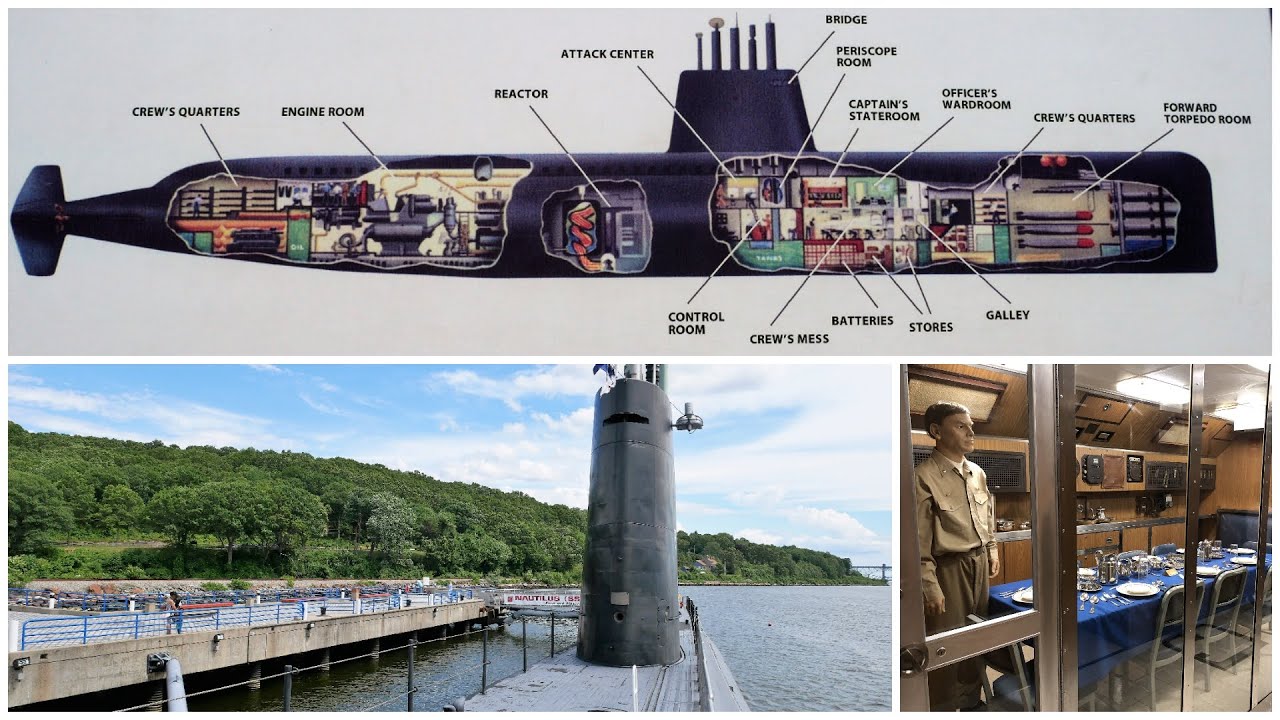


The First Nuclear Submarine In The World Proved That Technology That Seemed Science Fiction Could Conquer The Impossible And Inaugurated A New Era In Ocean Warfare.
On January 21, 1954, in front of a crowd that included First Lady Mamie Eisenhower, a submarine unlike anything ever built slid into the waters of the Thames River in Groton, Connecticut. Its name: USS Nautilus. Its secret: a nuclear reactor that would allow it to do things that experts swore were impossible. “Nuclear submarines are pure fantasy,” said conservative naval engineers. “They will never work reliably,” skeptics predicted. “The risk of radiation is far too great,” critics warned.
Four years later, on August 3, 1958, at 11:15 PM (Eastern Time), Commander William Anderson calmly announced over the Nautilus’ sound system: “To the world, our country, and the Navy — the North Pole.”
With 116 men aboard, the Nautilus had accomplished the impossible: becoming the first ship in history to cross beneath the geographic North Pole, 90 degrees North, completely submerged under a layer of ice that ranged from 10 to 50 feet thick.
-
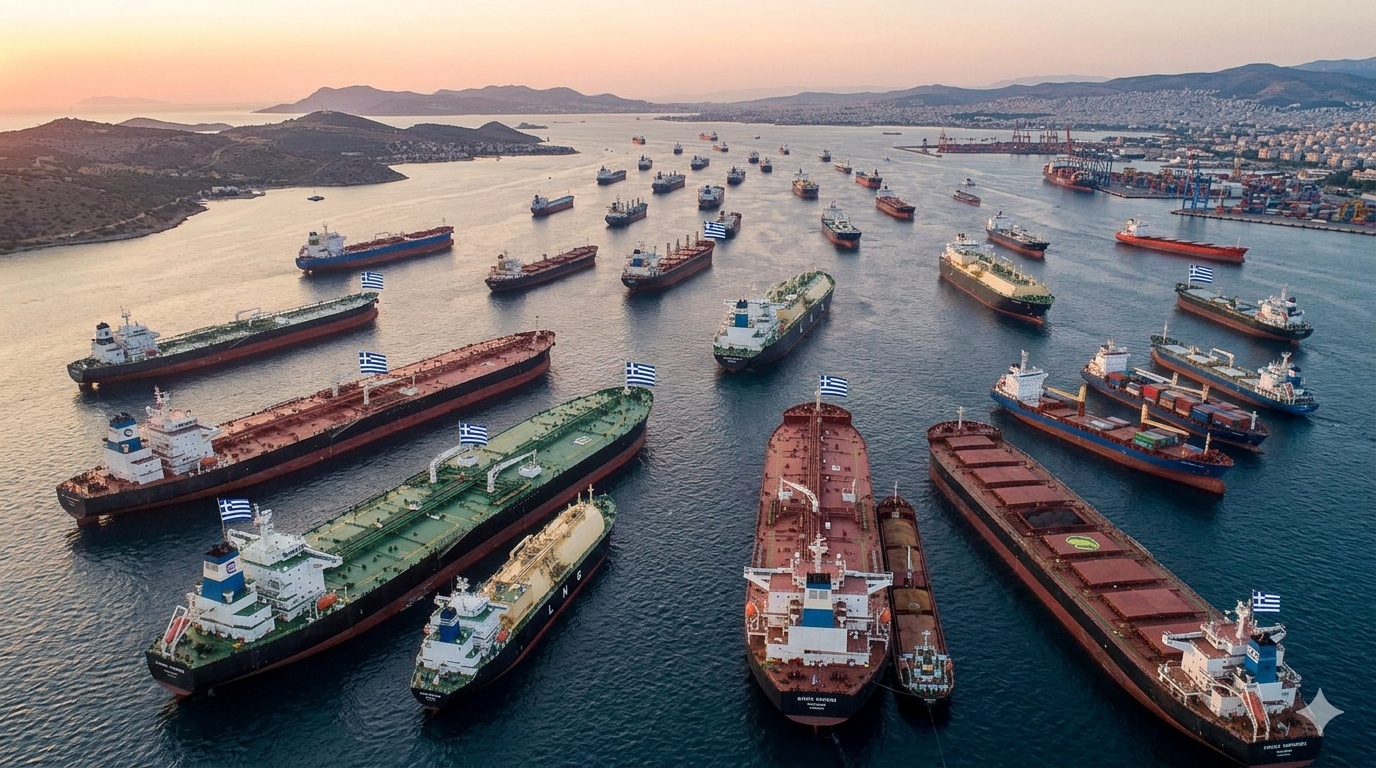
Neither the USA nor China: a small European nation has become one of the largest maritime powers on the planet, controlling one of the largest merchant fleets in the world with thousands of ships and dominating the global transportation of oil and strategic cargo.
-
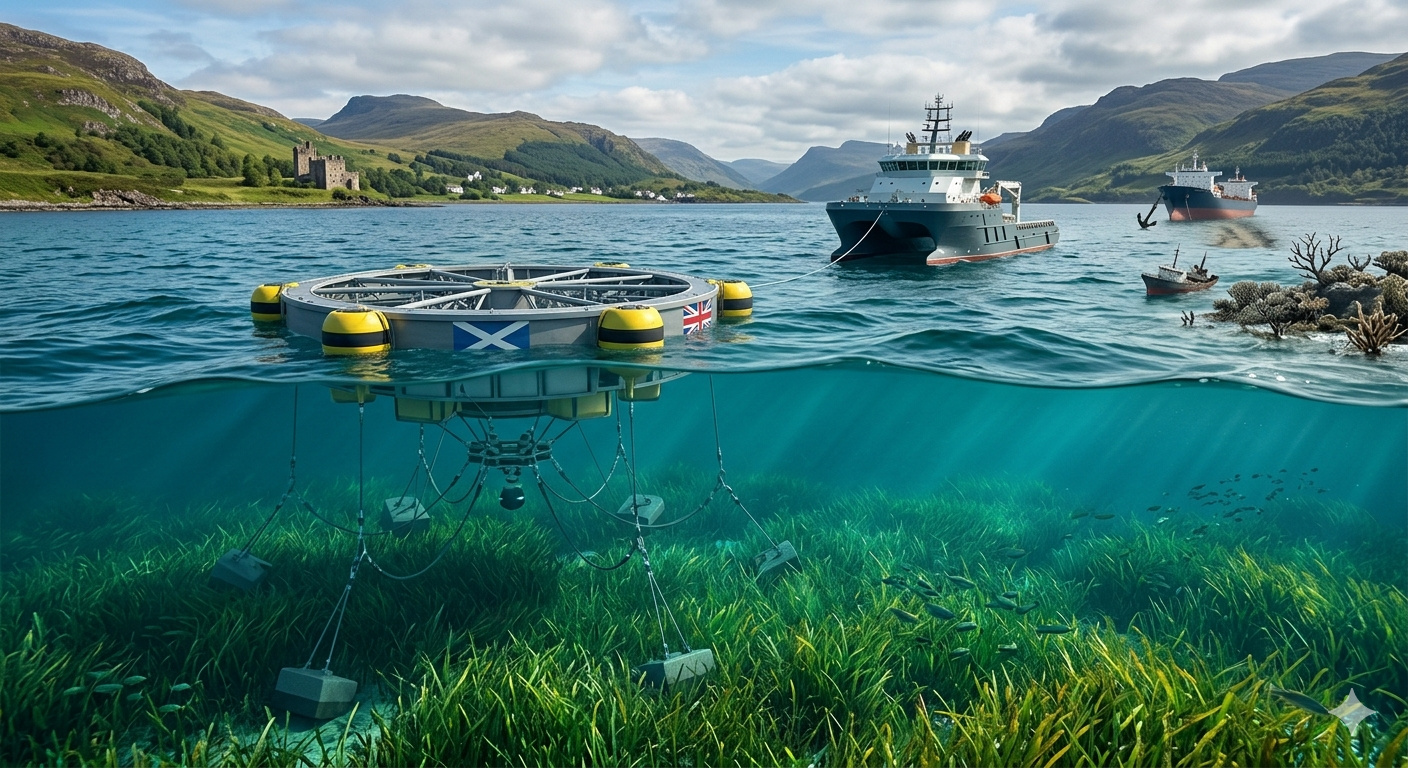
Scotland and the United Kingdom have created a new anchoring system that floats in the water without touching the seabed, after discovering that the current from a conventional anchor destroys up to 50 m² of seagrass meadow per event and that ship-damaged reefs showed no signs of recovery even ten years later.
-
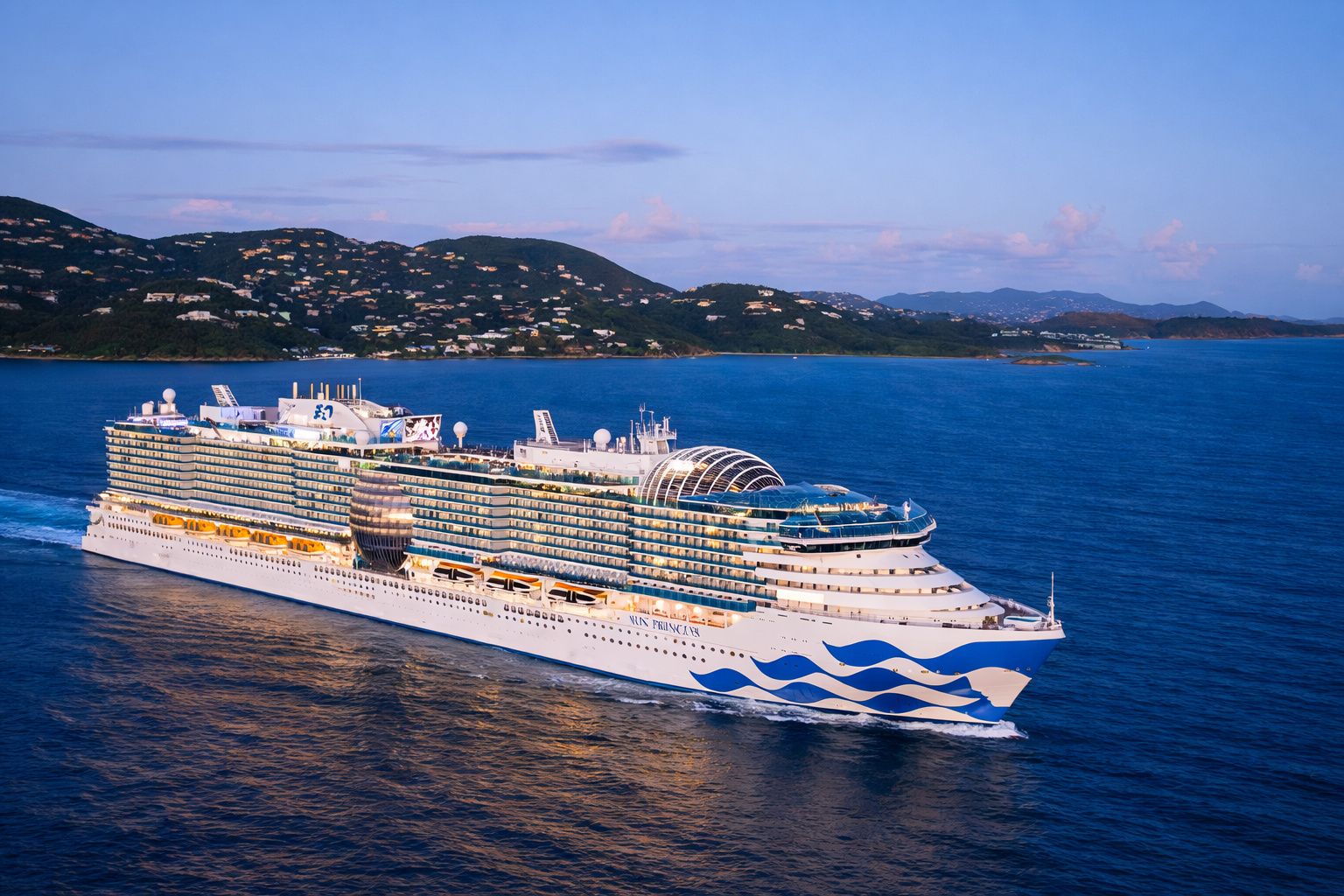
Weighing 175,500 Tons, Measuring 345 Meters Long, and With Capacity for Over 4,300 Passengers, the Sun Princess Becomes the Largest Ship Ever Built by Princess Cruises and Attracts Global Attention for Its Huge Glass Dome Inspired by Santorini’s Architecture Installed on Top of the Vessel
-
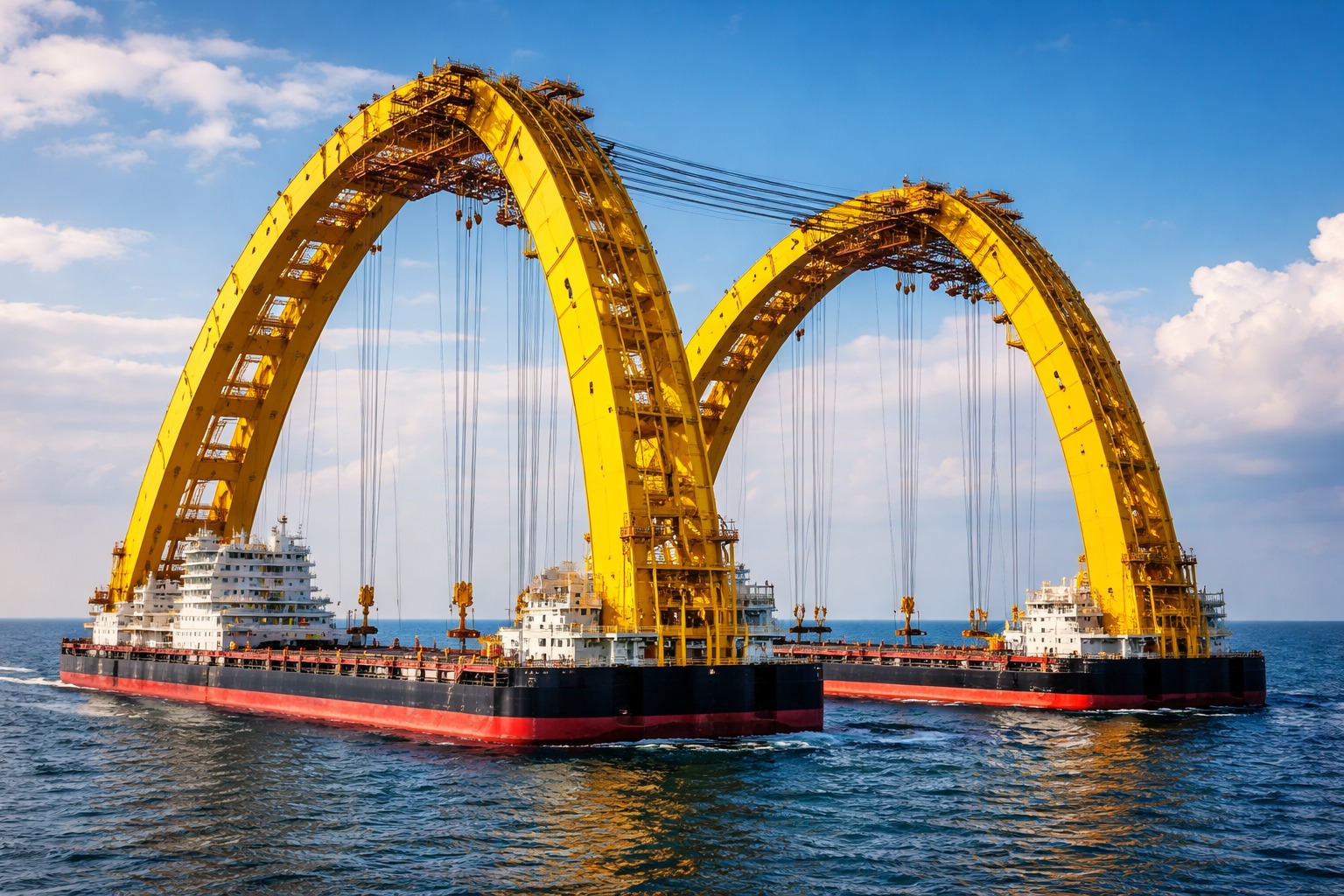
TX-10, The Colossus of The Sea: Largest Lifter Ship in The U.S., With Two Giant Barges, 73-Meter Tall Structure, and Strength to Raise 7,500 Tons of Sunken Oil Rigs

In its first two years of operation, the Nautilus sailed 62,000 nautical miles (about 115,000 kilometers) without needing to refuel once. It lived up to its name, matching the distance of the mythical 20,000 Leagues Under the Sea from Jules Verne’s novel. The story of the USS Nautilus is not just about a revolutionary submarine. It is about how a technology that seemed science fiction forever changed the balance of power in the world’s oceans and inaugurated the era of modern submarine warfare.
The Race Against Time And The Soviets
The 1950s was a period of rapid technological advances and increasing diplomatic tensions. The Cold War between the United States and the Soviet Union intensified with each passing day. Through technology, both superpowers sought to outpace each other while avoiding open, direct warfare.
In October 1957, the Soviets shocked the world by launching Sputnik 1 into orbit, the first artificial satellite in history. The American public was alarmed. If the Russians could send satellites into space, it meant they had rockets capable of launching nuclear missiles into American territory.
President Eisenhower felt the urgent need to show the American people and the world that the United States was not only as technologically advanced as the Soviets but superior. The Navy’s ability to excel in submarine development was exactly what he needed to demonstrate American technological supremacy.
It was in this context that Operation Sunshine was born, the secret plan to send the Nautilus to conquer the submerged North Pole.
The ‘Father Of The Nuclear Navy’ And His Impossible Dream
The man behind this revolution was a controversial and stubborn figure: Admiral Hyman G. Rickover, known as the “Father of the Nuclear Navy.” A brilliant engineer but difficult personality, Rickover passionately believed that nuclear propulsion would completely transform submarine warfare.
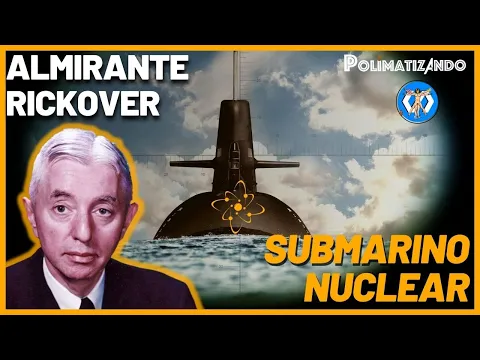

Conventional submarines of the time relied on diesel engines for surface navigation and electric batteries for submerged operation. This meant they had to surface regularly — typically every 48 hours — to recharge the batteries and refresh the air. They were, in practice, “ships that could dive” and not true submarines.
A nuclear reactor would change everything. It does not consume oxygen, produces no emissions, and can operate for months or even years without refueling. A nuclear submarine would be a true inhabitant of the depths — capable of remaining submerged for a time limited only by the need for food for the crew.
But there were enormous technical challenges. How to compact a nuclear reactor into a limited space? How to protect the crew from radiation? How to make the system work reliably underwater, where any leak could be fatal?
In March 1953, a prototype called Mark I successfully completed a simulated trip of 96 hours — an extraordinary record for the time. This paved the way for the Mark II, the final model that would be installed on the Nautilus.
The reactor was designed to operate using enriched uranium, with a high concentration of the isotope uranium-235 to compact it and obtain a longer lifespan. As enriched uranium is a highly controlled substance, it made it easier to generate electricity for long periods, allowing better navigability.
The Construction Of A Dream
The keel of the Nautilus was laid on June 14, 1952, at the Electric Boat Division of General Dynamics in Groton, Connecticut, the same company that sold the first submarine to the U.S. Navy in 1900. President Harry S. Truman was present at the ceremony.
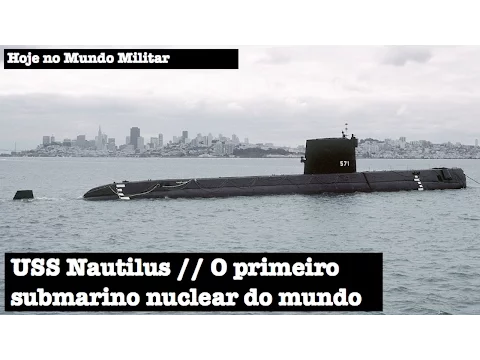
The project was authorized by Congress in July 1951 as SCB 64. The name “Nautilus” was chosen in homage to both Jules Verne’s fictional submarine in “Twenty Thousand Leagues Under The Sea” and to the USS Nautilus (SS-168) which served with distinction in World War II.
The designers took inspiration from the advanced hydrodynamic design of the German Type XXI U-boat developed during World War II. The Type XXI featured an aerodynamic shape that allowed for greater speed and underwater efficiency compared to earlier designs optimized mainly for surface travel.
The Nautilus was 98 meters (320 feet) long and 8.2 meters wide at its maximum. Its surface displacement was about 3,530 tons. The crew consisted of about 13 officers and 92 enlisted men. The submarine was designed to operate at depths of over 100 meters and was armed with 6 torpedo tubes.
On December 30, 1954, the Mark II reactor became operational inside the submarine. Less than a month later, on January 21, 1954 (the date of the official launch), First Lady Mamie Eisenhower broke the traditional champagne bottle at the bow.
On September 30, 1954, the Nautilus was officially commissioned as the first nuclear-powered ship of the U.S. Navy. Its hull number: SSN-571.
The First Records: Living Up To Jules Verne
The Nautilus quickly began to break records. In its early tests, it demonstrated capabilities that seemed straight out of science fiction.
Diesel-electric submarines of the time could remain submerged for about 48 hours before needing to surface to recharge batteries. The Nautilus could stay submerged for weeks. Conventional submarines had underwater speeds of 8-10 knots. The Nautilus reached over 20 knots (about 37 km/h) — and could maintain that speed indefinitely.
On February 4, 1957, the Nautilus recorded its 60,000th nautical mile (110,000 km), matching the endurance of the fictional Nautilus described in Jules Verne’s novel “Twenty Thousand Leagues Under The Sea.” It took just two years to cover this epic distance — all without refueling the reactor once.
In May 1957, the Nautilus departed for the Pacific Coast to participate in coastal exercises and Operation “Home Run,” which familiarized Pacific Fleet units with the capabilities of nuclear submarines. The Navy was quickly learning that they had a revolutionary weapon on their hands.
In August 1957, the Nautilus made its first trip of 1,200 nautical miles under the polar ice — a preliminary test for the mission that would change history.
The “Impossible” Challenge: Conquering The North Pole
It was not enough for the United States to have built a nuclear submarine. The Nautilus needed to be tested to show how much more advanced the technology was compared to anything the Soviets had.
Several ideas were discussed, including having the Nautilus and USS Skate (SSN-578) complete a submerged trip around the Earth. Until Commander William Anderson, captain of the Nautilus, suggested something that had never been considered: a submerged crossing beneath the North Pole.
The idea seemed crazy. No ship in history had ever succeeded in reaching the North Pole due to the depth and thickness of the ice in the region. The waters were shallow in many areas — there was a real risk of the submarine becoming trapped between the ocean floor and the ice above.
Moreover, navigation would be extremely difficult. Both magnetic compasses and normal gyroscopes become inaccurate above 85° North. The magnetic north is not exactly at the North Pole, but south of it — so magnetic compasses point almost opposite to true north at those latitudes.
Without GPS (which did not yet exist), without the ability to use radio or celestial navigation while submerged, and with unreliable navigation instruments, how could they find their way through thousands of kilometers of ice-covered ocean in complete darkness?
“Impossible,” the experts said. “Suicidal,” pessimists warned.
But Anderson and his crew were determined to try.
The First Attempt: The Ice Wins
On August 19, 1957, the Nautilus departed from Groton, Connecticut, on its first attempt to navigate under the pole. The mission was secret; the crew was ordered to reach 83° North.
But an accident while surfacing among the ice damaged the periscopes, forcing the submarine to return to base. The ice had proven to be a powerful opponent. The attempt failed.
Just two months later, in October 1957, the Soviet Union launched Sputnik into orbit. The pressure on Americans to demonstrate technological superiority increased dramatically.
It would be necessary to try again the following summer when ice conditions were potentially better.
Operation Sunshine: The Mission That Would Change History
On April 25, 1958, the Nautilus set out again towards the West Coast under the command of William Anderson. It stopped in San Diego, San Francisco, and Seattle. On June 9, it left Seattle and began its historic journey under the codename “Operation Sunshine.” A fitting name for an expedition that would operate during 24 hours of sunlight in the Arctic summer.
On June 19, the Nautilus entered the Chukchi Sea but was forced to retreat due to deep ice in the relatively shallow waters. The ice extended 60 feet below sea level. In many places, there was not enough space between the ice and the ocean floor.

On June 28, it arrived at Pearl Harbor to await better ice conditions. The frustration was immense, but the mission was too important to abandon.
Finally, on July 23, 1958, conditions appeared favorable. The Nautilus departed from Pearl Harbor heading north towards the Bering Strait. This time, it was hoped that Arctic ice levels would be at their lowest, facilitating navigation.
Onboard were 116 men, including four scientists specially chosen for this journey. The chief scientist and ice pilot was Dr. Waldo Lyon from the Naval Electronics Laboratory. A special gyroscope built by Sperry Rand was installed just before the journey.
Beneath The Ice: Four Days In The Darkness
On August 1, the Nautilus submerged in Point Barrow, Alaska — the northernmost point of the United States — at a depth of 150 meters. Ahead of them: over 1,800 nautical miles (2,940 km) of Arctic ocean covered by solid ice.
The crew photographed the area and searched for the ocean valley on the sea floor that would allow for a smooth journey. Then, silently, they disappeared beneath the ice.
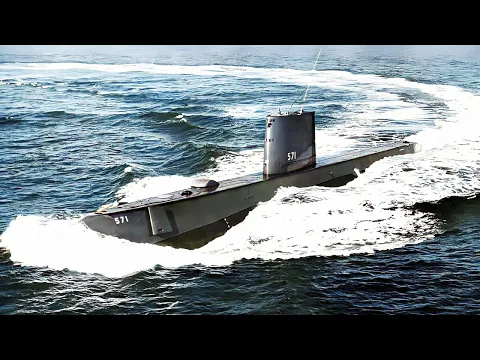
For four days, the Nautilus navigated through the icy waters of the Arctic without contact with the outside world. There was no working radio. There was no GPS. The magnetic compasses were useless. The special gyroscope was their only hope for accurate navigation — and even that became increasingly inaccurate as they approached the Pole.
Commander Anderson had considered using torpedoes to blast a hole in the ice if the submarine needed to surface in an emergency. It was literally a game of “longitude roulette” — there was a real risk that the submarine could become disoriented beneath the ice.
The tension was palpable. The submarine was navigating through a layer of ice that varied from 10 to 50 feet thick. A navigation error, a mechanical failure, any problem could be fatal.
“Nautilus 90 North”
At 11:15 PM (Eastern Time) on August 3, 1958, the historic moment arrived. Commander Anderson calmly announced over the sound system: “To the world, our country, and the Navy — the North Pole.”
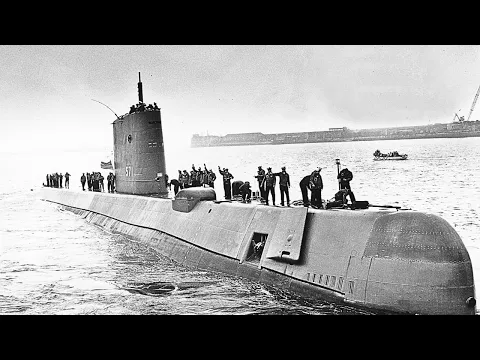
The USS Nautilus had become the first ship in history to cross beneath the geographic North Pole — 90 degrees North. The crew did not pause to celebrate. They simply continued to navigate.
Anderson did not notify Washington until 36 hours later, when they surfaced in the Greenland Sea, northeast of Greenland. The message sent to President Eisenhower was brief and to the point: “Nautilus 90 North.”
The submarine had traveled 1,830 miles (2,940 km) in 96 hours completely submerged beneath the polar ice. It had reached speeds of up to 25 knots during parts of the journey — something no conventional submarine could ever do while submerged.
Operation Sunshine was a complete success. The impossible had been conquered.
The Hero Returns Home
On August 7, Anderson was flown from Iceland back to the United States to meet with President Eisenhower. The commander received the Legion of Merit, and the Nautilus received a Presidential Unit Citation, the first ever awarded in peacetime.
Once Anderson returned to the crew, the USS Nautilus began its journey back to New London, Connecticut. It entered the New York harbor to a hero’s welcome and a spectacular parade.
Fireboats sprayed huge jets of water as a welcome. An escort of 25 ships accompanied the Nautilus. Horns and whistles sounded. Crowds gathered on the banks to see the submarine that had conquered the impossible.
On August 27, the crew paraded down Lower Broadway in Manhattan before a crowd estimated at hundreds of thousands of people. Actors and celebrities visited the submarine. The Nautilus and its crew became instant symbols of American technological superiority.
The Geopolitical Impact: Changing The Balance Of Power
The success of Operation Sunshine had profound implications that went far beyond a simple navigational record.
First, it was a powerful response to the Soviet success of Sputnik. It demonstrated that the United States not only possessed advanced nuclear technology but could apply it in ways that the Soviet Union was still unable to. The Soviets did not have a nuclear-powered submarine of their own at the time.
Second, it opened the possibility of a new trade route — a Northwest Passage between the major oceans of the world. Nuclear-powered cargo submarines could, in the future, use this route to the advantage of global trade.
Third, and most strategically important, it demonstrated that nuclear submarines could operate anywhere in the world’s oceans, including beneath the polar ice caps where conventional submarines could never go. This completely changed the strategic calculus of the Cold War.
Nuclear submarines armed with ballistic missiles could now hide beneath the Arctic, invulnerable to detection, poised to launch a nuclear counterstrike even if American territory were completely destroyed. This ability to “second strike” became a fundamental pillar of the nuclear deterrent strategy.
The Arctic, which had been a region of little strategic importance, suddenly became a potential battleground of the Cold War. American and Soviet nuclear submarines would spend the next decades playing a deadly game of cat and mouse beneath the polar ice.
The Impact On Modern Submarine Technology
The Nautilus set many standards for future nuclear submarines. Its design included extensive protection against possible radiation contamination and diesel-electric auxiliary power as a backup — features that would become standard in all subsequent nuclear submarines.
The technology developed for the Nautilus, including the N6A-1 inertial navigation system from North American Aviation, paved the way for the advanced systems used in modern submarines.
Today, there are 130 nuclear submarines in the world, operated by only six countries: United States (66 units, more than double the Russian number), Russia, United Kingdom, France, China, and India. All are direct or indirect descendants of the pioneering technology developed for the USS Nautilus.
The route opened by Nautilus in 1958 through the North Pole is a path that modern nuclear submarines regularly traverse, silently hiding beneath the Arctic ice. What seemed impossible in 1954 is routine today.









Mas o que pouca gente sabe é que há a impressão digital de um brasileiro no USS Nautilus.
À época do desenvolvimento do projeto os USA precisavam de um composto muito especial para a fabricação do combustível para o reator nuclear do submarino.
Era o óxido de európio, não somente pelo material em si, mas também pelo grau de pureza e pela quantidade, eram necessários 30 kg desse composto para a fabricação da primeira carga do núcleo do reator.
Nenhum laboratório do mundo tinha capacidade para produzir essa quantidade na pureza exigida pelo projeto.
Depois de algumas consultas aos melhores laboratórios reconhecidos na época apenas um respondeu positivamente.
Foi o laboratório da empresa Orquima, de São Paulo, chefiado pelo professor Alcídio Abraão, brasileiro, e que produziu e forneceu os 30 Kg necessários para a Marinha dos USA.
O Professor Alcídio Abraão veio a desenvolver, mais tarde, toda a tecnologia nacional para a produção dos compostos de urânio utilizados na fabricação dos elementos combustíveis de nossa usinas nucleares de Angra 1 e Angra 2.
E mais, desenvolveu também várias várias abordagens laboratoriais para o beneficiamento de terras raras, hoje tão em voga nas discussões que abordam o tema da transição energética.
O Professor Alcídio Abraão é um desses heróis anônimos brasileiros que tanto contribuíram para o desenvolvimento tecnológico do País.
Ótimo Artigo!!! Os desafios vencidos e Engenharia em busca do chamado desenvolvimento!
Foi impressionante até para os padrões de hoje, quem dirá para aquela época!