





 Português
  Inglês
  Espanhol
  3 min de leitura
  0 comentários


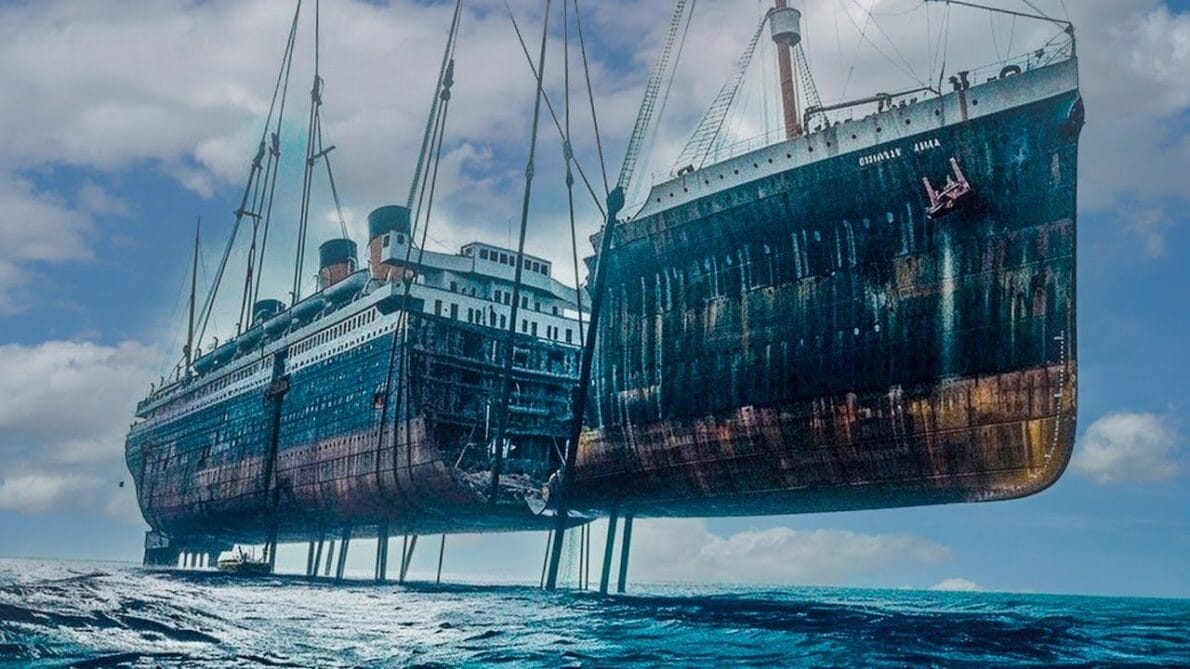
Scientists Propose Revolutionary Methods To Recover The Titanic, Using Floatation Tanks To Lift The Sunken Giant From The North Atlantic Floor, Challenging The Limits Of Engineering In An Unprecedented Mission More Than A Century After Its Tragic Loss.
The RMS Titanic, resting over 12,500 feet, about 3.8 km deep in the North Atlantic, may finally leave its seabed thanks to human ingenuity. After colliding with an iceberg on April 15, 1912, and sinking on its maiden voyage. Today, scientists propose a bold approach to recover the Titanic: using floatation tanks.
This idea involves attaching large containers filled with air to the hull of the wreck, creating enough upward force to bring it to the surface. The theoretical simplicity of the method contrasts with the practical complexity, given the enormity of the Titanic, with its 269.9 meters in length and 46,000 tons in weight. Overcoming the extreme pressure at the depths of the ocean and ensuring a balanced distribution of buoyancy are just some of the monumental challenges.
To Lift The Titanic From The Seafloor, Large Floatation Tanks Are Needed
To execute the plan, custom floatation tanks would be necessary, capable of withstanding pressures of about 5,500 pounds, almost 2.5 tons, more than double the pressure in a car tire, due to the water pressure above. Additionally, the implementation requires advanced technology to accurately position and secure the tanks to the wreckage, which is fragmented into two large sections separated by 610 meters.
-
Historic bankruptcy of Centauro shocks the market, and the century-old company puts more than 500,000 products, machines, and complete infrastructure up for online auction.

-
New shoe factory in Ceará is expected to create 400 jobs and strengthen the local economy.

-
No one imagined it, but a mixture of sawdust with a mineral that fights fires surprises scientists with a result that changes the course of fire-resistant construction.

-
From empty land to a high-end house, wooden construction uses a lightweight system, metal structure for the foundation, ventilated ceramic cladding, and special windows to create an efficient and comfortable living space throughout the year.

The operation would be meticulously monitored, requiring a massive amount of compressed air to displace the water and elevate the Titanic. Remotely operated vehicles and specialized divers would play crucial roles in the installation and maintenance of the tanks, facing the challenge of working in a hostile and unpredictable environment. The vision of recovering the Titanic pushes the limits of modern engineering and captures global imagination, promising one of the most spectacular maritime rescue missions in history.
The Other Proposed Method Is Freezing With Liquid Nitrogen
The liquid nitrogen freezing method involves creating a containment structure around the Titanic wreck, followed by pumping liquid nitrogen to rapidly freeze the surrounding water, effectively turning the ship into a massive block of ice. This approach faces significant challenges, such as the need for a tremendous amount of liquid nitrogen to generate the cold needed to encapsulate an object as large as the Titanic, which is over 300 meters long and weighs 46,000 tons.
Building a metal mesh around the wreck to contain the ship and protect its fragile structure is a complex operation, and there are also concerns about the environmental impact on the delicate marine ecosystem. Frankly, transporting such a large quantity of liquid nitrogen to the seabed, overcoming the high pressure, and maintaining the nitrogen in its liquid form while being pumped to the site are enormous logistical and technical challenges. These factors make the freezing method with liquid nitrogen a theoretically possible option, but extremely challenging in practice.










-

-

-

-

-

12 pessoas reagiram a isso.