





 Portuguese
  English
  Spanish
  5 min of reading
  0 comments


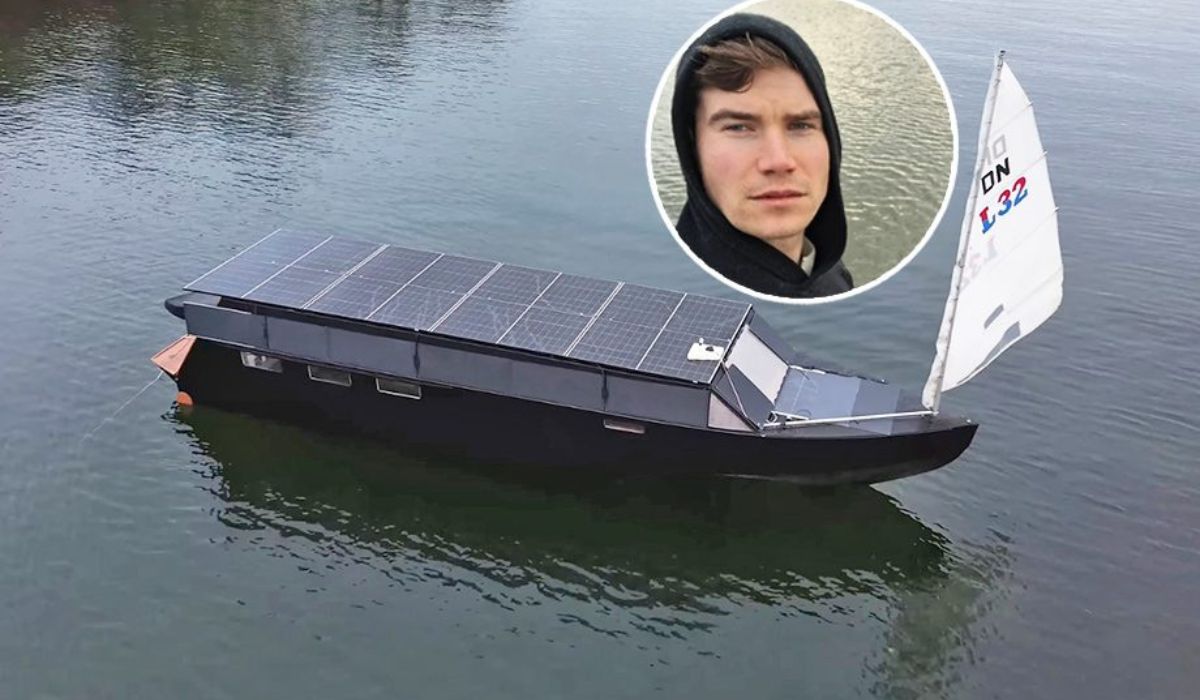
Project combines living on board, solar energy, and long-distance navigation on an 11-meter vessel that has been tested in Europe and presented to the public by the creator in videos published online.
Solar boat Helios-11 and the autonomous navigation proposal
A Finn documenting his routine on the True North Yachts channel has turned the idea of sailing without fossil fuel into a livable prototype.
Named Helios-11, the 11-meter boat was built by Lukas over 200 days and combines solar panels, an electric motor, and a sail for journeys with less dependence on external support.
In the creator’s publications, the vessel appears as his home and as a testing platform for a navigation model focused on autonomy at sea.
-
Neurologist Richard Restak issues a severe warning to all people over 65: there is a daily habit he recommends completely eliminating from your life because it is destroying your neurons and accelerating memory loss.

-
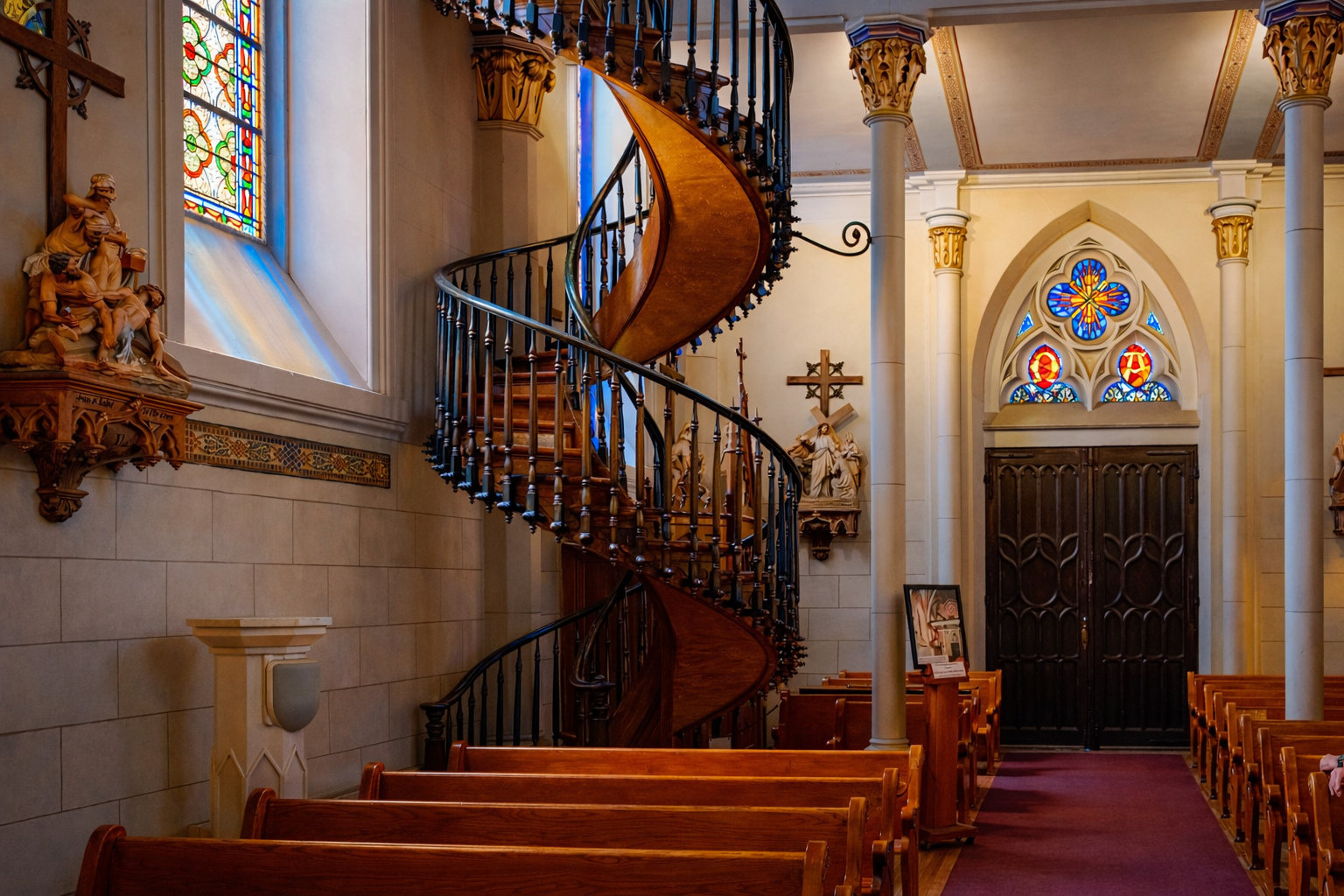
With 6.1 meters and 33 steps, the spiral staircase of the Loretto Chapel in the United States gained fame worldwide for making two complete 360-degree turns without a central support.
-
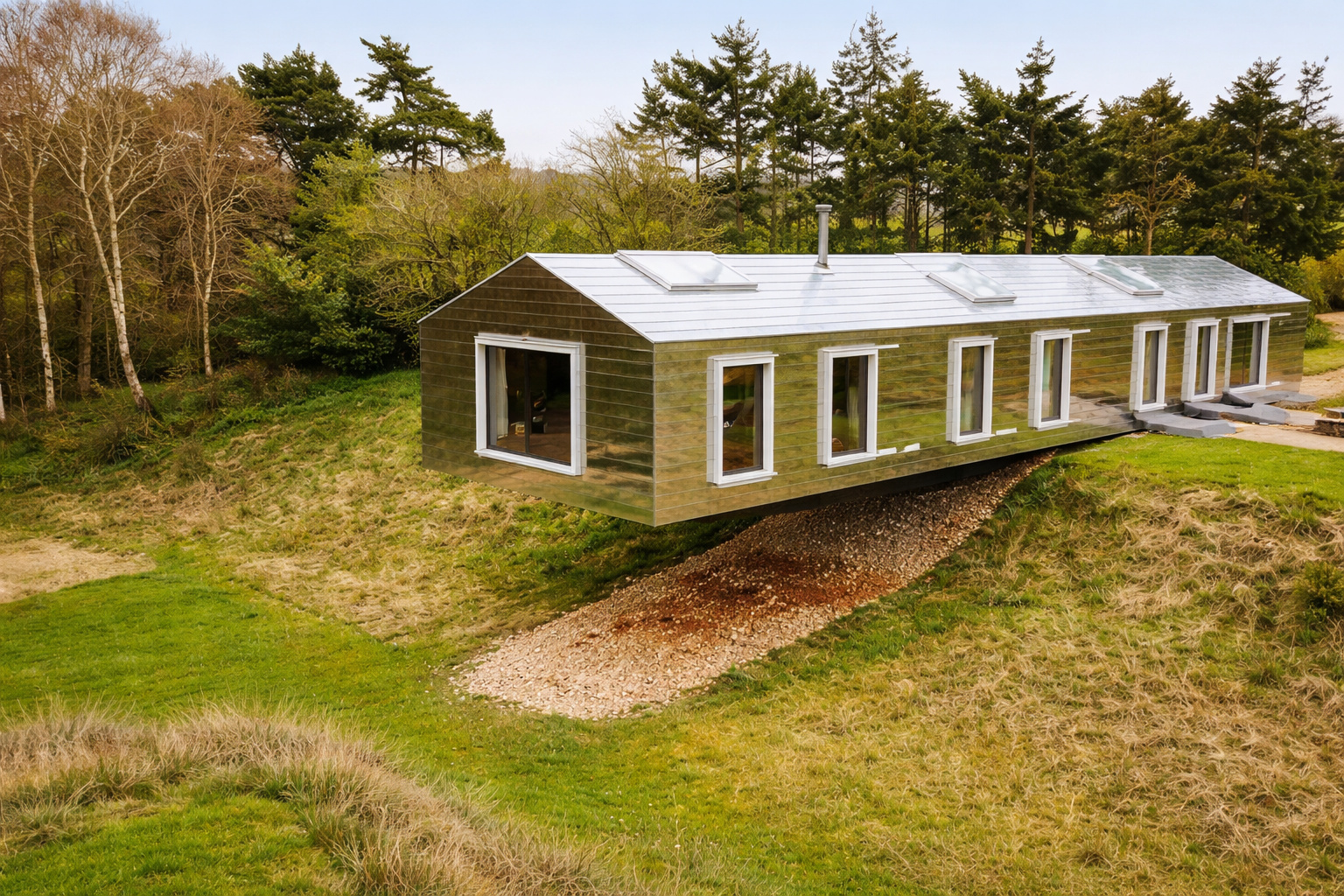
With 30 meters in length, a house in England appears to float in the air and surprises engineers and architects around the world due to its visual effect and construction method suspended over sloped terrain.
-
Called El Inmortal, the building that survived earthquakes in Ecuador seems to balance, defies the laws of physics, and impresses with its bold construction structure.

The proposal gained visibility because Lukas himself describes the project as a “solar-powered explorer yacht with infinite autonomy”.
In the material released by him, the term is used to define a vessel designed to operate without conventional refueling, supported by solar generation and, when necessary, by the sail.
So far, the concept has been presented by the project’s author and recorded in the channel’s videos, where he shows tests, adjustments, and segments of the journey southward in Europe.
How the solar-powered boat was built
The construction of Helios-11, according to Lukas, took about six months in a shed.
During this process, he claims to have prioritized weight reduction without compromising structural integrity.
The choice for a lighter vessel, without many of the items typically found on larger leisure boats, appears as one of the project’s axes.

According to the creator’s public accounts, this configuration helps improve the efficiency of the electric system and the utilization of energy captured by the solar panels.
The propulsion system combines light panels and a 6-kilowatt electric motor.
On sunny days, Lukas reports that the boat can reach up to 8.5 knots, with a cruising speed of around 7 knots.
During periods of lower sunlight, a common condition in parts of northern Europe, the sail is used as a complementary resource.
According to the creator, it can also work in conjunction with the motor to enhance propulsion.
The proposal, therefore, combines different sources of movement within the same experimental project.
What does the “infinite autonomy” mentioned by the creator mean
This configuration helps explain why Helios-11 was designed as an exploration vessel.
Instead of prioritizing high-end finishes or heavier equipment, Lukas focused the project on energy efficiency, operational autonomy, and the possibility of living on board.
The prototype, at this stage, serves as a practical test of a vessel capable of sailing for long periods without relying on fossil fuel.
In the material released by the creator, the term “infinite autonomy” does not appear as a formal technical certification.
The term is presented as the idea that the boat can continue its journey without refueling diesel or gasoline, as long as the energy generated and managed on board is sufficient to maintain operation.

Tests of Helios-11 in Europe and use as housing
The practical experience of Helios-11 has helped expand the reach of this proposal.
In videos published after the launch, Lukas shows the boat moving outside Finland and reports on the vessel’s performance in European canals and on the route towards France and Spain.
In one of the updates, he records the passage towards the Rhône River, used as a test for consumption, stability, and routine on board.
Although it is 11 meters long, the Finn claims that Helios-11 was designed for long journeys and even for ocean crossings.
However, there is no public confirmation that a transatlantic trip has been made by the prototype.
What has been documented so far is navigation in European segments and the continuous use of the boat as a testing platform in real operation.
Cost of the project and next plans of True North Yachts
According to Lukas, the accumulated cost of Helios-11 reached US$ 30,000.
Based on the commercial exchange rate of the dollar at the end of March 2026, this amount corresponds to about R$ 170,000, and not approximately R$ 160,000, as stated in versions that circulated in Brazil.
The project has begun to attract attention for combining independent construction, low-consumption solutions, and a testing routine open to the public on YouTube.
On the True North Yachts channel, which has over 13,000 subscribers, Lukas publishes records from the assembly phase to the challenges faced during navigation.
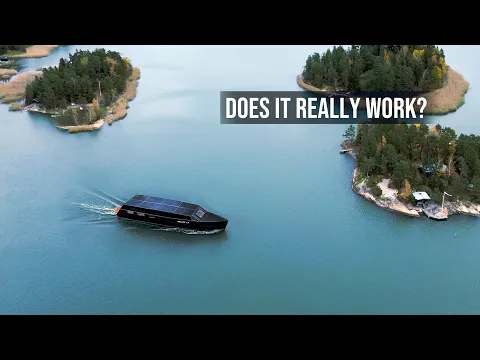

As a result, Helios-11 has been followed by people interested in electric boats, living on board, and alternatives for nautical mobility with less use of fossil fuels.
The project’s impact has also opened up space for new plans.
The creator has already indicated that he intends to move on to a larger vessel, with more professional construction and increased energy generation capacity.
Among the possibilities publicly mentioned are larger models and configurations similar to a catamaran, with more usable area for the installation of solar panels and increased power.
Project remains in practical validation phase
For now, Helios-11 continues as a prototype in real use.
The boat has already demonstrated, in the creator’s own publications, that it can navigate, serve as housing, and operate with a system based on solar energy and sail support.
At the same time, the public history of the vessel indicates that the project is still in the practical validation phase, with adjustments made throughout the journey and solutions under study for future versions.
In this context, Lukas’s experiment has been presented by him as an attempt to practically test the limits and possibilities of a lightweight, electric vessel designed for long distances.






Seja o primeiro a reagir!