





 English
  Francês
  Alemão
  Italiano
  Japonês
  Norueguês
  Portuguese
  Spanish
  6 min of reading
  0 comments


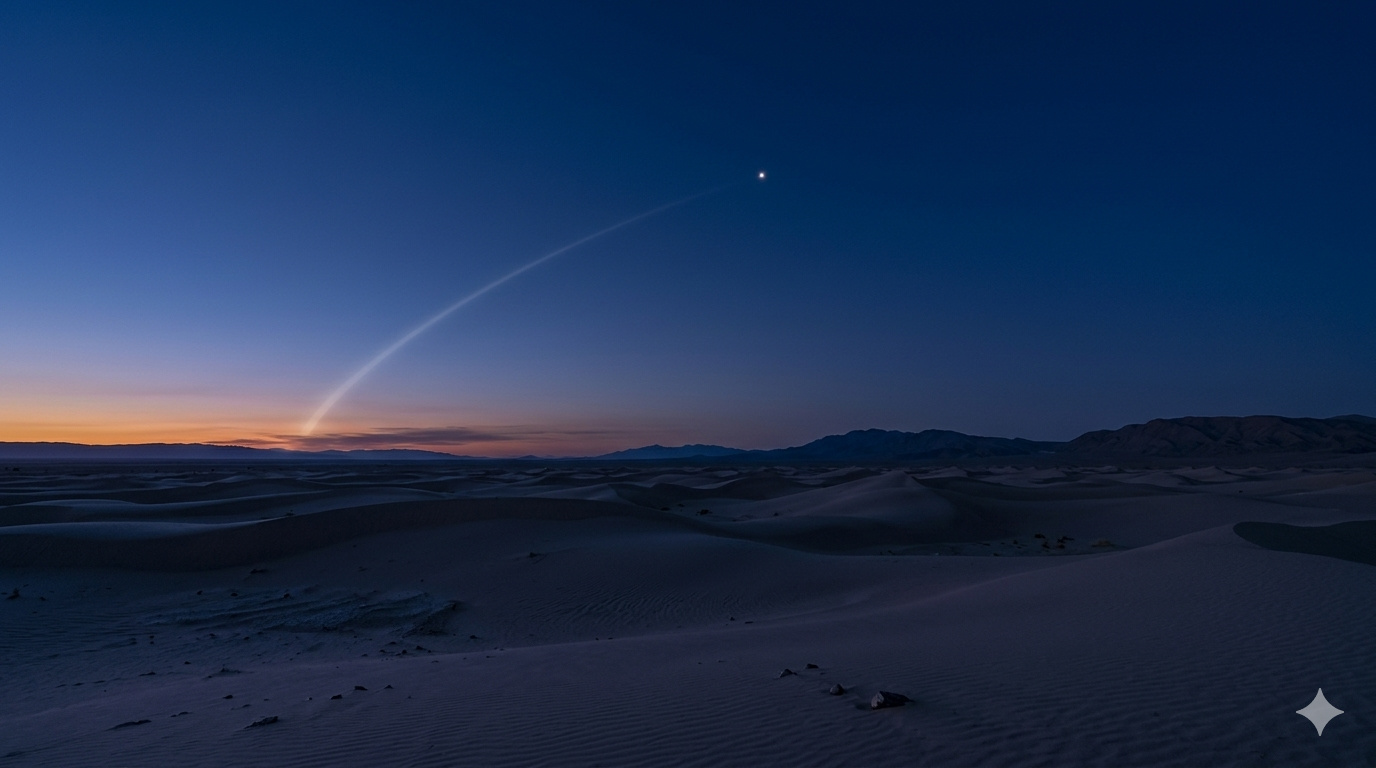
In 2028, Mercury will have one of the largest elongations of the century and will be visible at sunset for a few days, in a rare opportunity for observation.
The year 2028 will mark one of the most favorable moments to observe the planet Mercury from Earth. According to astronomical data based on ephemerides calculated by systems such as the NASA JPL Horizons and records of planetary elongations compiled by astronomical observatories, the planet will reach multiple significant elongations throughout the year, including an event on September 6, 2028, that reaches about 27.1° of angular distance from the Sun — close to the maximum possible limit of its orbit.
This phenomenon, known as maximum elongation, occurs when Mercury reaches the greatest angular distance from the Sun, allowing it to be visible on the horizon shortly after sunset or before daybreak. Under normal conditions, the planet is extremely difficult to observe due to its proximity to the Sun, which obscures its visibility.
In 2028, however, the orbital geometry between Earth, Mercury, and the Sun will create a sequence of favorable configurations, with elongations exceeding 25° at certain times, significantly increasing its visibility in the twilight sky. This means that the planet can be seen for a longer time after sunset and in a higher position on the horizon, greatly enhancing the chances of observation even with the naked eye.
-
350-year mystery may have been solved: remains of a soldier who inspired the hero of The Three Musketeers found beneath a church in the Netherlands.

-
NASA photographed a nearly perfect square with 3 km sides on Mars, 13 times larger than the Great Pyramid of Giza, but the official explanation is natural erosion; still, no one has explained why the four sides have almost identical lengths.

-
Starlink breaks the barrier of 10,000 satellites in orbit and takes its expansion to an unprecedented level, with a direct impact on global internet, technological competition, and the race for space.

-
Japan finds an alternative to oil amid rising prices by transforming ocean balance into electricity with a new technology that maintains efficiency even when the sea changes.


What is maximum elongation and why does this phenomenon determine when Mercury can be seen from Earth
Maximum elongation is a fundamental concept in observational astronomy. It represents the largest angle between an inner planet — such as Mercury or Venus — and the Sun, as seen from Earth.
As Mercury orbits the Sun at an average distance of just 58 million kilometers, it never appears completely far from the star in the sky. This limits its visibility to short periods during twilight.
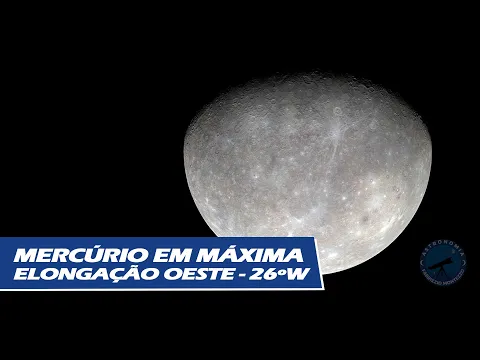
When maximum elongation occurs, this angle can reach about 18° to 28°, depending on the planet’s orbital position. The larger this value, the longer Mercury will remain visible after sunset.
The event in 2028 stands out precisely because it combines a high elongation with favorable geometric conditions, allowing the planet to reach a higher position in the sky than usual, which is rare on human observation scales.
Rare orbital configuration between Earth, Mercury, and the Sun increases visibility time on the horizon
Mercury’s orbit is highly elliptical, meaning its distance from the Sun varies significantly over time. This characteristic directly influences the elongation and visibility of the planet.
Additionally, the tilt of Mercury’s orbit relative to the plane of the Earth means that some elongations are much more favorable than others. In 2028, these variables align unusually.

The combination of Mercury’s orbital position and the tilt of the ecliptic relative to the Earth’s horizon will cause the planet to remain visible for a longer interval after sunset, especially at certain latitudes.
This type of alignment does not occur every year with the same intensity, making the event a limited and valuable opportunity for astronomical observation.
Why is Mercury considered the most difficult planet to observe with the naked eye in the Solar System
Although it is one of the five planets visible to the naked eye, Mercury is often cited as the most difficult to observe. This is due to a combination of physical and geometric factors.
First, its proximity to the Sun means it always appears close to the horizon, where the Earth’s atmosphere is denser and residual sunlight is still intense. This reduces contrast and makes visualization difficult.

Second, the planet has a relatively lower brightness compared to Venus, for example, which is extremely bright and easy to identify.
Finally, the time available for observation is very short. In many cases, Mercury remains visible for only 20 to 30 minutes before disappearing on the horizon. The 2028 elongation, by increasing this interval and raising the planet in the sky, partially reduces these limitations, making the phenomenon particularly relevant.
A few days window reinforces the rare nature of the event and requires attention to the astronomical calendar
One of the most important aspects of this type of phenomenon is its limited duration. Even in favorable elongations, Mercury’s visibility occurs within a window of a few days.
This happens because the planet moves quickly in its orbit, completing a full revolution around the Sun in just 88 days. As a result, its relative position changes rapidly in the sky.
During the maximum elongation of 2028, there will be an ideal period when Mercury will be sufficiently far from the Sun and still visible after sunset. Outside of this window, it will visually approach the star again, becoming difficult to observe once more.
This behavior reinforces the importance of following astronomical calendars and specific forecasts to identify the exact days of best visibility.
Observation of Mercury contributes to studies on rocky planets and orbital dynamics
Although visual observation of Mercury is often associated with amateur astronomy, the planet also plays an important role in scientific studies.
Its orbit and behavior were fundamental to the development of Albert Einstein’s general theory of relativity, especially regarding the precession of perihelion.
Additionally, Mercury is one of the best examples of a rocky planet with extreme characteristics, including temperature variations that can exceed 400 °C during the day and drop drastically at night.
Mission such as MESSENGER, concluded in 2015, and the ongoing BepiColombo mission provide detailed data about its surface, composition, and magnetic field. Visibility events like that of 2028 help maintain public and scientific interest in the planet, connecting simple observations to complex phenomena in physics and astronomy.
The 2028 event reinforces how orbital cycles determine when and how we observe the sky
The observation of Mercury at maximum elongations is a clear example of how celestial movements determine the way we see the universe. Unlike stars and constellations, which maintain relatively fixed positions over time, planets follow dynamic trajectories that constantly alter their position in the sky.
These changes are governed by precise physical laws, but their practical effects — such as the visibility of Mercury — only become evident at specific moments, such as that expected in 2028.
This type of event highlights the relationship between orbital mechanics and astronomical observation, showing how seemingly simple phenomena depend on complex and rare configurations.
Mercury will appear in the sky at sunset in 2028 and will disappear again after a brief and unrepeatable window
The maximum elongation of Mercury in 2028 represents a rare opportunity to observe one of the most difficult planets in the Solar System. For a few days, it will cease to be an almost invisible point near the Sun to become an observable object on the horizon at sunset.
This temporary transformation reinforces the dynamic nature of the sky and the importance of astronomical events that connect science, observation, and human curiosity.
After this brief period, Mercury will visually approach the Sun again, disappearing once more in the brightness of twilight and concluding another orbital cycle that will only repeat under similar conditions years later.
The 2028 window, therefore, is not just a visual event — it is a clear example of how the movement of celestial bodies creates rare opportunities that depend on precision, timing, and alignment in space.







Seja o primeiro a reagir!