





 English
  Francês
  Alemão
  Italiano
  Japonês
  Norueguês
  Portuguese
  Spanish
  6 min of reading
  0 comments


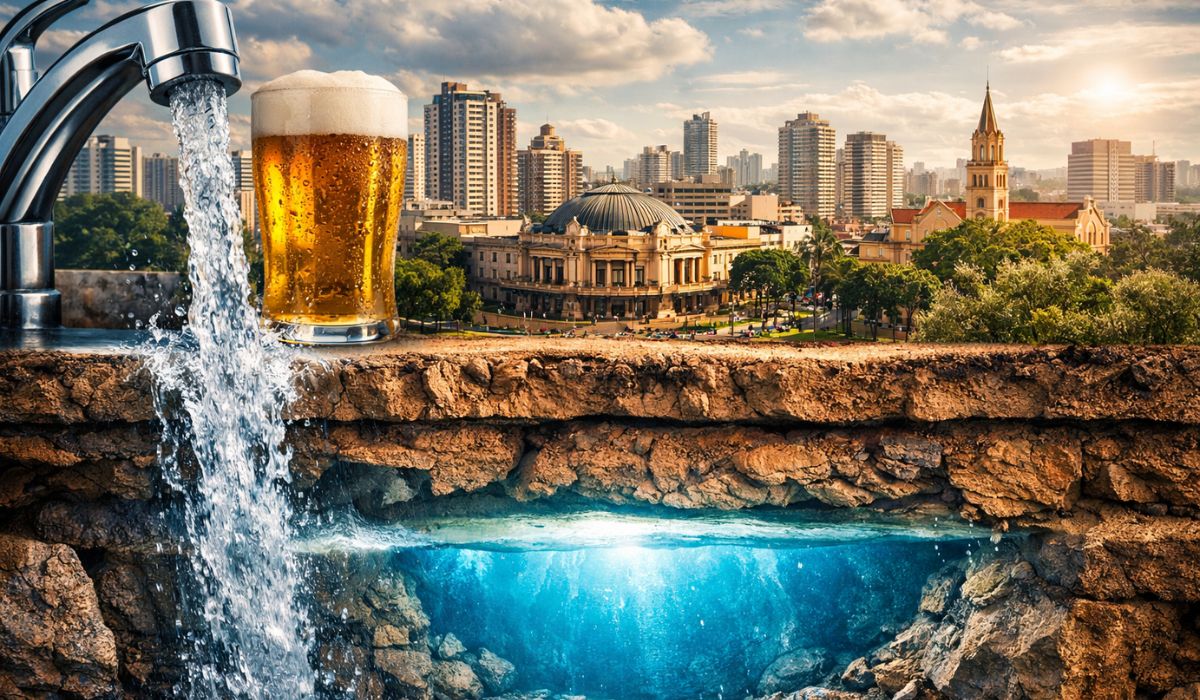
Ribeirão Preto brings together underground water supply, outstanding social indicators, brewing tradition, environmental preservation, and an innovation hub, in a combination that helps explain the city’s prominence in the interior of São Paulo.
When a resident of Ribeirão Preto turns on the tap, part of the water that reaches homes may have started its underground journey about 230,000 years ago.
This data was obtained by researchers from Unesp in partnership with the International Atomic Energy Agency and published by the FAPESP Agency.
With an estimated population of 731,639 inhabitants in 2025, Ribeirão Preto has characteristics that are uncommon among large Brazilian cities.
-
Seen from space, a colossal ‘Y’ cuts through the largest desert in China, blending a jade-filled river, red and white mountains, and revealing the absurd scale of the transformation of the Taklamakan surrounded by a green wall with billions of trees.

-
The Pacific Ocean reveals what the cliffs of Big Sur have hidden for millennia: Pfeiffer Beach, in California, features swirling purple sand formed by garnet crystals and displays a stone arch that is illuminated by the sun in winter for just a few days each year.

-
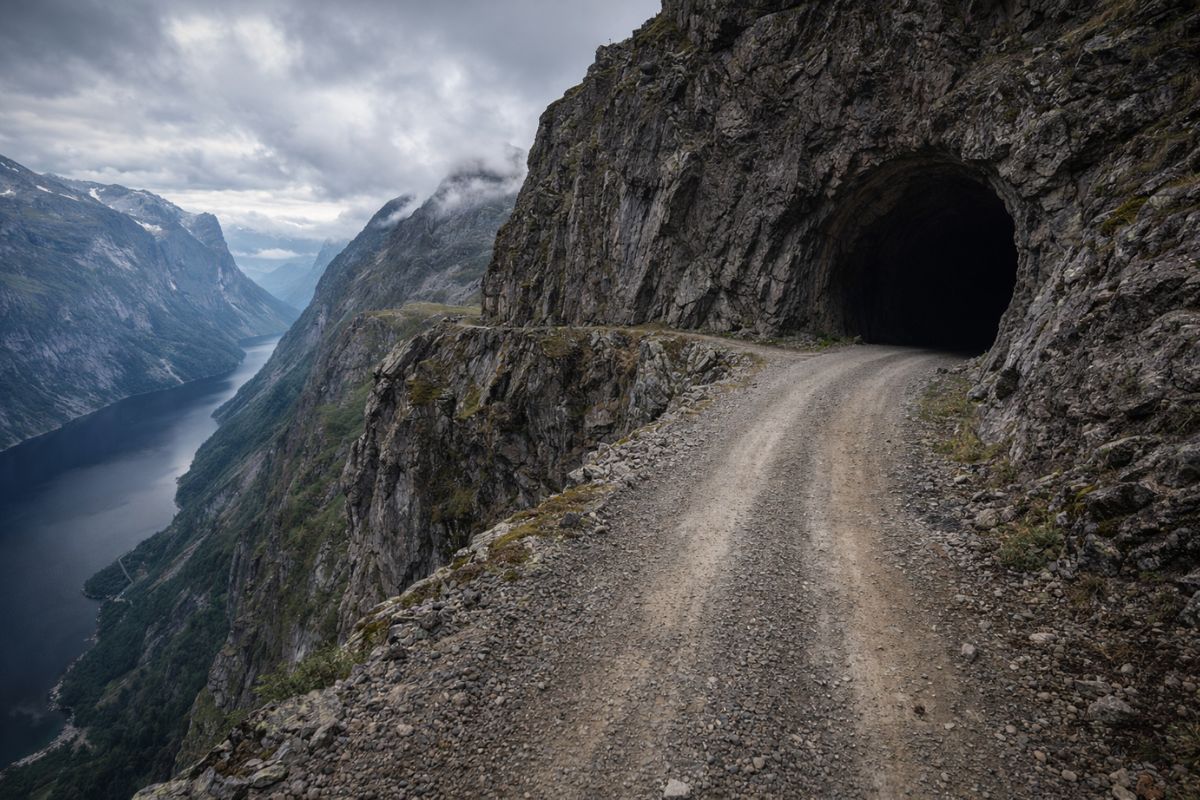
Aursjøvegen in Norway is a 100-kilometer gravel road that crosses chasms and dark tunnels carved into the rock at an altitude of 947 meters in the fjords and is only open for four months a year.
-
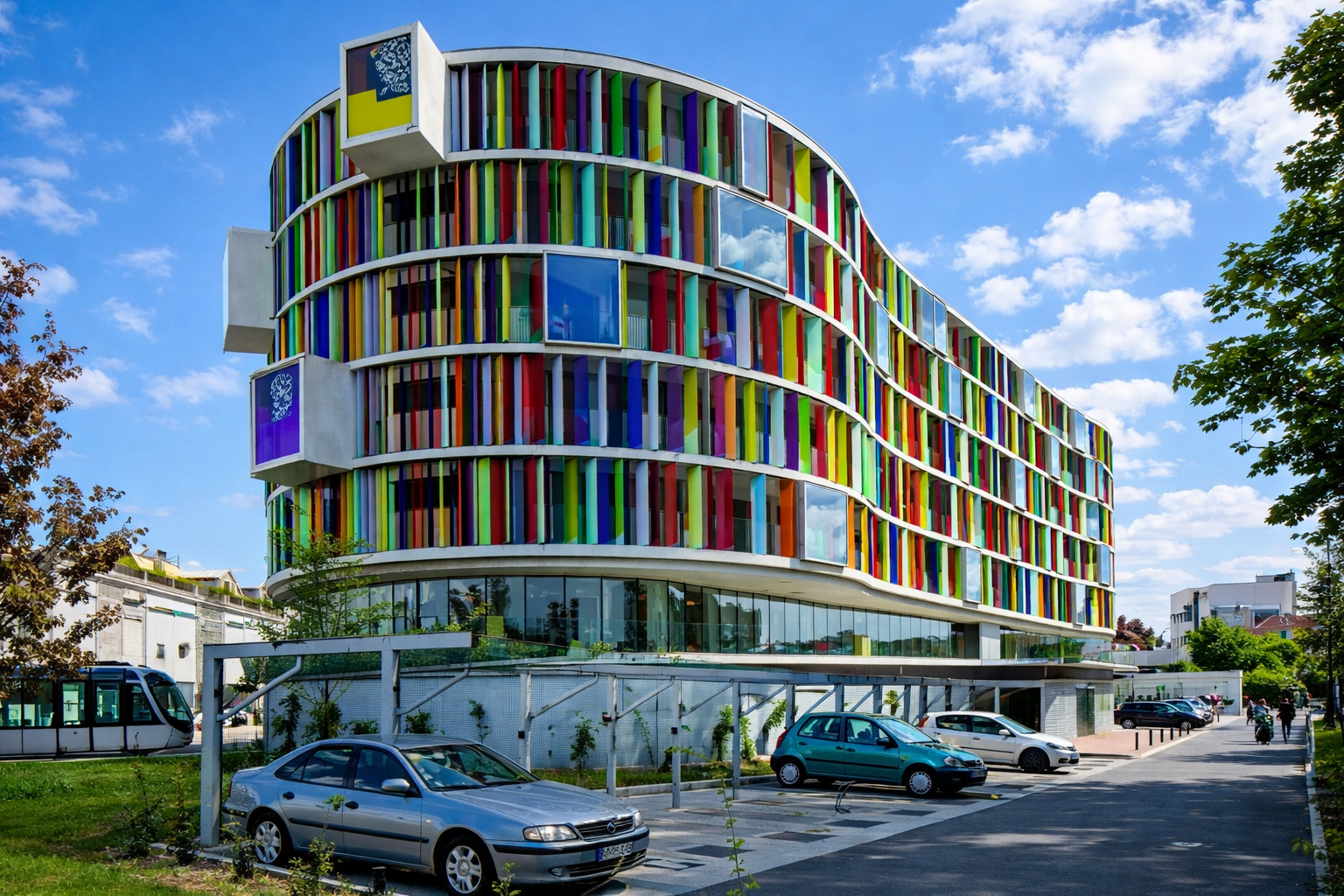
With about 4,000 m², the building constructed in a traditional neighborhood in France looks like a rainbow, has a colorful facade, mixes vibrant glass, and creates one of the most unusual visuals in Bordeaux.

The municipality is entirely supplied by underground water from the Guarani Aquifer and ranks among the national highlights in social indicators.
Guarani Aquifer and supply in Ribeirão Preto
Ribeirão Preto is recognized by public agencies and technical studies as one of the most well-known cases of using the Guarani Aquifer System for urban supply.
In practice, this means that the water consumed by the population is drawn from deep wells installed in the underground system.
Data from the city hall and studies on the subject indicate that the municipality is the largest in the country supplied exclusively by underground water.
This supply model places Ribeirão Preto in a different position from most Brazilian cities, which rely on rivers, reservoirs, or mixed systems.
Besides its underground origin, the age of some of the water also draws attention in scientific studies.
Research supported by FAPESP identified, based on the analysis of the krypton-81 isotope, waters with a residence time of up to about 230,000 years in the aquifer.
In practical terms, this indicates that a fraction of this resource circulated through geological formations for millennia before being captured.
This data has been used by researchers to gauge the temporal scale of the system’s renewal and the need for controlled use.
Nonetheless, the topic is not treated solely as a natural asset.
Recent studies and official documents from the municipality point to the need for more careful management of the aquifer and alternatives to enhance water security in the coming years.
This debate is not new in the city.
Ribeirão Preto has been dealing with discussions about the lowering of the underground water level and proposals to diversify supply sources in light of urban growth for decades.
Ribeirão Preto between coffee, urbanization, and economic growth
Before being called the Brazilian California, Ribeirão Preto consolidated its prominence with coffee.
Between the end of the 19th century and the early decades of the 20th century, coffee production boosted the local economy and financed urban expansion.
During this period, the city gained notable buildings and began to be associated with an urban standard that was often compared to that of more developed centers at the time.
It was in this context that the nickname “Petit Paris” emerged, linked to architecture, cultural life, and the economic weight of the region.
The expression “Brazilian California” was popularized later and came to synthesize the image of local prosperity.
The nickname appears in journalistic records and promotional texts linked to the economic performance of the municipality and the region.
Over time, the city ceased to be recognized solely for its coffee production.
Today, the local economy encompasses activities related to agribusiness, health, higher education, commerce, services, and innovation.
Quality of life in Ribeirão Preto in the IPS 2025
In the most recent social portrait, Ribeirão Preto appeared among the best results in the country in the 2025 Social Progress Index.
The municipality achieved 69.57 points and ranked 15th nationally among the 5,570 evaluated municipalities.
The index considers indicators related to basic human needs, foundations of well-being, and opportunities.
Therefore, the result is often used to measure quality of life beyond income and economic activity.
This performance aligns with other established indicators.
In the Human Development Atlas, Ribeirão Preto records HDI of 0.800, classified as very high.
In the area of sanitation, historical data from the municipality indicate broad coverage of water supply and sewage systems.
This set of factors helps contextualize the result obtained in the IPS.
Another point frequently cited in studies and surveys about the city is the structure of health and higher education.
The USP campus and the Hospital das Clínicas of the Ribeirão Preto Medical School support a network of care, research, and training with regional and national reach.
Institutions linked to the university also highlight the complex’s work in high-complexity areas, including transplants and research in cell therapy.
This profile reinforces the city’s centrality as a hub for specialized services.
Craft beer in Ribeirão Preto and official recognition
The relationship of Ribeirão Preto with beer spans over a century.
The industrial tradition dates back to the early 20th century and gained popular visibility with historic establishments in the city center, including the Choperia Pinguim, opened in 1936.
In recent decades, the municipality has also become associated with the rise of craft breweries.
The sector has helped renew this tradition and has become part of the city’s tourist and economic image.
The recognition reached the legal level on July 31, 2024, when Law No. 18,006 was enacted, declaring Ribeirão Preto the “Capital of Draft Beer and Craft Beers” in the state of São Paulo.
The formalization consolidated a title that had already been adopted by public agents and the productive sector.
Besides the symbolic aspect, the measure reinforced the local identity linked to the production and consumption of beer.
In a survey released by Booking.com in 2021, Ribeirão Preto was included among the most recommended destinations by Brazilians for beer tasting.
This data appears in promotional material from the platform and helps explain the municipality’s association with this tourist segment.
Mata de Santa Teresa and innovation in the interior of São Paulo
The image of a regional center coexists with areas of environmental preservation within the urban perimeter.
The Ecológica Station of Ribeirão Preto, known as Mata de Santa Teresa, has 154 hectares and is considered strategic for conservation and research.
The area emerged as a reserve in 1957 and was transformed into an ecological station in 1984.
In a region marked by agricultural and urban occupation, the fragment is pointed out by environmental agencies as a significant remnant of native vegetation.
On another front, Ribeirão Preto also houses one of the most well-known innovation environments in the interior of São Paulo.
Located on the USP campus, the SUPERA Park occupies 378,000 square meters and brings together more than 120 businesses in its ecosystem, according to information from the institution itself.
The incubator linked to the park appears in institutional materials among the best positioned in Latin America in the UBI Global ranking.
The complex has also received investment for the implementation of the Health to Business Center, a project aimed at connecting academic research and companies in the health sector.
These elements help shape the current profile of the city.
Ribeirão Preto maintains historical significance in agriculture but has also expanded its presence in services, education, health, technology, and tourism linked to gastronomy and beer.
Below the surface, the city maintains a direct relationship with the Guarani Aquifer, one of the largest underground freshwater reserves in the world.
On the surface, it combines historical heritage, urban expansion, and diversified economic activities, in a scenario that helps explain its prominence in the interior of São Paulo.








Seja o primeiro a reagir!