





 English
  Francês
  Alemão
  Italiano
  Japonês
  Norueguês
  Portuguese
  Spanish
  5 min of reading
  0 comments


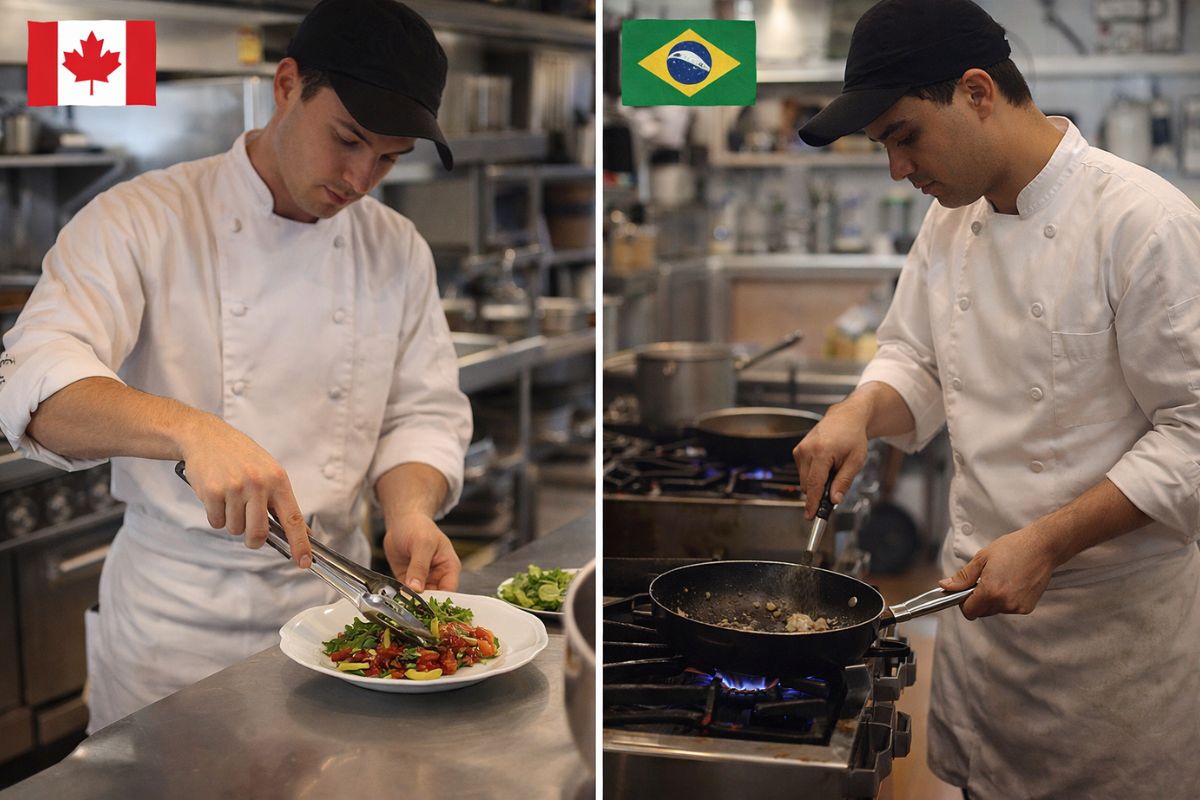
A beginner cook in Canada starts earning between 15 and 25 Canadian dollars per hour, plus tips that can exceed a thousand dollars monthly. In Brazil, the same professional earns an average of R$ 1,797 per month, equivalent to R$ 9 per hour, in kitchens with temperatures nearing 50°C and a turnover of 74%.
Being a cook in Brazil and Canada are experiences so different that they seem like distinct professions. In Canada, a cook with no experience starts earning 16 Canadian dollars per hour, with quick adjustments to 17 and then 19 dollars based on performance. Adding tips, the monthly income exceeds 4,000 Canadian dollars. In Brazil, a kitchen assistant earns an average of R$ 1,797 per month, practically the minimum wage. Dividing by 25 working days and 8 hours of work, the hourly rate is about R$ 9.
The salary difference is brutal, but it is not the only chasm between the two countries. In Brazil, a cook’s shift can exceed 12 hours, with reports of shifts lasting up to 15 hours in kitchens that approach 50°C. The turnover in the Brazilian restaurant sector reached 74.3% in the first half of 2024, more than double the average in the service sector. Of the workers who left restaurants during the pandemic, 62% do not want to return. The scenario raises an urgent question: why does no one want to be a cook in Brazil anymore?
The salary of a cook in Brazil: R$ 9 per hour in a sector that keeps losing people
The restaurant sector in Brazil directly employs 4.94 million people in over 1.3 million establishments, of which 94% are microenterprises. Bakeries, snack bars, bars, buffets, and takeout services make up the majority of these businesses, almost always with tight profit margins.
-
Seen from space, a colossal ‘Y’ cuts through the largest desert in China, blending a jade-filled river, red and white mountains, and revealing the absurd scale of the transformation of the Taklamakan surrounded by a green wall with billions of trees.

-
The Pacific Ocean reveals what the cliffs of Big Sur have hidden for millennia: Pfeiffer Beach, in California, features swirling purple sand formed by garnet crystals and displays a stone arch that is illuminated by the sun in winter for just a few days each year.

-
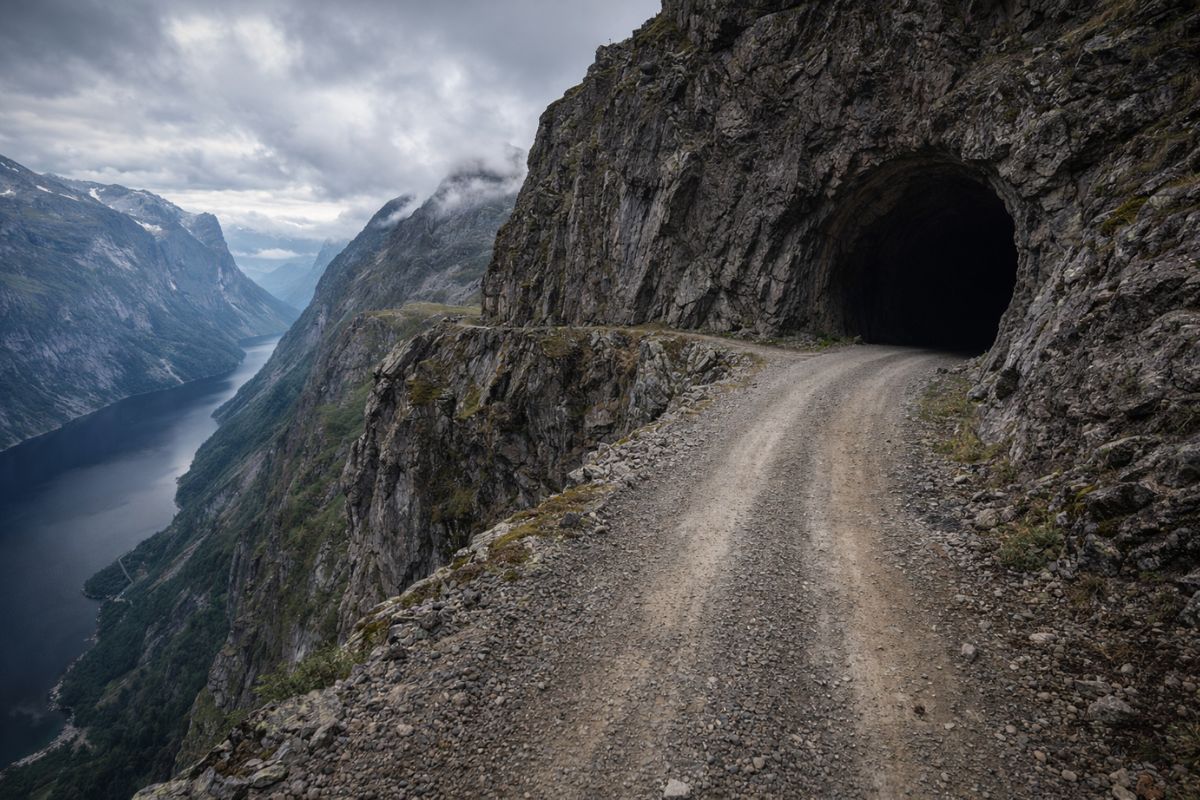
Aursjøvegen in Norway is a 100-kilometer gravel road that crosses chasms and dark tunnels carved into the rock at an altitude of 947 meters in the fjords and is only open for four months a year.
-
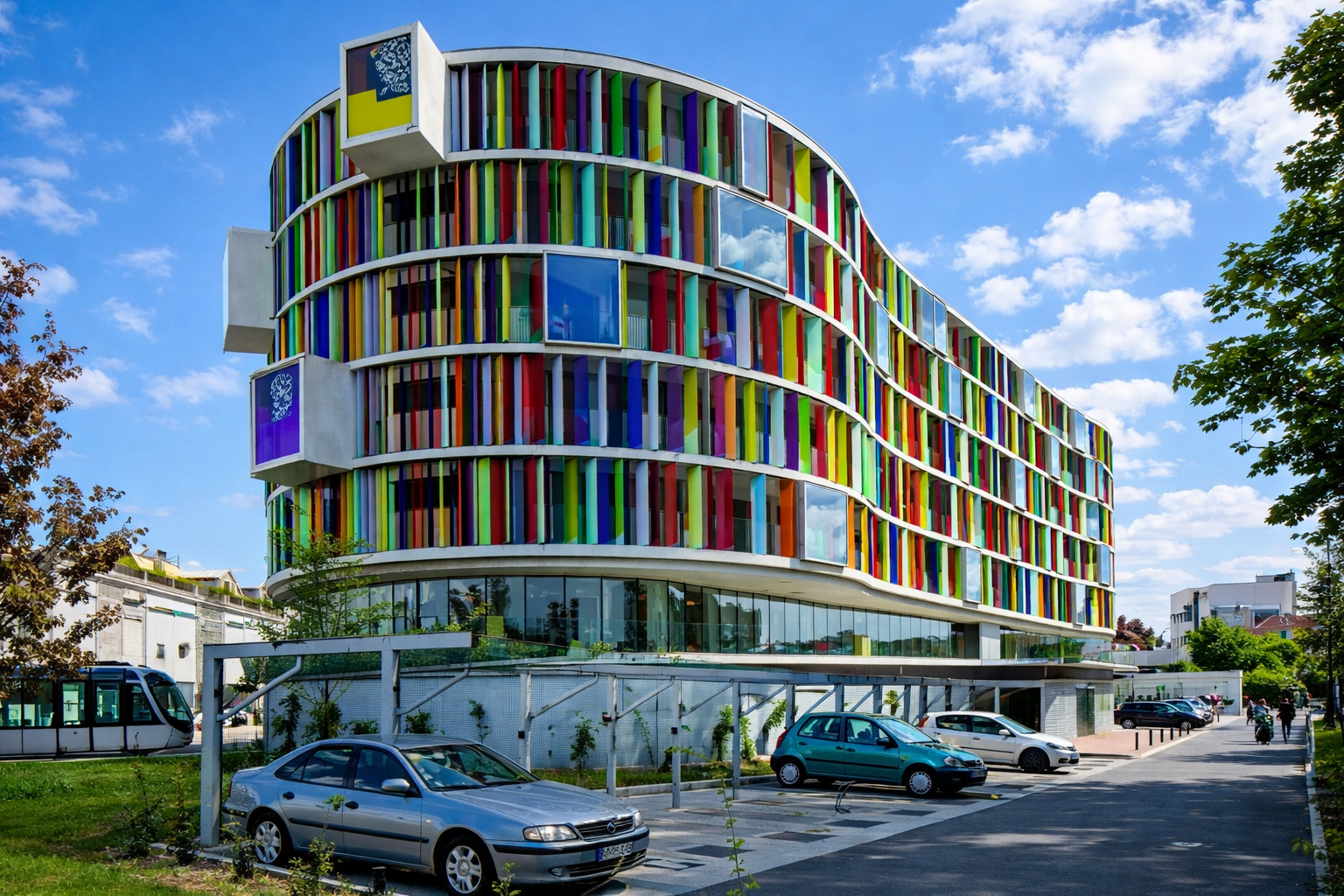
With about 4,000 m², the building constructed in a traditional neighborhood in France looks like a rainbow, has a colorful facade, mixes vibrant glass, and creates one of the most unusual visuals in Bordeaux.

For the cook working in these places, the starting salary is an average of R$ 1,797. Even with experience, the salary range for cooks in Brazil rarely exceeds R$ 2,500 to R$ 3,500. The ceiling is low and the ladder is short.
In Curitiba, the minimum wage for cooks was R$ 1,585 in 2022 and rose to R$ 1,889 in 2025, basically the accumulated inflation, with no real gain in purchasing power. With this salary, a cook in Brazil cannot even survive with dignity in a capital city.
And the comparison with alternatives like app delivery makes everything worse: a delivery person from iFood had an average gross earning of R$ 28 per hour in 2024, more than triple what a registered cook earns.
Cook in Canada: fair salary, real tips, and career progression
In Canada, the official government panel, the Job Bank, shows that cooks typically earn between 15 and 25 Canadian dollars per hour, depending on the region. A beginner cook starting at 16 dollars can reach 19 in a few months, simply by showing dedication and reliability.
In addition to the base salary, tips genuinely supplement income: in some months, the extra amount can exceed a thousand Canadian dollars. In the end, the cook takes home more than 4,000 dollars per month.
The work is tough, the kitchen is hot, and the pressure exists as in any part of the world. But there is a fundamental difference: the cook in Canada is fairly compensated for the effort they put in.
The more they keep their head down and work, the more they earn. If they cover for a colleague, do overtime, or work weekends, the money follows. In Brazil, a cook who takes on multiple roles rarely sees a difference in their paycheck.
15-hour shifts, 50°C in the kitchen, and a culture of shouting: the reality of the Brazilian cook


The working conditions of a cook in Brazil go far beyond the low salary. Shifts exceeding 12 hours standing, in cramped spaces with temperatures reaching 50°C, are part of the routine.
The constant risk of cuts and burns is real, and after a certain hour, the cook is no longer working: they are just trying to survive the shift. And there is the social aspect that weighs heavily: weekends, holidays, and festive dates are the moments when everyone is living, and the cook is serving those who are living.
The culture within many Brazilian kitchens still treats shouting as a management tool. Chef Izabela Dolabela, a participant in the first edition of MasterChef Professional, reported that the environment is often toxic, with shouting, abuse of power, and overload.
In 2025, 41% of establishments identified signs of mental illness among their employees, and 45% of these cases resulted in absences. Chef Franklin, runner-up of MasterChef Professionals, published a manifesto calling for the regulation of the cooking profession and more dignified working conditions.
Why do Brazilian restaurants pay cooks so poorly
The answer lies in the math of restaurants. The average net profit of those that manage to operate with a positive balance did not exceed 10% in 2024. More than half of Brazilian restaurants operate at a loss. In October 2025, 23% had losses and 35% had overdue debts.
Raw materials increased by 6.3% in 2024, against a general inflation of 4.83%. Food becomes more expensive, but customers do not accept to pay proportionally more. The result is that less than R$ 0.10 remains from each real earned.
This tight accounting explains why cooks’ salaries do not rise. It is not just a matter of employer greed. The owner says they cannot pay more without going bankrupt. The cook says they cannot survive on just that. And both are telling the truth at the same time.
The sector is trapped in a structural dilemma that cannot be resolved with goodwill from one side alone. As long as the Brazilian economy does not grow enough to increase the population’s disposable income, restaurant margins remain tight and cooks’ salaries remain stagnant.
62% do not want to return: the pandemic changed the relationship between cooks and restaurants
The pandemic was a turning point for thousands of cooks in Brazil. The sector lost 1.2 million jobs during the health crisis. When the jobs returned, the workers did not. Of those who left, 62% stated they do not want to return.
Among those who are still in the field, more than half are considering changing careers in the next 12 months. And 90% of business owners in the sector find it difficult or very difficult to hire. There are vacancies, but no one is willing to accept the conditions offered.
The cook who left during the pandemic discovered that there are alternatives. App delivery, remote work, self-employment, or simply a job in another sector that pays the same but with less brutal conditions. When there is a guaranteed minimum and a real alternative, the cook can say no.
And sectors that historically pay poorly feel the impact first. Starting in May 2026, NR-1 will require companies to include psychosocial risks in occupational health management, which could force changes in kitchens. But a regulation does not change culture alone. What changes culture is management, fair compensation, and respect.
Have you ever worked as a cook?









Seja o primeiro a reagir!