





 Portuguese
  English
  Spanish
  4 min of reading
  0 comments


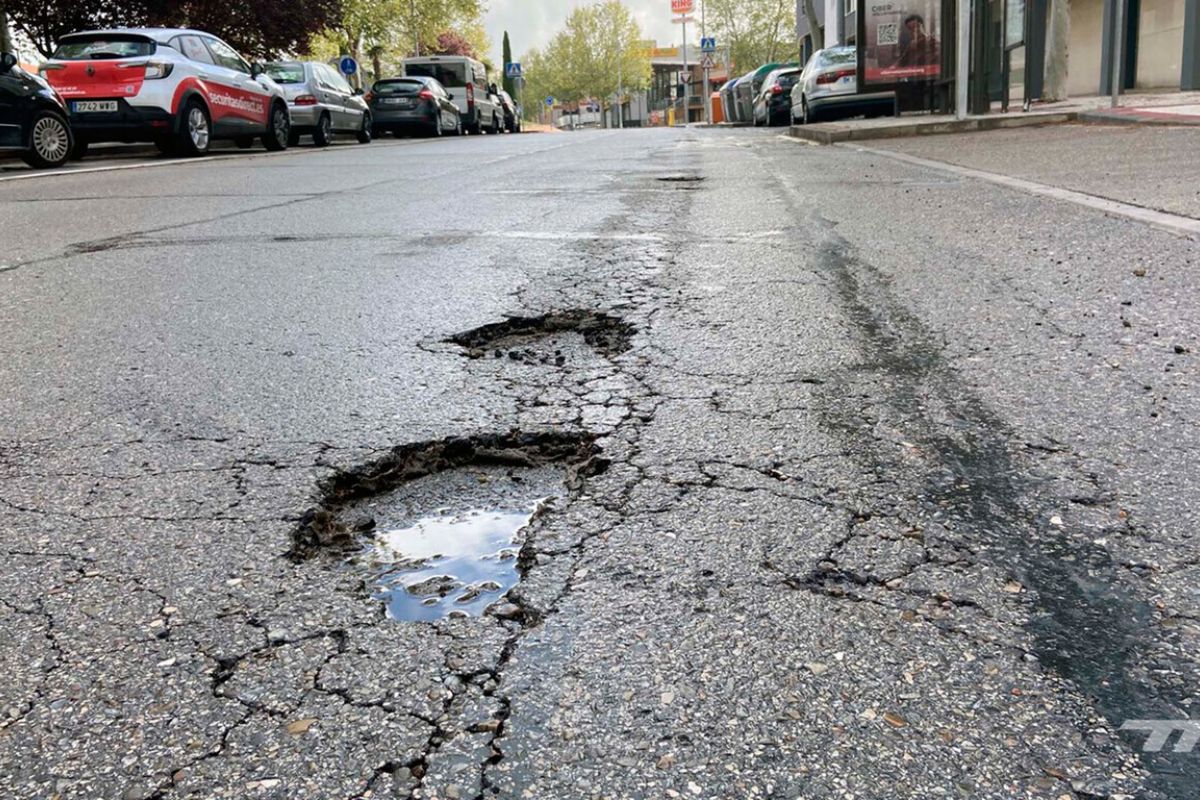
Potholes in the streets of León generate a flood of complaints after winter rains, but the city hall says the road was signposted, at 30 km/h it was possible to avoid them, and compensates at most 50%
The potholes in the streets of León, Spain, became so severe after heavy winter rains that drivers report tires and suspensions bursting frequently. The problem has led to an increase in complaints against the city hall for damage to vehicles, but the public authority’s response has irritated those who travel on the roads.
Instead of fully assuming the repairs, the city hall maintains that the fault lies with the driver, claiming improper driving for the road conditions, which would be properly signposted. Even when accepting the complaint, the payment is usually partial and may be limited to half the repair cost.
Potholes like “craters” and over 30% increase in complaints
Since the end of 2025, complaints for vehicle damage due to the state of the pavement have increased by over 30%. Driving in León has become an obstacle course, avoiding potholes described as true craters.
-
31,000 years ago, humans were already performing complex amputations with surgical precision without antibiotics, modern anesthesia, or a sterilized environment, and they made patients survive for years, as evidenced by the skeleton found in Borneo that rewrites the history of medicine on the planet.

-
A fragment of moss the size of a grain of sand helped the FBI uncover a shocking tomb raiding scandal in the U.S. and exposed a scheme that lasted for years in Chicago.

-
Using drones, archaeologists identify a lost city founded by Alexander the Great that was buried for centuries in the Persian Gulf, and the discovery reveals a metropolis of 6 km² with a monumental palace.

-
The decommissioned ambulance that became a home with a kitchen, bathroom, and solar energy: a couple invested $3,000 and created a home on wheels.

Incident reports cite potholes of up to 40 cm in diameter and 7 cm deep, a direct risk to tires, wheels, and suspensions. The size helps explain why damage occurs even on short trips.
City hall says the fault lies with the driver and that it was signposted
The city hall, according to mentioned resolutions, claims that “the driver’s actions played a decisive role” and that the damage would not occur with diligent driving. In other decisions, the argument is that the driving was not adapted to the road conditions, which would be signposted.
The administration also emphasizes that many incidents occurred during the day, with perfect visibility, and that the condition of the tires should be taken into consideration.
The 30 km/h limit becomes an argument to deny compensation
It is highlighted that the streets of León have a limit of 30 km/h. The city hall uses this data to argue that, at this speed, it would be easy to avoid, reinforcing the thesis that the damage would be avoidable.
In practice, the reasoning closes the public authority’s account: if there was signage and low speed, the driver could have avoided the pothole, which would justify denying or reducing the payment.
When the city hall pays and why it almost never covers everything
According to Motorpasion, many complaints end up ignored or accepted only partially, even when there is a police report proving the damage on the road. Requests without a report and expert opinion are usually rejected.
Those who include documentation may receive something, but rarely the total amount. There is an example of a case where they accepted 40% of the bill, and the practical rule described is that the cap generally stays at 50% of the repair.
Recourse to Justice becomes the alternative for those who want the full amount
When the city hall only pays part, the remaining option is to go to court, which involves time and money. According to the source, if the court rules in favor of the driver, the court costs would be covered by the city hall, but this depends on a favorable ruling.
In other words, to try to receive 100%, the path tends to be longer and more expensive, which discourages some drivers.
Temporary repairs: sand in the potholes and the cycle starts again
Between January and February, rain and snow battered León for days, and the city hall would not have been able to keep up with the volume of repairs. It was reported that they resorted to temporary solutions, such as filling potholes with sand.
The problem is that rain and traffic remove this material, and the craters reappear, restarting the cycle. It is a quick but unstable measure that does not address the cause of the asphalt giving way.
Why does rain create craters in the asphalt
According to an explanation attributed to a civil engineer: when the rain is heavy or continuous and drainage fails, water seeps under the asphalt, saturating the layers below and eroding materials.
With the weight of vehicles, the pavement sinks and opens craters. Without efficient drainage and proper recomposition of the layers, the potholes tend to return.
Do you think it is fair for the city hall to limit reimbursement and blame drivers for these damages, or should the city pay for the full repair when there is a report proving the crater on the road?






Seja o primeiro a reagir!