





 Portuguese
  English
  Spanish
  3 min of reading
  0 comments


Surprising discovery reveals how an almost invisible evidence was able to dismantle a defense version and change the course of a complex criminal investigation
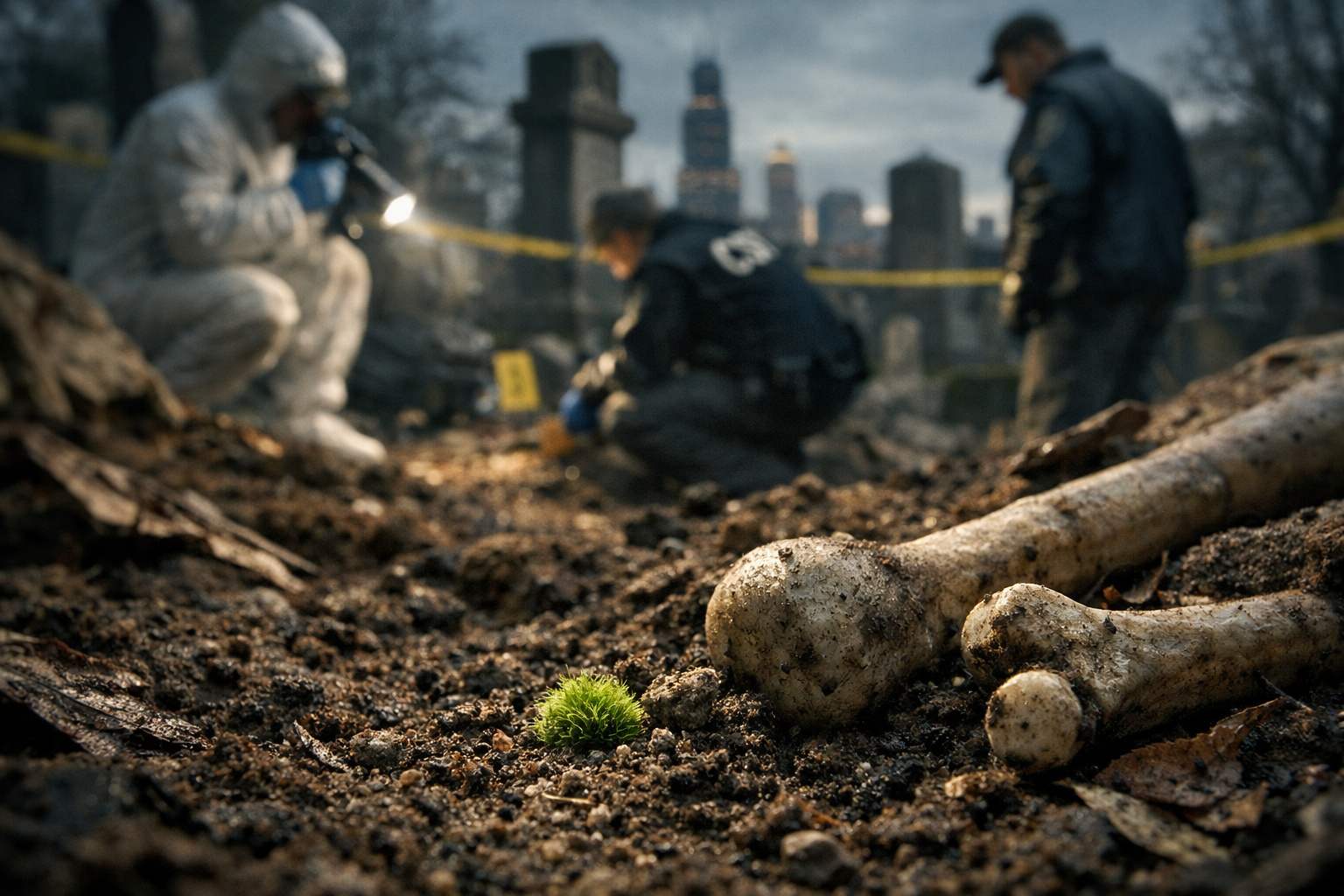
At first glance, it seemed just an irrelevant detail — a fragment of moss the size of a grain of sand. However, it was precisely this microscopic evidence that became a key piece for the FBI to unravel a shocking scheme of grave robbing in the United States, bringing to light one of the most disturbing cases ever recorded in a cemetery in Chicago.
The information was released by “Science Alert” based on investigations conducted in partnership with experts from the Field Museum in Chicago, who deepened the scientific analysis of the material found, revealing details that completely changed the course of the case.
Investigation at Burr Oak Cemetery exposes scheme that affected dozens of families
It all began in 2009, when authorities identified irregularities at Burr Oak Cemetery, located on the outskirts of Chicago. Initially, the case seemed to involve administrative failures. However, as the investigations progressed, a much graver scenario came to light.
-
Amid the United States’ economic blockade, China delivers 15,000 tons of rice to Cuba as part of a 60,000-ton donation personally approved by Xi Jinping. The package includes 80 million dollars and solar panels for hospitals.

-
For around 200 reais, anyone can buy a kit and have a chip implanted between their fingers to replace cards, keys, badges, and even medical information in case of a hospital emergency.
-
A 600-meter hill in the interior of Santa Catarina hides a volcanic past of almost 600 million years. The Morro do Garrafão in Corupá may have been an ancient extinct volcano, and science now confirms what the residents have always suspected.
-
Family has lived for over 50 years without electricity and running water at home in the South of Minas, 10 minutes from the city, improvising light, bath, and water while facing a lack of basic resources and awaiting property regularization.





Cemetery employees were accused of exhuming old graves, relocating remains within the grounds, and subsequently reselling the plots as if they were available. This illegal scheme may have affected dozens of families, generating outrage and pain among the victims’ relatives.
Furthermore, during the searches, agents found bones buried in a different area of the cemetery. It was at this moment that an apparently trivial detail began to attract attention: alongside the remains, there was a small fragment of moss about 20 centimeters deep.
The “microscopic detective” that changed everything in the investigation

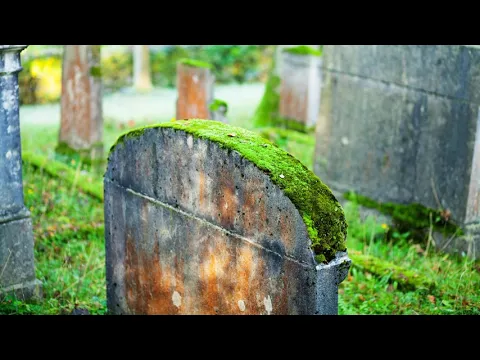
Although it seemed insignificant, the fragment was analyzed by specialists, who identified the species as Fissidens taxifolius, commonly known as “common pocket moss.” From this identification, scientists realized something crucial: that type of moss was not typical of the area where the bones were found.
From there, researchers expanded the analysis to other regions of the cemetery. As a result, they located colonies of the same moss in a completely different sector — precisely where investigators already suspected the bodies were originally buried.
Thus, it became evident that the remains had been removed and relocated within the grounds, confirming the existence of the criminal scheme.
To further deepen the investigation, scientists analyzed the chlorophyll present in the moss. This technical detail was essential, as the degradation of the pigment allowed for estimating the time since the plant had been removed from its original environment.
The results were decisive: the fragment was between one and two years old. This directly contradicted the version presented by the defense, which claimed that the crime had occurred before the hiring of the involved employees.

Plant forensic science gains prominence after conviction of those involved
Based on the set of evidence — including the botanical analysis — four employees were convicted in 2015 for desecration of human remains. The case not only had legal impact but also gained international scientific repercussion.
This is because the episode practically demonstrated the enormous potential of using plant evidence in criminal investigations. Although still a little-explored field, with few records over the last century, so-called forensic botany proved to be extremely effective in this context.
Moreover, experts highlight that discreet organisms, such as moss, can function as true “silent witnesses.” That is, even without being perceived, they carry valuable information capable of revealing movements, dates, and changes in the environment.
Therefore, this case reinforces a new perspective for criminal expertise: that even the smallest elements of nature can play a decisive role in solving complex crimes.









Be the first to react!