





 Portuguese
  English
  Spanish
  7 min of reading
  0 comments


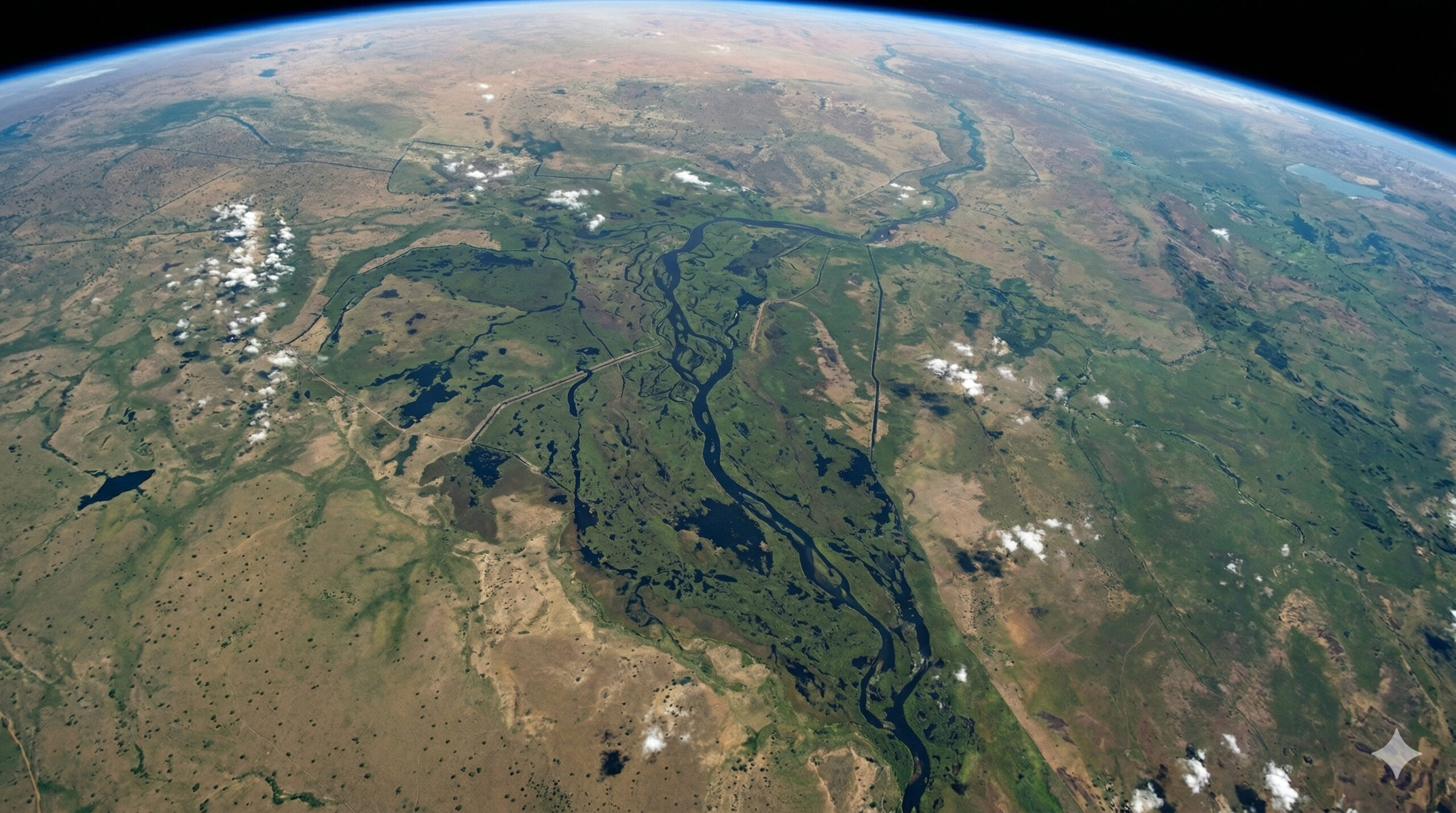
The Sudd, the largest swamp in Africa, can reach the size of England, causes the Nile to lose half its water, and has been blocking routes with giant floating islands for centuries.
In 2024, UNESCO once again highlighted the role of the Sudd, located in South Sudan, as one of the most extraordinary wetland systems on the planet, while technical documents from the Nile Basin Initiative indicate that the swamp, with an average area of around 57,000 km², can reach up to 130,000 square kilometers depending on the system’s discharge. At this scale, the Sudd acts as a gigantic natural filter and water regulator in the upper stretch of the White Nile.
As the river enters the Sudd, it loses the configuration of a single channel and begins to spread into meanders, channels, lagoons, and extensive flood areas, forming a complex aquatic mesh that is difficult to delineate. This hydrological behavior helps explain why the area functions simultaneously as a retention zone, flood buffer, and regulator of water flowing downstream.
In this process, about 50% to 55% of the water that enters the system is consumed by evaporation and evapotranspiration, according to technical syntheses compiled by the Nile Basin Initiative and environmental reports from the same ecosystem. This phenomenon transforms the Sudd into one of the main points of water dissipation in the entire Nile basin, significantly reducing the volume of water that continues downstream.
-
Alone in the forest for 11 days, an indigenous teenager from Acre recounts how he changed his path, got lost in the dense jungle, and survived on wild fruits, water, and calm until he found a way out and was rescued.
-
Psychology has discovered that adults who describe themselves as “non-creative” almost always trace this belief back to a single moment in childhood when someone evaluated what they did instead of asking what it meant, and the wound was so small that they confused it with a personality trait.

-
Archaeologists found a 440-year-old silver coin buried under the ruins of a church in the Strait of Magellan, and it revealed the exact location of a Spanish colony where 300 people were abandoned and died of hunger in the place that the English renamed Puerto del Hambre.
-
Elected for the 9th time as the happiest country in the world, Finland has created a program that offers a free 7-day trip with all expenses paid for foreigners to learn how to live like Finns, including a companion, sauna, lake, and complete disconnection from their cell phones.

How the Sudd transforms the White Nile into a labyrinth of channels, floating islands, and dispersed water
Unlike a traditional river, the stretch of the White Nile within the Sudd does not follow a single course. Upon entering the swamp, the water divides into multiple arms, forming a complex and unstable network.
This network consists of narrow channels, shallow lagoons, seasonal flood areas, and extensive mats of floating vegetation. The river’s flow becomes diffuse, slow, and highly variable.
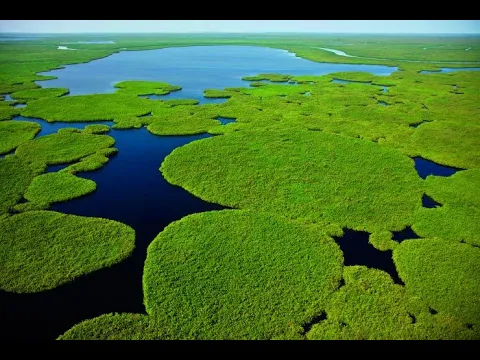

The vegetation plays a central role in this process. Species such as papyrus, water hyacinth, and water lily grow densely, creating plant masses that reduce water speed and increase the area of contact with the atmosphere.
The larger the exposed area and the slower the water, the greater the evaporation, and this is exactly what the Sudd maximizes. This system causes the White Nile to lose its identity as a river and behave like a dispersed water body.
Giant floating islands in the Sudd can block entire rivers and change the map of the region
One of the most impressive aspects of the Sudd is the formation of floating islands, known as “sudd,” which gave the swamp its name. The term comes from Arabic and literally means “barrier.”
These islands are formed by dense vegetation that detaches from the bottom and begins to float, being transported by currents and wind. Some of these masses can reach dozens of kilometers in length.
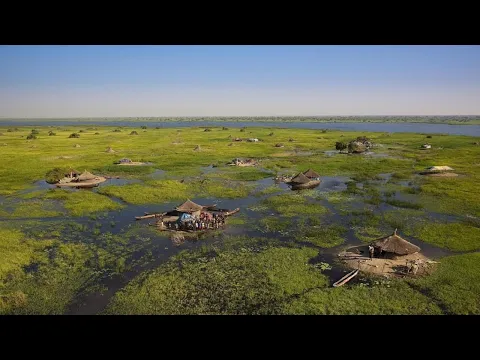
As they move, they can block entire channels, redirect the flow of water, and even create new routes within the swamp.
This behavior makes the Sudd a constantly changing system, where maps quickly become obsolete. Channels that existed in one year can disappear the next, while new passages emerge in unexpected locations.
Swamp that changes shape every year challenges maps and hydrological forecasts
The Sudd is not a static environment. Its extent, shape, and structure vary significantly throughout the year, depending on rainfall in the region and in the upper course of the White Nile, especially in areas like Uganda and South Sudan.
During the rainy season, the swamp expands, flooding vast areas and creating a continuous landscape of water and vegetation. In the dry season, it retracts, concentrating water in more defined channels.
Moreover, the movement of floating islands constantly alters the internal configuration of the system. This extreme variability makes the Sudd one of the most challenging environments to map and study accurately.
Even with the use of satellite imagery, the dynamics of the swamp require constant monitoring.
Sudd blocked the advance of Roman Empire soldiers and European explorers for centuries
The difficulty of crossing the Sudd is not a recent phenomenon. Historical records indicate that in 61 A.D., an expedition sent by Roman Emperor Nero attempted to explore the course of the Nile to the south.
The soldiers advanced until they encountered the swamp but could not proceed. The labyrinth of water, vegetation, and blocked channels made crossing impractical.

Centuries later, in the 19th century, European explorers faced the same problem when trying to locate the sources of the Nile. The Sudd again presented itself as an almost insurmountable barrier.
It was not a solid obstacle, but a living and changing system that hindered any attempt at continuous navigation. This history reinforces the role of the Sudd as one of the greatest natural challenges to geographic exploration.
Jonglei Canal attempted to divert the White Nile and recover lost water in the Sudd
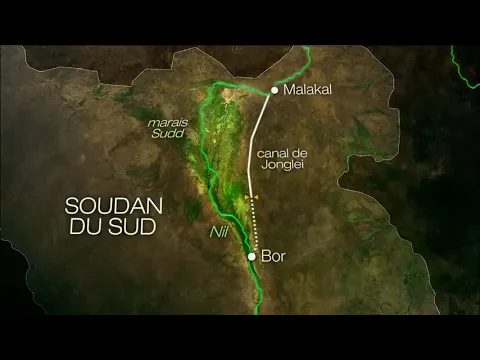
In the 1970s, an ambitious attempt emerged to bypass the Sudd and reduce water losses from the White Nile: the Jonglei Canal.
The project envisioned the construction of a canal approximately 360 kilometers long, capable of diverting part of the river’s flow directly north, avoiding the swamp. Construction began in 1978 and progressed rapidly, with about 240 kilometers excavated by 1984.
However, the project was halted due to civil war in Sudan and was never completed. If completed, the canal could have significantly altered the hydrological regime of the Nile, increasing the volume available to downstream countries like Egypt and Sudan.
On the other hand, experts warned of potential severe environmental impacts, including reduced biodiversity and changes in local climate.
Ecological importance of the Sudd sustains millions of people and hundreds of species
Despite its hostile appearance, the Sudd is one of the richest ecosystems in Africa. It is home to hundreds of bird species, including large migratory populations, as well as mammals such as antelopes, elephants, and giraffes.
Aquatic vegetation provides food and shelter, while the water supports human activities such as fishing and livestock. About one million people live in the region or directly depend on the swamp for their livelihoods.
This balance between water, vegetation, and fauna transforms the Sudd into one of the most important ecological systems on the African continent.
Any significant alteration in its dynamics can have broad consequences for local communities and biodiversity.
Sudd influences regional climate and can affect emissions of gases like methane
In addition to its hydrological role, the Sudd also influences the regional climate. The large amount of water and vegetation contributes to the release of vapor into the atmosphere, affecting local rainfall patterns.
Moreover, flooded areas are known to emit methane, a greenhouse gas. Studies indicate that the Sudd may play a relevant role in this context.

This positions the swamp not only as a regional element but as part of larger climatic processes. The interaction between water, soil, and vegetation creates a complex system, with impacts that extend beyond its geographical boundaries.
Why the Sudd remains one of the most difficult natural systems to control on the planet
The combination of scale, internal dynamics, and ecological importance makes the Sudd extremely difficult to control or modify.
Projects like the Jonglei Canal show that human interventions face significant technical, political, and environmental challenges.
Furthermore, any attempt to alter the system must consider impacts at multiple levels, from water availability to the survival of communities and species.
The Sudd is not just a swamp, but an integrated system that connects hydrology, climate, ecology, and history. Its complexity continues to challenge scientists and planners.
This type of “living barrier” may exist in other regions of the world and change entire rivers
The Sudd is an extreme example of how nature can completely reorganize the behavior of one of the largest rivers on the planet.
By transforming the White Nile into a dispersed and highly evaporative system, it redefines the hydrological dynamics of the entire region.
In light of this, a relevant question arises: are there other natural systems capable of altering entire rivers in this way, functioning as living barriers that grow, move, and change shape over time?
The answer may be hidden in still little-studied regions of the planet, where similar processes may be occurring without significant scientific visibility.





Seja o primeiro a reagir!