





 English
  Francês
  Alemão
  Italiano
  Japonês
  Norueguês
  Portuguese
  Spanish
  4 min of reading
  0 comments


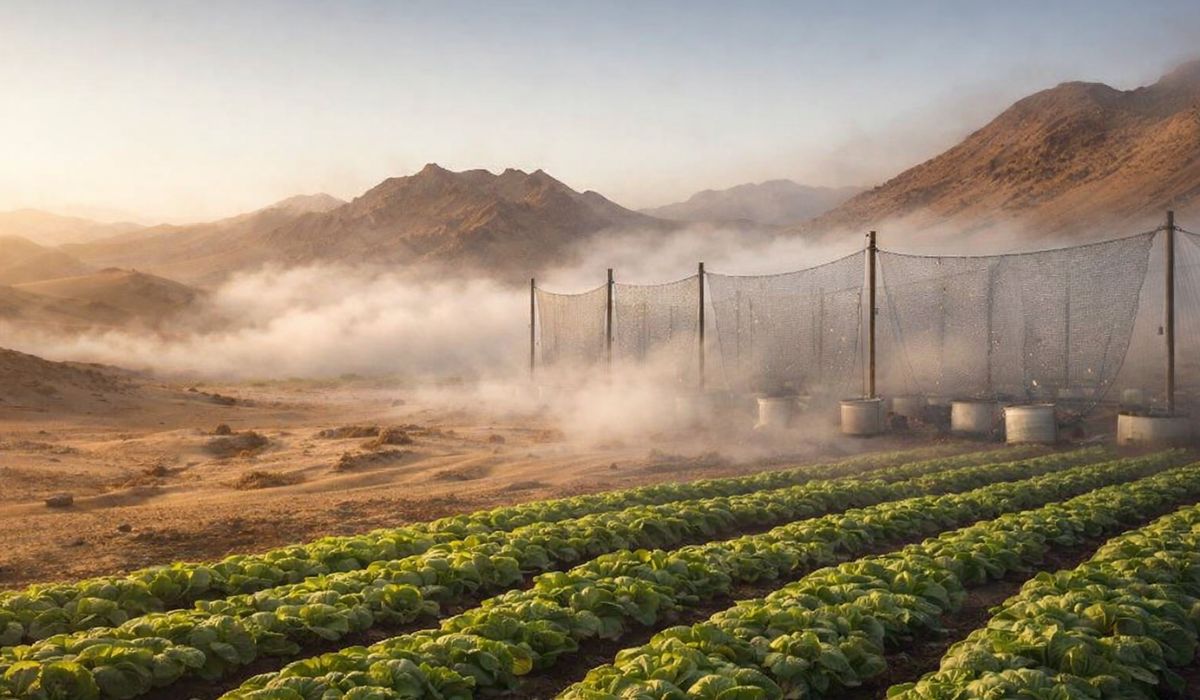
In the Atacama, farmers and researchers test an unusual way to obtain water in one of the driest regions on the planet, combining local knowledge and academic research around fog and food production.
In the Atacama Desert, in Chile, producers and researchers have been using fog water harvesting to grow food in areas marked by extreme water scarcity.
The experiment takes place near Chañaral and uses screens installed between poles to condense moisture from the air, which is then stored in reservoirs and applied, among other uses, in hydroponic lettuce cultivation and the development of lemon trees.
The initiative has begun to attract attention by bringing together community work and academic research in one of the driest regions on the planet, where some sectors go years without recording rain.
-
350-year mystery may have been solved: remains of a soldier who inspired the hero of The Three Musketeers found beneath a church in the Netherlands.

-
NASA photographed a nearly perfect square with 3 km sides on Mars, 13 times larger than the Great Pyramid of Giza, but the official explanation is natural erosion; still, no one has explained why the four sides have almost identical lengths.

-
Starlink breaks the barrier of 10,000 satellites in orbit and takes its expansion to an unprecedented level, with a direct impact on global internet, technological competition, and the race for space.

-
Japan finds an alternative to oil amid rising prices by transforming ocean balance into electricity with a new technology that maintains efficiency even when the sea changes.

According to Orlando Rojas, president of the Atacama Fog Catchers Association, lettuce production was the one that showed the best response after attempts with other crops.
In a report to Reuters, he stated that the group is producing hydroponic lettuce entirely with fog water.
Fog water harvesting in the Atacama Desert
The system used is simple.
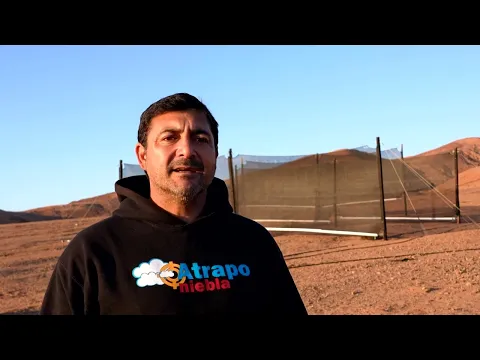
A mesh is suspended between two poles to intercept the humidity present in the air.
When the fog touches this surface, droplets form that run down and are collected in tanks.
Amid rocky hills and stretches of dry sand, this mechanism has allowed for the collection of water to sustain part of the local agricultural production.

According to Rojas, in these inhospitable points, the collection reaches 1,000 to 1,400 liters of water.
The same resource has also been used in lemon trees observed in the area.
According to him, the continuity of the project is linked to the need for access to water in a territory where the natural supply of the resource is limited and irregular.
Lettuce cultivation with fog water
The choice of lettuce came after experiences with other crops.
As Rojas reported, these attempts did not yield the expected results, which led the group to concentrate efforts on this vegetable.
In this context, hydroponic cultivation works as a compatible alternative with the availability of collected water, as it allows for more precise control of resource use and nutrient supply.
Members of the project also highlighted characteristics of the water obtained from fog.
Mario Segovia, linked to the harvesting group, told Reuters that it is neutral water, without chlorine and minerals, used with nutrients in the cultivation system.
The statement was made to describe the environment in which the vegetables are being developed; however, the report does not mention independent laboratory analysis beyond this account.
Map indicates water harvesting potential in Chile
At the same time that the practical experience develops in the Atacama, the UC Atacama Desert Center works to expand the use of this type of technology in other areas of the country.
The Chilean university publicly launched, on June 2, 2025, a free and open platform called Fog Water Map, created to identify the harvesting potential along the northern and central coast of Chile.
According to the institution, the tool covers about 2,000 kilometers, from Arica to Maule, and informs not only where there is fog but also how much water can be extracted, meter by meter and month by month.
The proposal is to provide a technical basis to guide decisions on the use of this resource in regions with water restrictions.
Camilo del Río, director of the UC Atacama Desert Center, stated that fog water can serve as a complementary option for different scales of need in territories affected by scarcity.
In the official presentation of the platform, he also stated that one of the historical obstacles to the use of this resource was the lack of reliable and accessible information.
According to the university, the map seeks to transform years of research into a practical tool for territorial planning and water management.
Research on water scarcity and fog use
The academic project relies on a fog monitoring network and a computational model called AMARU, fed by meteorological observations, GOES satellite images, and digital elevation models.
According to UC, this system uses data from over 25 stations distributed between the north and the central-southern zone of Chile to estimate the water potential of fog.
According to the institution, the methodology can serve as a reference for other arid environments with advective fog, such as areas in Peru, California, Namibia, Portugal, Spain, and Morocco.
The university presents this mapping as a support tool for local studies and projects, without indicating that the technology could broadly replace other supply sources.

Water scarcity in Chile and local alternative
At the launch of the map, UC reported that 72% of Chile’s surface suffers from drought in varying magnitudes.
In this scenario, fog harvesting is presented by the university as a localized and complementary alternative to other sources, especially in coastal communities and desert areas where atmospheric humidity can be converted into water for specific use.
In the case of Chañaral, the experience with lettuce and lemon shows a practical application of this model on a scale adapted to local conditions.
Between university research and the experience conducted by residents, the project shows how fog water harvesting has been tested as a resource for agricultural cultivation in a region marked by water scarcity.





Seja o primeiro a reagir!