





 Portuguese
  English
  Spanish
  6 min of reading
  0 comments


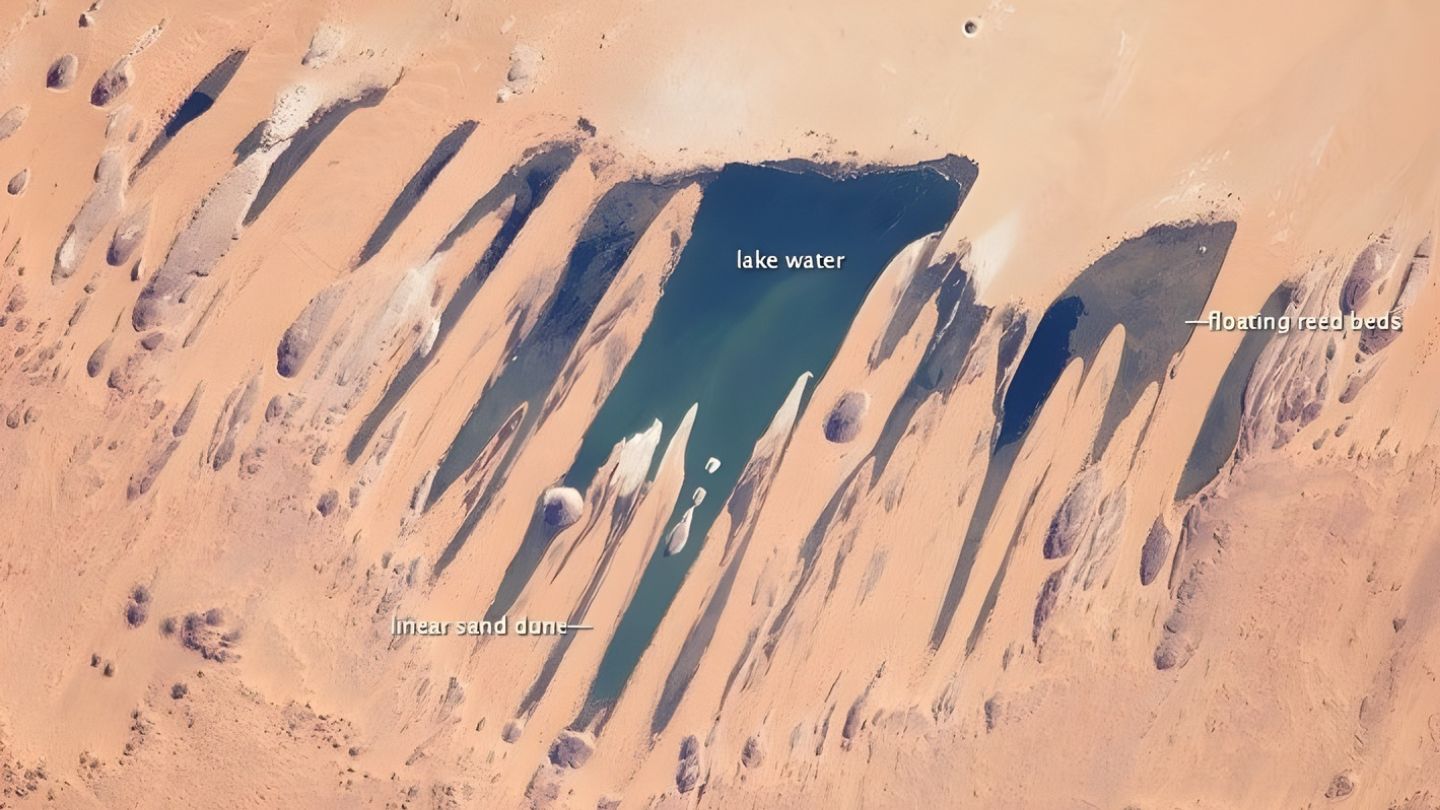
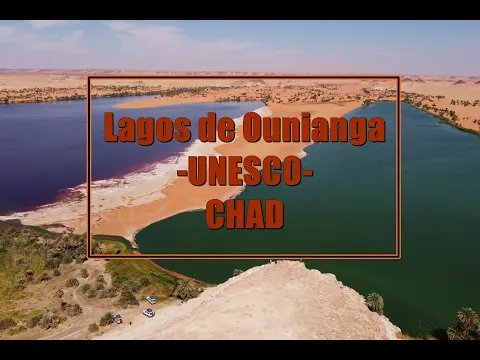
Ounianga Lakes challenge the Sahara with 18 permanent bodies of water fed by underground aquifers in one of the driest regions of the world.
Located in the northeast of Chad, in the heart of the Sahara Desert, the Ounianga Lakes form one of the planet’s most unusual hydrological phenomena. In a hyper-arid region with less than 2 millimeters of rain per year, this set includes 18 permanent lakes distributed in two groups, creating a landscape that contrasts radically with the dry environment around it.
The system occupies about 62,808 hectares and has been recognized as a World Heritage Site by UNESCO, which describes the area as a site of exceptional natural value due to the rare combination of extreme desert landscape, lake diversity, and unique hydrological functioning.
The presence of stable water in one of the driest areas on Earth does not depend on simple surface replenishment, but on a subterranean system fed by fossil water, which compensates for intense losses due to evaporation. Studies on Lago Yoa, one of the main bodies of water in the complex, show a continuous record of about 6,100 years, reinforcing that the phenomenon is linked to a deep and long-lasting hydrogeological dynamic in central Sahara.
-
Orenburg has rivers, roads, and industrial areas covered in snow in a geometric pattern visible from space, and a NASA image reveals how the winter lasting up to 5 months and temperatures below −30 °C transform the city of over 500,000 inhabitants into an almost continuous white map.
-
They have orbited the Moon and are now returning home: the astronauts of Artemis II are making final preparations for a descent at 38,000 kilometers per hour, with a landing in the ocean scheduled for this Friday at 9 PM Brasília time.

-
An American has spent over 30 years building a 34-meter training ship in his backyard in Maine using recycled steel from Navy ships, and is now trying to win the dispute that keeps the vessel grounded.
-
With 17 seniors aged between 90 and 99, the group breaks the record for the oldest choir in the world and becomes news in the United Kingdom.

Subterranean aquifer system feeds the lakes even without rain
Unlike conventional lakes, which directly depend on rain or surface rivers, the Ounianga Lakes are fed by fossil subterranean aquifers. These water reservoirs were formed in much wetter periods of the Sahara’s history, when the region had a climate completely different from the current one.

With the advance of aridity over thousands of years, surface water has disappeared, but part of the subterranean resources remained stored at depth.
This water continues to emerge slowly through subterranean springs, sustaining the lakes even under extreme evaporation conditions. This mechanism explains why the lakes persist even without significant rainfall.
Lakes show different levels of salinity in the same system
One of the most curious aspects of the Ounianga complex is the coexistence of lakes with completely distinct chemical characteristics. Some lakes have freshwater, while others are highly saline or even hypersaline.
This variation occurs due to differences in evaporation rates, depth, and degree of isolation between the bodies of water. Lago Yoa, for example, reaches about 27 meters deep and maintains relatively stable water over time.
The chemical diversity within a single system reinforces the complexity of the local hydrological balance. This phenomenon is rare in desert environments.
Dunes and natural barriers help preserve water
The presence of large dunes around the lakes plays a fundamental role in maintaining the system.
These formations act as natural barriers against the wind, reducing the evaporation rate of the water. Additionally, they help isolate the lakes, preventing water from dispersing quickly across the terrain.
Without this natural protection, the intense evaporation of the Sahara could eliminate the lakes in relatively short periods. This balance between wind, sand, and water is essential for the survival of the system.
Lago Yoa preserves a climatic record of thousands of years
Lago Yoa is considered one of the most important natural records of the climatic history of the Sahara. Sediments accumulated at the bottom of the lake have been analyzed by scientists to reconstruct environmental changes over thousands of years.
These records indicate that the region was once much wetter, with abundant vegetation and greater availability of surface water.
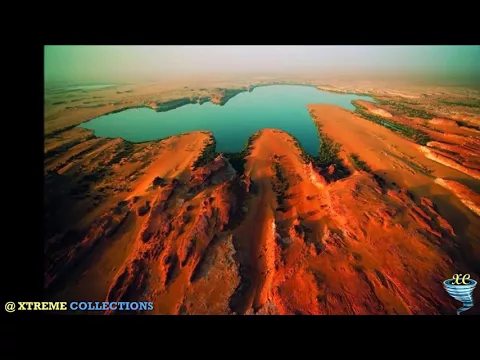
The lake acts as a geological time capsule, preserving information about the transformation of the Sahara over millennia. This type of data is essential for understanding long-term climate changes.
System divides into two groups with distinct characteristics
The Ounianga Lakes are generally classified into two main groups: Ounianga Kebir and Ounianga Serir.
The first includes larger and deeper lakes, with greater hydric stability.
The second includes smaller, shallower lakes with greater salinity variation.
This division reflects differences in subterranean feeding dynamics and evaporation.
The coexistence of two distinct systems within the same region increases the complexity of the phenomenon. This makes the site even more relevant for scientific studies.
Phenomenon can be observed from space due to extreme contrast
The contrast between the intense blue of the lakes and the yellow of the Sahara dunes makes the complex visible from satellites. Images captured by NASA missions clearly show the bodies of water standing out in the middle of the desert.
This visibility reinforces the scale and uniqueness of the system. Few natural phenomena present such a striking contrast in orbital images. This contributes to scientific and visual interest in the region.
In the Sahara environment, the evaporation rate can be extremely high, which would normally lead to rapid water loss. However, in the Ounianga Lakes, this process is balanced by a continuous flow of groundwater.
Although this flow is slow, it is sufficient to keep the lake levels relatively stable over time. This delicate balance between loss and replenishment is what sustains the system in the long term. Any alteration in this balance can directly impact the lakes.
Region harbors life adapted to extreme conditions
Despite the hostile environment, the lakes support life forms adapted to extreme conditions. Fish species, aquatic plants, and microorganisms manage to survive in different levels of salinity.
These species are important for studies on biological adaptation. The presence of life in such an arid environment reinforces the ecological importance of the system. This factor also contributes to its international protection.
The Ounianga Lakes are often described as one of the most unusual lake systems on the planet.

The combination of permanent water, subterranean feeding, and extremely dry environment is not common on a global scale. This set of characteristics led to the international recognition of the site.
The system represents an extreme example of how geology and hydrology can create exceptions to the dominant climatic logic. This makes it a unique case study.
Climate change and groundwater use may threaten the balance
Although the system has endured for thousands of years, it is not immune to environmental changes. Changes in climate or excessive exploitation of the aquifers can affect the water flow that feeds the lakes.
Since replenishment is extremely slow, any impact can have long-term effects. The preservation of the water balance is essential for the continuity of this phenomenon. This aspect raises concerns about the future of the system.
What the Ounianga Lakes reveal about the past and future of the Sahara
The existence of the lakes offers important clues about the region’s climatic past. They indicate that the Sahara was once a much wetter environment and that water is still present, even if hidden underground.
Moreover, they show how natural systems can persist under extreme conditions when there is a balance between geological and climatic factors. The Ounianga Lakes serve as a link between the Sahara’s wet past and its arid present, revealing the complexity of the planet’s environmental dynamics.
The case of Ounianga raises a relevant question: how many other similar systems may exist hidden beneath deserts around the world? The presence of fossil aquifers in arid regions suggests that water may be much more distributed than it appears.
This type of phenomenon broadens the understanding of subterranean water resources and their importance for the future.
In light of this, an inevitable reflection arises: how many other “invisible oases” still exist on the planet, sustained by ancient reserves that continue to nourish life silently beneath the most inhospitable landscapes on Earth?







Seja o primeiro a reagir!