





 Portuguese
  English
  Spanish
  4 min of reading
  0 comments


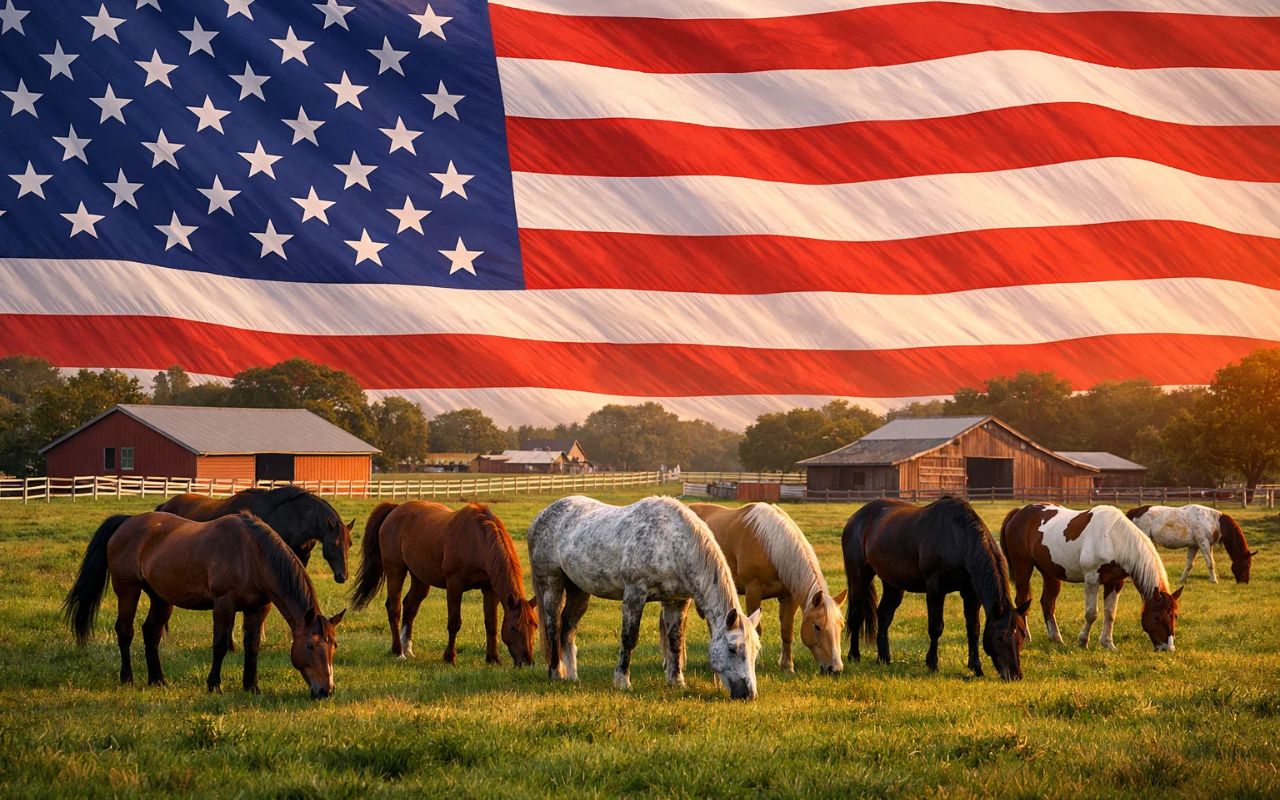
Understand why Ocala is the World Horse Capital, with thousands of animals, farms, historical champions, and a global equestrian economy.
Neither marketing nor chance. The title of World Horse Capital attributed to Ocala, Florida, is a direct result of a strategic combination: favorable natural environment, large-scale production, performance on the tracks, and a highly profitable market.
The city has become a global reference by turning horse breeding into a true economic engine.
The recognition is even adopted by institutions such as the Florida Thoroughbred Breeders’ & Owners’ Association, which projects the region internationally.
-
The government will charge up to R$ 650 from pet owners in 2026, and tourists traveling with their dogs will have to pay a daily fee; the measure surprised thousands of pet ‘parents’ in Italy.
-
Man swaps his cellphone and modern life for a shelter in a tree to test the limits of mental sanity and physical preparedness.
-
The United Kingdom is throwing six-ton concrete blocks to the bottom of the North Sea, and the reason is the opposite of what you might think, as each block carries 4,000 oysters capable of filtering millions of liters of water per day.

-
Family without running water in the interior of Ceará takes out a loan to drill an artesian well and discovers possible oil, but cannot use it, cannot sell it, and is left with a debt of R$ 15,000.

At the same time, there is a historical rivalry with Lexington. However, while the debate continues, Ocala consolidates its leadership with consistent numbers and results.
World Horse Capital: a billion-dollar market that drives the economy
Before looking at farms or tradition, it is the money that reveals the scale of Ocala. The city occupies a central position in the global horse trade, highlighted by the Ocala Breeders’ Sales Company.
The company dominates a large portion of the young horse auctions in the United States and generates over $190 million per year.
Additionally, thousands of animals pass through the region for initial training, consolidating a complete economic cycle.
Thus, Ocala not only breeds horses but also prepares and markets animals for the entire world.
If the market is impressive, the sports results confirm it. The World Horse Capital is also known for producing historical champions.
Among them are Affirmed and American Pharoah, two names directly linked to the region. Another highlight is Dr. Fager, whose performance is still remembered as a reference.
Moreover, horses bred in Florida have already won iconic races such as the Kentucky Derby, the Preakness Stakes, and the Belmont Stakes.
The foundation of the city is in the production scale
After understanding the top of the pyramid, it is necessary to look at the base. In Marion County, where Ocala is located, there is one of the largest concentrations of horses on the planet.
There are over 1,200 farms and about 75,000 animals, with a large portion being Thoroughbreds. This density creates a unique environment where the entire production chain operates in an integrated manner.
Additionally, the sector generates approximately 28,500 jobs, reinforcing its regional economic role.
Unlike other hubs, Ocala has decisive natural advantages. The limestone soil, for example, contributes to stronger bones in horses, an essential factor for performance.
Meanwhile, the climate favors the development of animals by reducing thermal stress.
As a result, breeders achieve better outcomes in both health and performance.
Therefore, nature acts as a direct ally of productivity.

World Horse Capital diversifies and expands global influence
Ocala is not limited to racing. Over the years, the city has expanded its activities to different equestrian disciplines.
Events like the HITS Ocala Winter Circuit and the Live Oak International attract participants from various countries. Additionally, the region gathers training centers, clinics, and specialized infrastructure.
In this way, the city positions itself as a complete hub of the equestrian universe.
In Ocala, the horse goes beyond the economy. It influences land use, preserves green areas, and boosts rural tourism.
Local policies help maintain this identity, ensuring that equine culture continues to be the central axis of development. Thus, the sector becomes part of the culture and landscape.
On the other hand, even in the face of competition from Lexington, Ocala continues to expand its relevance based on practical results.
Ocala does not rely solely on a symbolic title. The city sustains its position as World Horse Capital with numbers, champions, and a consolidated market.
Thus, instead of competing for narratives, the region accumulates results. And it is precisely this consistency that keeps Ocala at the top of the global equestrian scene.
With information from Compre Rural.



Seja o primeiro a reagir!