





 Portuguese
  English
  Spanish
  5 min of reading
  0 comments


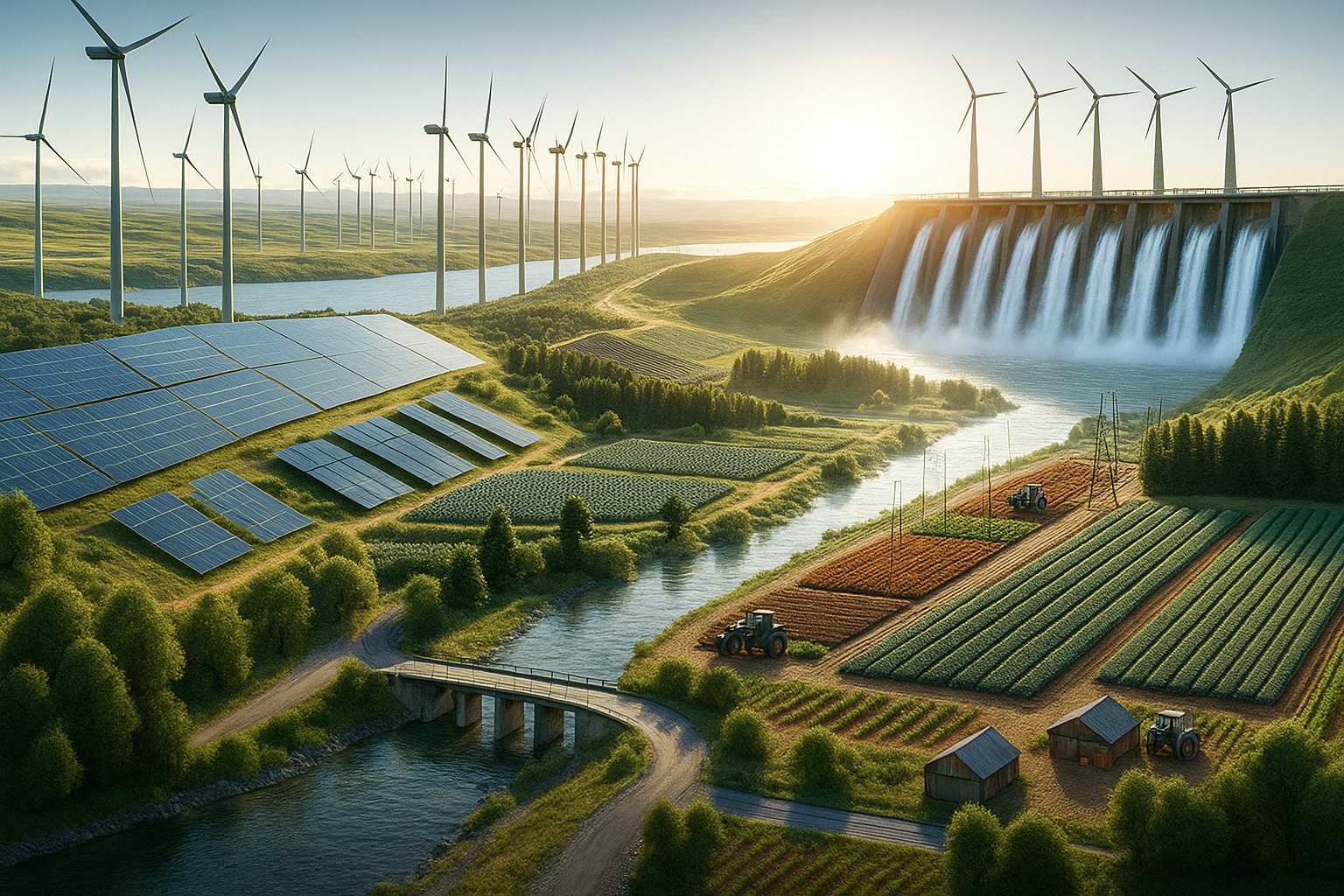
Learn How Incentives Boost Renewable Energy Projects in Brazil, Promoting Sustainable Growth and Opportunities While Requiring Regulatory Care.
Brazil has built a long trajectory in the development of energy sources; however, for decades, hydropower has supplied a large part of the national electricity matrix.
However, in recent decades, the country has diversified its energy production, incorporating sources such as wind, solar, and, more recently, green hydrogen and biogas.
Thus, this transformation resulted from a combination of historical, environmental, and economic factors, placing renewable energy projects at the center of discussions on sustainability and economic growth.
-
The Brazilian state accelerates industrial competitiveness with a focus on the extraction of strategic minerals to boost the energy transition in Goiás.

-
A Canadian retiree creates a hydroelectric system on a real river, generating energy continuously throughout the day and demonstrating how the power of water can supply a house with stability even in a simple structure.

-
Petrobras reaffirms its commitment to the market and ensures that it will carry out the energy transition safely to maintain national sovereignty.

-
Researchers discover a possible hydrogen deposit of up to 46 million tons beneath an ancient coal basin, and the volume could exceed half of the entire global production.


History and Trajectory of Renewable Energies in Brazil
Historically, Brazil began to invest in solar and wind energy significantly only from the 2000s onward. When concerns about climate change and the need to reduce dependence on fossil fuels began to influence public policies.
At that time, incentive programs, such as auctions for incentivized energy and special financing lines, attracted investors interested in exploring clean sources.
Consequently, the installed capacity of solar energy, which currently exceeds 60 GW, results from years of consistent policies and continuous investments in technology and infrastructure.
Furthermore, the development of renewable energy projects leveraged the learning acquired from pioneering energy efficiency programs.
These programs encouraged innovative solutions to reduce losses and better integrate clean sources into the electricity matrix.
Therefore, the growth of renewables is not just a recent phenomenon but a result of decades of planning and regulatory evolution.
Currently, the market for renewable energy projects in Brazil is growing rapidly.
Consequently, recent adjustments in regulation and the expectation of new tax incentives have encouraged national and foreign investors to develop initiatives in various areas.
Wind energy, which already represents the second largest source of generation in the electricity matrix, and solar photovoltaic, with accelerated growth in recent years, lead this movement.
Moreover, the development of the carbon credit market and the regulation of green hydrogen offer new business and investment opportunities.
Regulatory and Legal Considerations in the Expansion of Renewables
Despite the positive scenario, experts warn that caution is necessary.
Therefore, investors must conduct the expansion of renewable energy projects with attention to legal and regulatory issues, ensuring that the enterprises remain viable and sustainable in the long term.
According to lawyer Daniel Steffens from the Urbano Vitalino Advogados office, “the more vigorous entry of clean energies needs to be done responsibly, paying attention to contractual and regulatory risks that can directly impact investors and operators.”
This care ensures that the incentives provided by the government result in effective and safe growth of the sector.
Additionally, Brazil’s energy transition requires considering the reality of the national electricity system, which still depends on fossil sources to maintain supply stability.
Although renewable energy is expanding, it faces challenges of intermittency, especially during periods of low solar or wind production.
Therefore, managers must strategically plan renewable energy projects, integrating storage, smart grids, and flexibility solutions to ensure reliability in supply.
Moreover, the increasing share of renewables in the energy matrix reinforces the need for technical training and the formation of specialized professionals.
Consequently, companies and governments invest in courses, training, and certification programs, ensuring that renewable energy projects have qualified labor capable of facing the technological and operational challenges of the sector.
Strategy, Innovation, and Economic Impact
Renewable energy projects play a strategic role in meeting greenhouse gas emission reduction targets.
With the increasing share of clean sources in the electricity matrix, Brazil is consolidating as a global reference in sustainable energy production.
Moreover, the advancement of the sector strengthens energy independence and diversifies the economy, reducing vulnerabilities associated with fluctuations in fossil fuel prices in the international market.
Therefore, investors and companies operating in this segment must closely monitor regulatory changes, ensuring their contracts and projects are aligned with the current regulations.
Transparency, environmental risk analysis, and attention to licensing requirements are fundamental to ensuring that renewable energy projects develop safely and sustainably.
Additionally, cooperation between the public and private sectors, supported by appropriate incentives, accelerates the deployment of new energy sources.
Another important aspect is technological innovation, which increases efficiency and reduces costs.
For example, advances in photovoltaic panels and storage systems have expanded the economic viability of large-scale projects.
In wind energy, more powerful turbines and greater integration capacity with smart grids drive the sustainable growth of the sector.
Thus, these developments reinforce the importance of investing in renewable energy projects in a planned and strategic manner.
Furthermore, the integration of new digital solutions, such as monitoring software and artificial intelligence, optimizes production and reduces operational costs.
As a result, investments become more competitive and help establish Brazil as a global leader in innovation in the clean energy sector.
Social Benefits and Sustainability
In addition to the economic impact, renewable energy projects generate relevant social benefits, such as job creation and the provision of opportunities in regions far from major urban centers.
Consequently, clean energy, distributed efficiently, contributes to regional development and improves the quality of life in local communities, promoting inclusion and sustainability.
Thus, this social dimension plays a central role in assessing the viability and impact of any undertaking in the sector.
The growth of renewable energy projects also strengthens environmental awareness, encouraging responsible consumption practices and supporting public policies for emission reduction.
Thus, local communities and investors understand that economic success is directly linked to environmental sustainability, creating a virtuous cycle of development and preservation.
In summary, Brazil is going through a moment of great opportunities in the field of clean energy.
The combination of investment history, tax incentives, technological advances, and environmental awareness creates a favorable scenario for the growth of renewable energy projects.
However, investors and operators must remain attentive to the regulatory and legal risks, ensuring that growth is sustainable, safe, and responsible.
In this way, the balance between innovation, energy security, and environmental respect will be crucial for the country to consolidate its position as a global leader in renewable energy.










Seja o primeiro a reagir!