





 Portuguese
  English
  Spanish
  3 min of reading
  1 comment


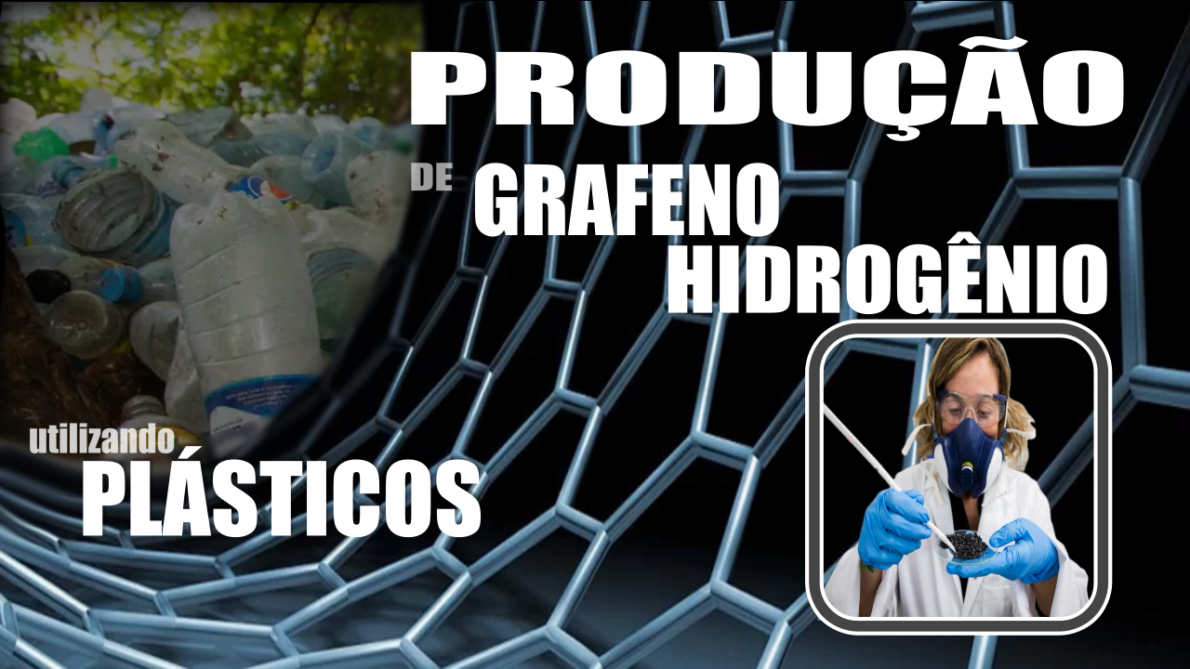

Hydrogen and Graphene Production from Discarded Plastic Promises to Revolutionize the Energy and Mining Industries on the Planet!
The production of hydrogen from discarded plastic, with the additional benefit of creating graphene, has the potential to revolutionize the energy and mining industries. This innovation not only contributes to the reduction of plastic waste but also offers an economical solution for the production of clean hydrogen.
Researchers at Rice University made a groundbreaking discovery: hydrogen production from plastic waste. This low-emission method also generates graphene, a valuable byproduct that can help offset production costs. Graphene, a mining favorite, is an extremely lightweight and durable material composed of a single layer of carbon atoms.
The discovery from Rice University represents a revolution in how we deal with plastic waste. Instead of being seen merely as an environmental problem, plastic waste now has the potential to become a valuable source of hydrogen and graphene. This could have significant implications for the circular economy, where waste is seen not as an end, but as the beginning of a new production cycle.
-
Historic bankruptcy of Centauro shocks the market, and the century-old company puts more than 500,000 products, machines, and complete infrastructure up for online auction.

-
Renewable energy advances over protected areas in Brazil, and a survey by the Energy Transition Observatory reveals silent impacts that challenge environmental conservation and pressure sensitive traditional territories.

-
Rio Grande do Sul accelerates energy transition: State invests in renewable technologies and consolidates decarbonization strategies and pathways to attract billions in new industrial investments.

-
Brazil extracts 26.3 million tons of ore from what was previously treated as waste, transforming residues into wealth, producing over 3 million tons of sand, and demonstrating how national mining is relearning to generate value.


Understand Once and For All the Power of Graphene: The Philosopher’s Stone of the Mining World
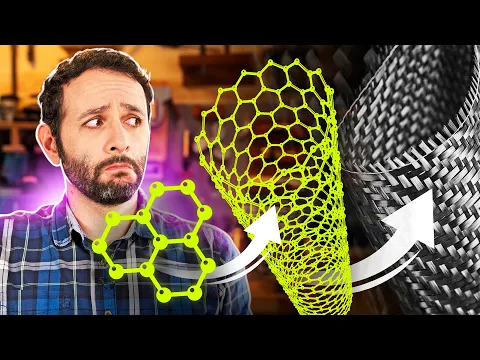

Graphene, a mining favorite, is an extremely lightweight and durable material composed of a single layer of carbon atoms, known for its exceptional properties. In this innovative process, the production of graphene plays a crucial role. By converting discarded plastics into high-yield hydrogen gas and high-value graphene, researchers have created a solution that could be a game changer.
One of the main advantages of this method is its ability to handle mixed plastics, eliminating the need for sorting by type or washing, making the process more efficient and accessible. Furthermore, if the graphene (currently available in the mining sector) produced is sold for just 5% of its current market value, this could result in a near-zero hydrogen production cost. Compared to “green” hydrogen obtained from renewable energy sources, which costs about $5 per kilogram, this approach is both economically advantageous and environmentally responsible.
Redefining the Future of Hydrogen on the Planet
Currently, hydrogen production mostly relies on fossil fuels, resulting in high carbon dioxide emissions. To meet net-zero emissions targets by 2050, it is imperative to adopt cleaner alternatives. Hydrogen obtained through steam reforming of methane, known as “gray” hydrogen, is unsustainable in the long term. The demand for clean hydrogen is set to increase in the coming decades, making initiatives like this one even more crucial.
The process involves Joule heating at high temperatures, vaporizing the hydrogen present in plastics and leaving graphene as a byproduct, a true revolution in mining. Results indicate that up to 68% of atomic hydrogen can be recovered with a purity of 94%.
Transforming Waste into Clean Energy
Hydrogen production from discarded plastic, with the additional benefit of creating graphene, has the potential to revolutionize the energy, recycling, and mining industries. This innovation not only contributes to reducing plastic waste but also offers an economical solution for the production of clean hydrogen. As the demand for cleaner energies grows, approaches like this may be the key to a more sustainable future.
Combining advanced technology with environmental responsibility, this research from Rice University points to a bright horizon, where plastic waste becomes a valuable source of clean energy and high-value materials. The pursuit of innovative and sustainable solutions is essential to addressing today’s global challenges and building a greener, more prosperous future.
I would love to know if you have heard about graphene and hydrogen. Let us know in the comments section. Don’t forget to leave 5 stars and enable CPG notifications to keep up with all the technology news. See you next time!










Acredito que este material /subistancia já se encontrava na estrutura dos discos voadores da área 51.