





 Portuguese
  English
  Spanish
  3 min of reading
  0 comments



The India is consolidating its position as a global power in solar energy with the inauguration of the largest solar panel factory in the country, operated by Tata Power. The new unit, located in Tirunelveli, Tamil Nadu, has an impressive capacity of 4.3 gigawatts (GW) and is part of a national strategy to strengthen local production of renewable energy.
The purpose of the venture goes beyond expanding solar infrastructure. India seeks to reduce dependence on imports, create new jobs, and compete directly with China, which currently dominates global solar panel manufacturing.
New Industrial Unit Drives Solar Energy Growth in India
The growing demand for clean energy has led India to invest heavily in expanding its production capacity. According to the Portal Energia website, Tata Power’s factory plays a crucial role in the country’s goal of achieving 500 GW of renewable capacity by 2030.
-
The Brazilian state accelerates industrial competitiveness with a focus on the extraction of strategic minerals to boost the energy transition in Goiás.

-
Seagri’s headquarters invests in solar energy with Neoenergia Coelba and promises to cut electricity costs, highlighting a strategic advance in sustainability and energy efficiency within state public administration.

-
A Canadian retiree creates a hydroelectric system on a real river, generating energy continuously throughout the day and demonstrating how the power of water can supply a house with stability even in a simple structure.

-
Solar Pyramid draws attention by converting solar energy into million-dollar savings and repositioning the City Hall of Curitiba as an example of innovation, sustainability, and intelligent use of public resources.
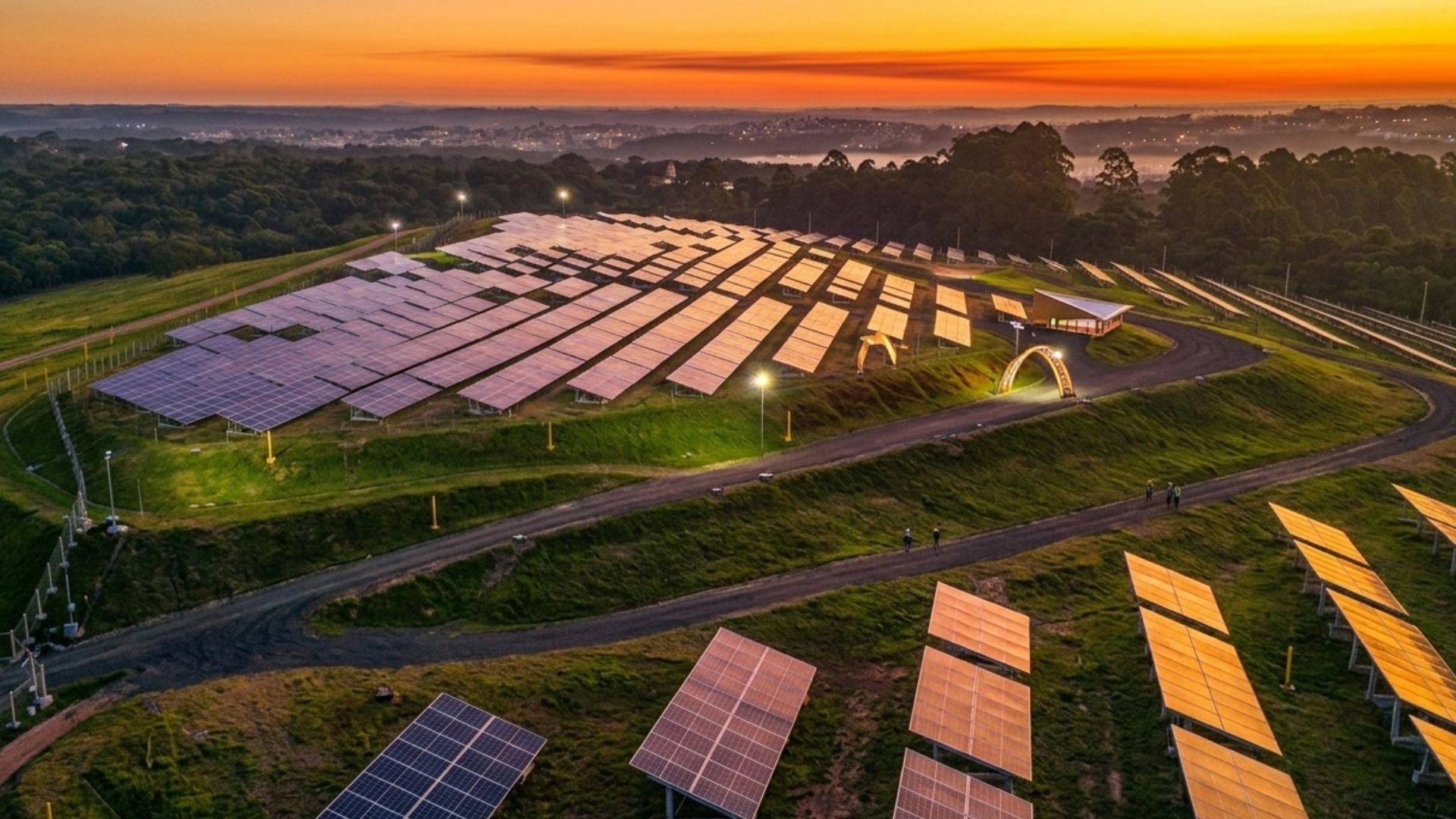

Furthermore, the Crisil Ratings Report indicates that local production of solar panels is essential to ensure energy autonomy, reduce costs, and strengthen the supply chain of photovoltaic energy.
Tata Power Solar stated that the new unit will manufacture high-efficiency solar modules, using TOPCon and monocrystalline PERC technologies. Both are recognized for their superior energy efficiency and long-term durability. These panels will serve both the domestic market and export demands.
The Largest Solar Panel Factory in India Focuses on Inclusion and Women’s Employability
In addition to environmental and economic impacts, the factory also stands out for its social commitment. According to the Portal Energia, about 80% of the jobs created in the unit are held by women.
This initiative not only strengthens the local workforce but also promotes female inclusion in the industrial sector, which has traditionally been male-dominated. The Chief Minister of Tamil Nadu, M.K. Stalin, attended the inauguration and emphasized the factory’s strategic role for the regional economy.
Tamil Nadu has already established itself as one of the main Indian states in the development of renewable energy. The new Tata Power factory further reinforces this position.
The Rapid Expansion of the Indian Solar Sector and Its Global Impacts
Tata Power already operates other factories for solar modules and photovoltaic cells. Currently, the company has 682 megawatts (MW) of capacity in modules and 530 MW in solar cells at its Bengaluru, Karnataka facility.
In addition, a new 2 GW plant is planned in Jodhpur, Rajasthan, further expanding India’s production capacity. According to the Crisil Ratings Report, the total manufacturing capacity of solar modules in India reached 60 GW by March 2024, while solar cell capacity reached 10 GW.
Forecasts indicate even faster growth. By the fiscal year of 2027, solar cell production in India could reach 55 GW. This growth will solidify the country as one of the leading global hubs of the solar industry.
Experts point out that this rapid expansion may challenge the dominance of China, which currently leads in solar panel manufacturing. With increased domestic production, India can reduce costs, attract international investments, and establish itself as a global player in the renewable energy sector.
What to Expect from the Future of Solar Energy in India?
The inauguration of the largest solar panel factory in India marks a significant advancement in the country’s energy transition. In addition to strengthening the industrial sector and boosting the economy, the expansion of photovoltaic solar energy represents a crucial step toward reducing carbon emissions and meeting global climate targets.
In the coming years, the trend is for investments in the solar industry to continue growing. The country is preparing for a scenario of greater energy independence, ensuring security in the supply of clean and affordable electricity for millions of Indians.
Finally, the rivalry between India and China in the solar sector promises to intensify as new factories and technologies are implemented. The future of global solar energy may increasingly be linked to the advancement of Indian national production, establishing the country as a key player in the sustainable energy revolution.










-

Uma pessoa reagiu a isso.