





 Portuguese
  English
  Spanish
  3 min of reading
  0 comments



The First Hypersonic Long-Range Missile of India Marks a Significant Advance in Military Technology, with Impressive Range
India has successfully tested a hypersonic long-range missile, bolstering its defense capability and standing out as one of the few nations with military technological domains. The test, conducted on Saturday, took place on Dr. APJ Abdul Kalam Island, located off the east coast of Odisha. The successful launch positions the country in an elite global group that includes China, Russia, and the United States.
Hypersonic Missile with Advanced Technology and Precision
Developed by the Defence Research and Development Organisation (DRDO) in collaboration with other institutes in the country, the missile is designed to carry payloads over distances greater than 1,500 miles (approx. 2,414 km).
According to an official statement, the system was monitored by multiple range devices, including ground stations and long-range maritime vessels, which confirmed precise maneuvers during the terminal phase of flight.
-
If the trip to the Moon were a hoax, it would be necessary to keep the secret among 400,000 people for more than 50 years and to deceive even the Soviet Union, which was tracking the radio signals coming from the exact direction of the satellite during each Apollo mission.

-
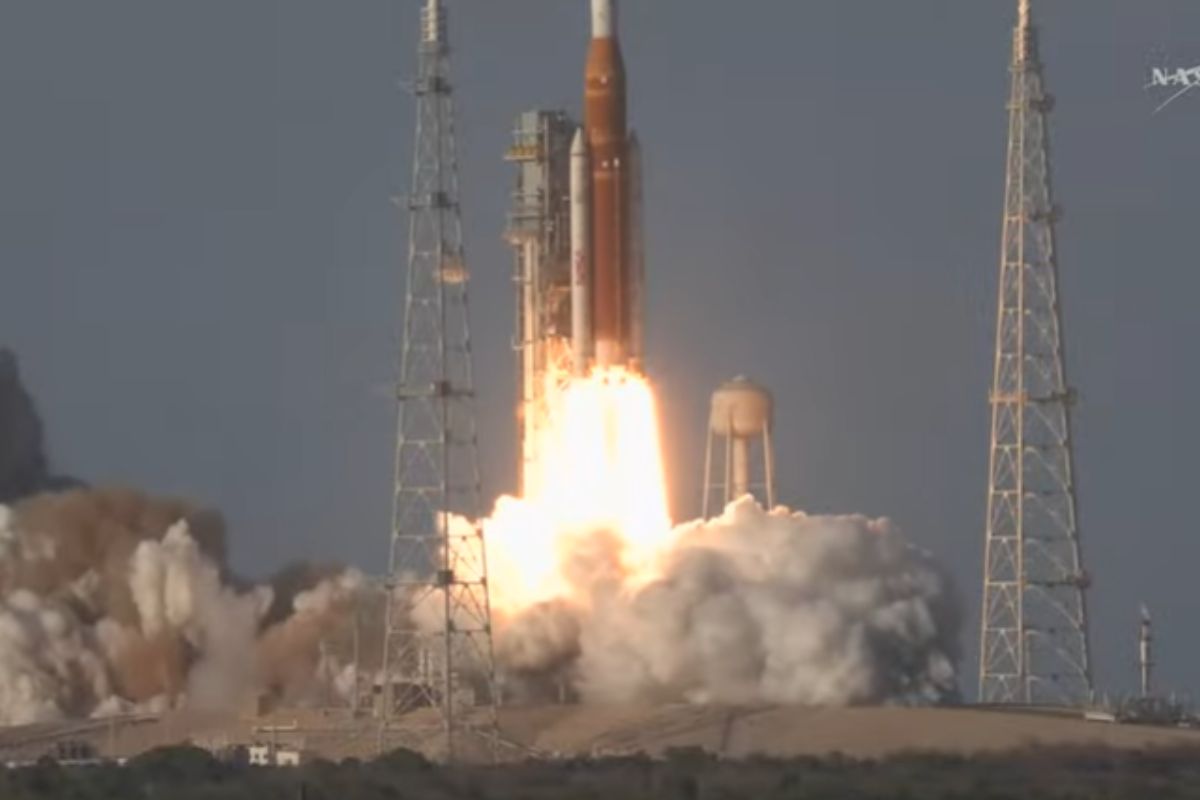
Artemis 2 launches at 7:35 PM with four astronauts and ends a 50-year fast in lunar orbit: the SLS rocket departs from Florida, the mission lasts 10 days, circles the far side, and tests Orion in a free-return trajectory.
-
China is testing a train that will operate at 400 km/h in daily service, which is 80 km/h faster than the French TGV, and uses carbon fiber, magnesium alloys, and more than 4,000 sensors to become the fastest commercial train on the planet.

-
Forget about having an air fryer, electric oven, and steam pot taking up space in your kitchen because a 30-liter smart oven combines all these functions, automatically selects the ideal temperature, and even turns off by itself when cooking is done.


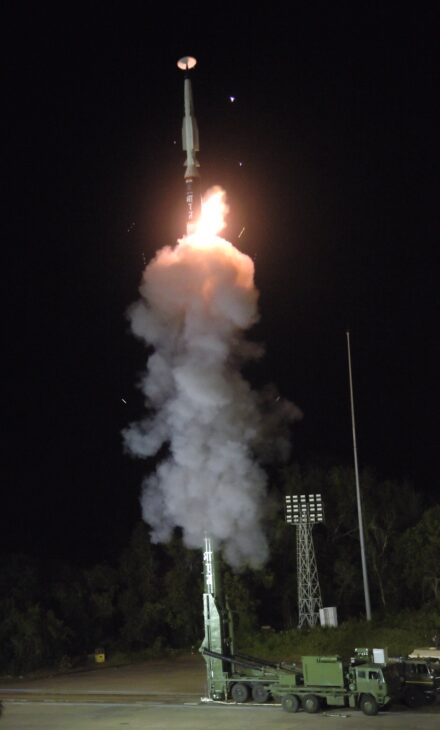
The DRDO, through its official account on X (formerly Twitter), revealed the news: “On November 16, 2024, @DRDO_India successfully conducted a flight test of its long-range hypersonic missile from Dr. APJ Abdul Kalam Island, off the coast of Odisha.”
Reactions and National Impact
The Defence Minister of India, Rajnath Singh, highlighted the historic milestone of progress for the country. “This is a significant moment that has placed India among the few nations with critical and advanced military technologies. I congratulate the team at @DRDO_India, our Armed Forces, and the industry for this exceptional achievement,” Singh wrote on X.
This achievement reflects India’s ongoing drive to demonstrate its technological capabilities, not only in the military field but also in space exploration. In August 2023, the Chandrayaan-3 mission successfully landed at the lunar south pole, with a modest budget of US$ 75 million. This achievement reinforces India’s confidence as a country capable of achieving ambitious goals with optimized resources.
The Global Context of Hypersonic Weapons
Hypersonic missiles are at the center of the global arms race for cutting-edge weaponry. Characterized by their ability to reach speeds between five and 25 times the speed of sound, these devices represent a significant strategic challenge to traditional defense systems.
Hypersonic weapons are divided into two main categories: Hypersonic Glide Vehicles (HGVs) and Hypersonic Cruise Missiles. HGVs are launched by rocket boosters, similar to ballistic missiles, but have the capability to glide and maneuver during flight. Meanwhile, hypersonic cruise vehicles utilize scramjet engines, which maintain hypersonic speeds while flying at lower altitudes, making them difficult to track and intercept.
The maneuverability feature is a crucial differentiator, as it allows these missions to alter their trajectories during flight, challenging defense systems in conventional ways.
A Promising Technological Future
The success of India’s hypersonic test marks an advance not only in the military field but also in strengthening its position as a global technological leader. With strategic investments in research and development, the country is becoming increasingly prepared to face emerging challenges in the international arena.
This achievement reflects India’s determination to establish itself as an innovation powerhouse, demonstrating that with vision and planning, it is possible to overcome limitations and achieve impactful results. The success in the field of hypersonic weapons is undoubtedly a chapter that solidifies the country’s position in an increasingly competitive global landscape.








Seja o primeiro a reagir!