





 Portuguese
  English
  Spanish
  3 min of reading
  0 comments


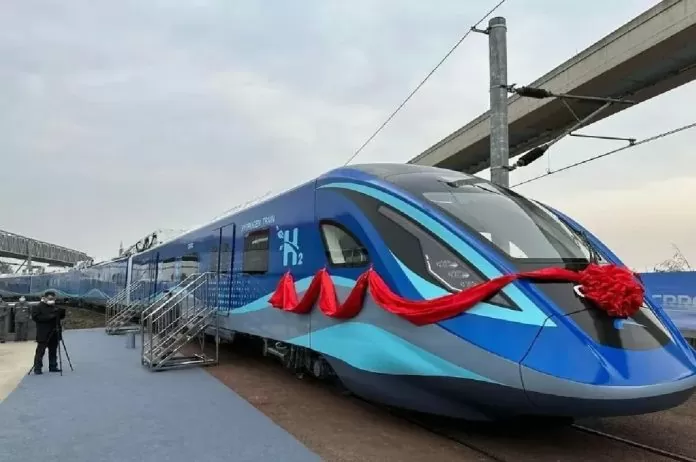
India Just Achieved A Historic Milestone In The Railway Sector By Testing A Hydrogen-Powered Train With An Impressive 1,200 Horsepower.
India is about to make history with an unprecedented achievement in the railway sector. The country has started testing the most powerful hydrogen-powered train in the world, which promises to revolutionize public transport and reduce emissions of pollutants.
With 1,200 horsepower, the new model easily surpasses the European trains that use the same technology, which typically have engines of 500 to 600 horsepower.
Unprecedented Power And Capacity Of The Hydrogen-Powered Train
The new train began testing on the route between Jind and Sonipat in the state of Haryana. Manufactured by Integral Coach Factory (ICF) in Chennai, it represents an important technical and symbolic advancement.
-
While Brazil wants to end the 6×1 work shift, the president of Argentina wants 12 hours for his workers, increasing political tension in the country.

-
The village where two rivers run side by side without mixing in Santarém and Alter do Chão reveals some of the most beautiful freshwater beaches on the planet.
-
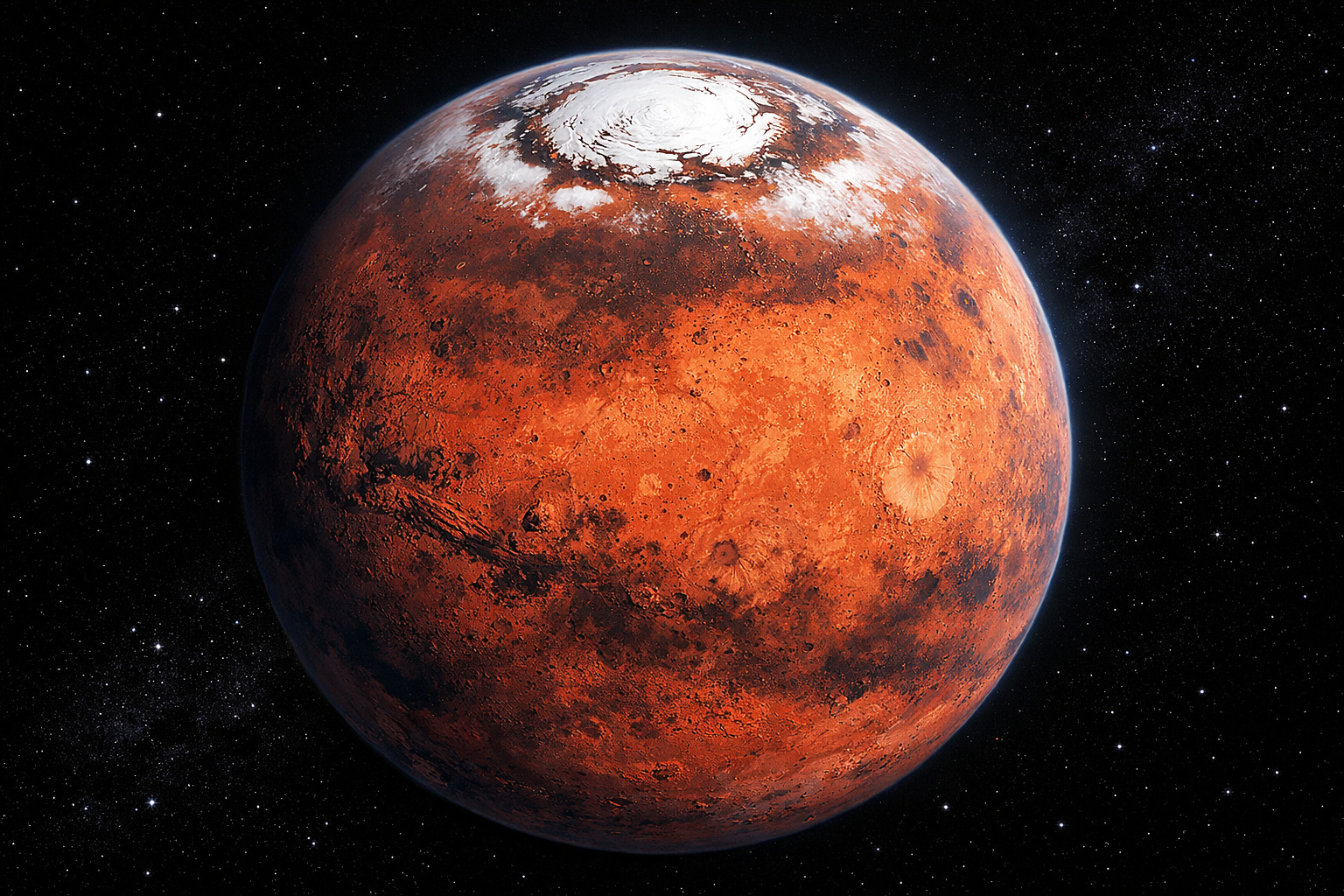
Mars is accelerating, and scientists have discovered that the planet’s day is getting shorter, revealing surprising signs of internal activity.
-
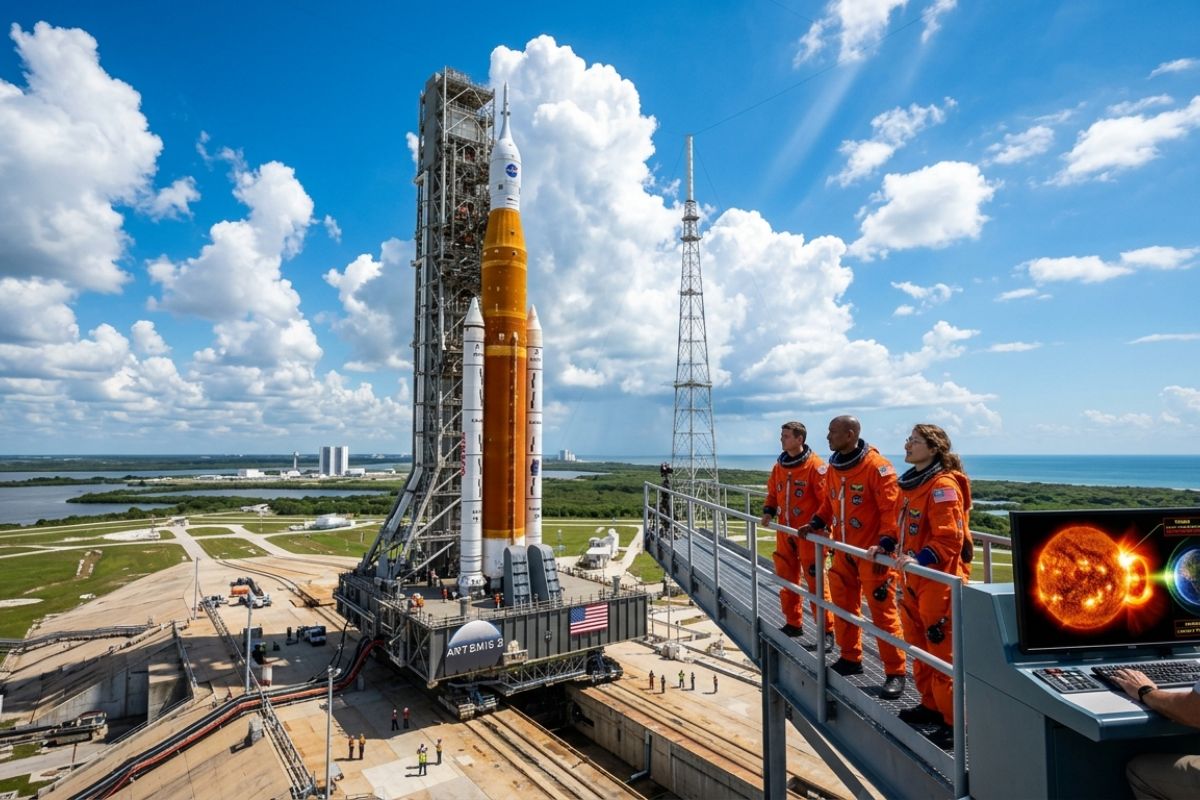
Artemis 2 is set to launch on April 1 at 7:24 PM to orbit the Moon with four astronauts, but a class X solar flare and coronal mass ejection could interfere with communications and threaten the launch.
The vehicle consists of one passenger car and two hydrogen storage cars. It can reach speeds of up to 110 km/h and carry up to 2,638 passengers — a significant number for this type of composition.
This high power is not common in hydrogen-powered trains. Therefore, the Indian model has established a new global standard. It is a bet from the country to combine innovation, sustainability, and mass mobility.
Technical Adjustments Delay Timeline
Despite the good initial results, the project still faces technical challenges. Experts have identified the need to improve the efficiency of the fuel cells, especially when the train operates at full load.
As a result, the commercial launch, initially expected for December 2024, has been postponed to mid-2025.
This change directly impacts plans to put the train into operation on the famous Kalka-Shimla route, a high-value historical and environmental tourist path. Nevertheless, the government remains optimistic and continues to invest heavily in the initiative.
“Hydrogen For Heritage”: A National Program
The train is part of a larger program called “Hydrogen For Heritage.” The idea is to use hydrogen-powered trains on tourist routes that are environmentally sensitive, where electrification is difficult or expensive.
For this purpose, the Indian government has allocated 280 billion rupees (around US$ 336 million) for the production of 35 trains with this technology.
In addition, 60 billion rupees (approximately US$ 72 million) are planned to create the hydrogen supply infrastructure.
The focus is on mountainous or hard-to-reach regions, where diesel still dominates. The switch to hydrogen could improve air quality and reduce noise in local communities.
Towards Carbon Neutrality
This effort is part of the national strategy to achieve net-zero emissions by 2030. India sees hydrogen as one of the most promising solutions for sectors where direct electrification is challenging, such as railways. The government is already planning to go further.
Development is underway for a version with eight carriages, which will be the largest hydrogen-powered passenger train in the world.
The new composition will maintain the same speed of 110 km/h and could accommodate an even larger number of users. The goal is to demonstrate that it is possible to scale this technology for broader uses.
Environmental And Economic Advantages
The hydrogen train emits no greenhouse gases directly, provided the hydrogen used is sourced from renewable origins.
It also reduces air pollution and noise, especially in protected areas and rural zones.
Moreover, it decreases reliance on fossil fuels and helps strengthen energy security. If hydrogen is generated from sources like sunlight and wind, the energy chain becomes cleaner and more local.
This kind of innovation also stimulates strategic sectors of the economy, such as transport, energy, and manufacturing. It is a technology that not only addresses environmental issues but also creates new industrial opportunities.
Promising Future
Despite the ongoing technical adjustments, the Indian project marks an important turning point in the use of clean energy for mass transport. The country is betting on a broad transformation, focusing on sustainability and innovation.
The next major goal is already in sight: to launch the world’s largest hydrogen-powered passenger train, with eight carriages, by the end of 2025.









Seja o primeiro a reagir!