





 Portuguese
  English
  Spanish
  4 min of reading
  11 comments


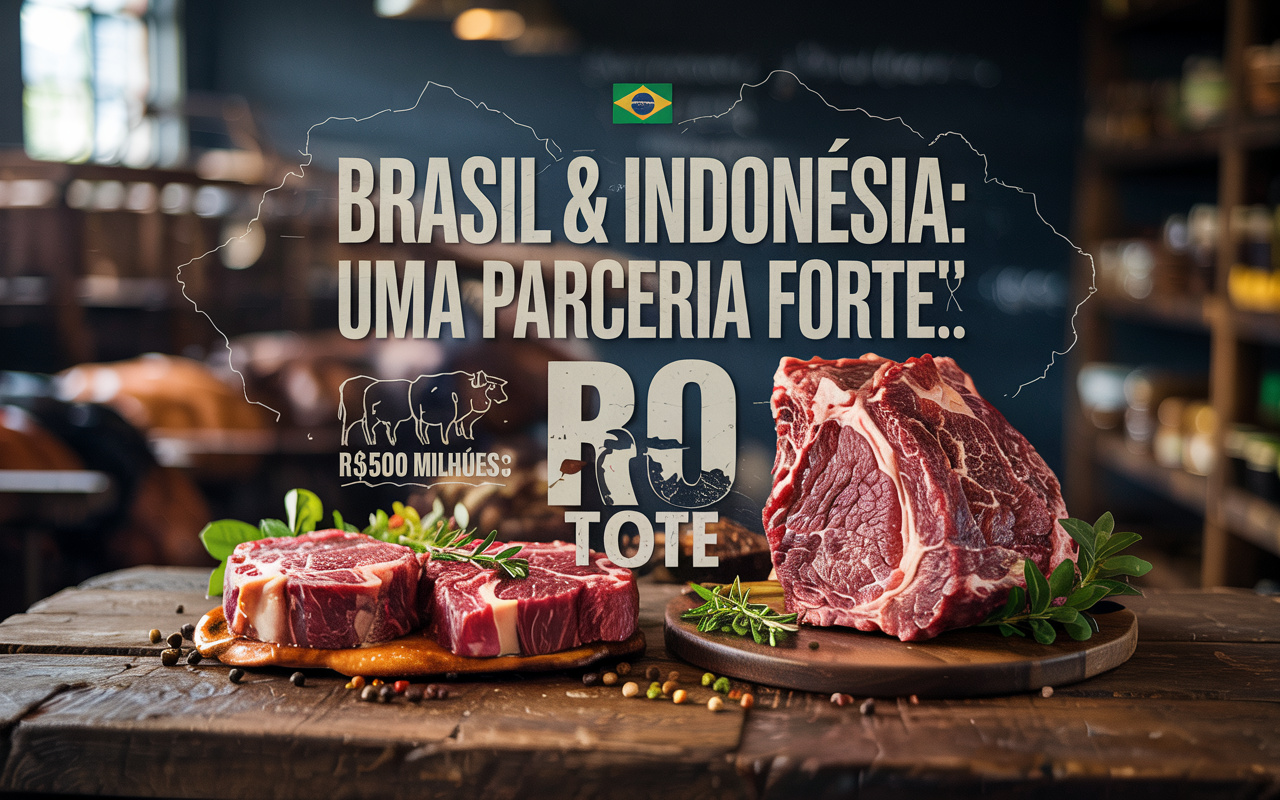


Brazil Conquers Indonesian Market and Challenges Australian Dominance in Beef — New Destination Could Move Billions in Agriculture.
The opening of the Indonesian market for Brazilian beef, officially confirmed in 2023 after years of diplomatic and sanitary negotiations, is set to gain momentum in 2025. The Asian country, with a population of over 270 million and a growing economy, represents one of Brazil’s largest commercial opportunities of the decade. This development ignites expectations in the national agribusiness sector, which sees Indonesia as a chance to diversify exports and reduce dependence on China. At the same time, it creates a new competitive landscape with Australia, which had previously dominated the supply of beef to Indonesians.
The Agreement That Opened the Doors
The negotiations between Brazil and Indonesia lasted over 10 years, hampered by sanitary requirements and strong Australian lobbying.
In 2023, Indonesia finally recognized the Brazilian inspection and sanitary surveillance system, allowing the import of fresh beef from approved slaughterhouses. Initially, only a few plants were authorized, but the Ministry of Agriculture estimates that the number could grow as the trade relationship strengthens.
-
Brazilian city bets on the business environment to generate jobs and attract investments in the energy sector — secretary reveals strategy at Macaé Energy 2026.

-
50 viaducts, 4 tunnels, 28 bridges, and 40 kilometers of bike paths: BR-262 in Espírito Santo will receive 8.6 billion reais for the largest engineering project in the state’s history, inspired by the Immigrant Highway in São Paulo.

-
Brazil produces too much clean energy and doesn’t know what to do with it: over 20% of solar and wind capacity was wasted in 2025 while investors flee and 509 renewable generation projects were abandoned in the last year.

-
Piauí will produce a new fuel that replaces diesel without needing to change anything in the truck’s engine and reduces pollutant gas emissions by half: truck drivers from all over the Northeast are already celebrating the news that will arrive later this decade.


In June 2025, Indonesia increased its quota from 350,000 to 534,000 heads of cattle and excited Brazilian agribusiness with new negotiations.
The entry of Brazil into the Indonesian market was celebrated as a diplomatic victory. The Brazilian Foreign Ministry worked directly to overcome barriers and convince the authorities in Jakarta that Brazil has reliable food control, monitoring, and safety systems. For the government, the agreement represents a strategic milestone to expand its presence in Asia beyond China and the Middle East.
The Importance of Indonesia for Brazil
The consumption potential of Indonesia is impressive. The country has one of the largest Muslim populations in the world, with a growing demand for halal beef — prepared according to Islamic religious rules. Australia, the main supplier until now, exports around US$ 1 billion in beef to Indonesians each year.
With Brazil’s entry, the expectation is to capture part of this market in the coming years. According to the Brazilian Association of Meat Exporting Industries (ABIEC), Indonesia could become one of the top 10 destinations for Brazilian beef by 2030, generating hundreds of millions of dollars a year.
The Halal Challenge and Brazilian Adaptation
To gain a foothold, Brazil had to adapt part of its production to halal requirements. Major slaughterhouses, such as JBS and Minerva, already have certified production lines to meet Islamic markets, including Egypt, Saudi Arabia, and the United Arab Emirates. This experience was crucial for the country to quickly adapt to Indonesia’s requirements.
Still, there are logistical and cultural challenges. Indonesian consumers are accustomed to Australian beef, and gaining their trust will require marketing campaigns, competitive pricing, and quality assurance.
Rivalry with Australia
Australia views Brazil’s entry as a direct threat. Until now, its logistical advantage — geographical proximity and preferential agreements — ensured a near monopoly on beef supply to Indonesia.
Now, it will have to face Brazilian competition, which may offer more competitive prices due to economies of scale in production.
Analysts point out that the dispute goes beyond commerce: it involves political and diplomatic influence in the region. Indonesia is seen as a key player in Southeast Asia, and its rapprochement with Brazil could signal a greater openness to partnerships outside the traditional axis dominated by Australia and the United States.
Impacts on Brazilian Agribusiness
For Brazil, entry into Indonesia reinforces a trend of diversification. Currently, China accounts for over 60% of national beef exports. This concentration is risky, as sudden embargoes or political crises can cause billion-dollar losses. By conquering new markets, Brazilian agribusiness reduces its vulnerability and strengthens its global position.
Another strategic point is the cost-benefit relationship. Although Indonesia does not have the same purchasing power as China, the growth of the local middle class indicates an increase in animal protein consumption over the coming decades. In a scenario of growing global demand, positioning early can ensure a competitive advantage in the future.
Geopolitics of Animal Protein
The competition for the Indonesian market is also part of a larger context: the geopolitics of protein. As beef becomes a strategic product, major powers and blocs seek to secure reliable supply chains. Brazil, the largest global exporter, has become a central player in this equation.
By gaining market share in Indonesia, Egypt, and Vietnam, the country expands its economic and diplomatic influence. Conversely, it challenges traditional suppliers, such as Australia and India, who now need to share space.
Prospects for the Coming Years
The Brazilian government bets that, in five years, Indonesia will be one of the main destinations for national beef in Asia, alongside China and Hong Kong. To achieve this, it will be necessary to maintain constant diplomatic dialogue, expand authorized slaughterhouses, and ensure traceability and halal certifications on a large scale.
Furthermore, Brazil is studying ways to enhance logistical agreements to reduce transport costs to Southeast Asia. One of the proposals is to leverage the transoceanic route with stops at ports in the Middle East, optimizing freight and strengthening bilateral agreements.
The entry of Brazilian beef into Indonesia is more than just business: it is a strategic move that alters the balance of animal protein trade in Asia. For agribusiness, it represents diversification and new revenues. For Brazil, it is also a geopolitical victory, reducing dependence on China and challenging traditional rivals.
Whether the rivalry with Australia will be purely commercial or take on broader political contours remains to be seen. What is certain is that Brazil has just opened one of the most promising doors in the global food market.







Vá cheirar a virilha do Trump, viralatasss.
Nesse caso corre o risco de beijar a boca do eduardo bananinha kkkkk
Acho que essa parceria não tem como dar certo. Seria melhor se fosse com os estados unidos, Trump sabe negociar
Disse o analfffabeto político, patriota da pátria alheia…
Acho que essa parceria não tem como dar certo. Seria melhor se fosse com os estados unidos, Trump sabe negociar
VC DEVE PARECER COM AQUELE **** **** AMERICANO TRUMP, ESSE **** T QUERENDO DISTRUI A ECONOMIA MUNDIAL, RESUMINDO VC DEVE SE BOLSONARO