





 Portuguese
  English
  Spanish
  5 min of reading
  0 comments


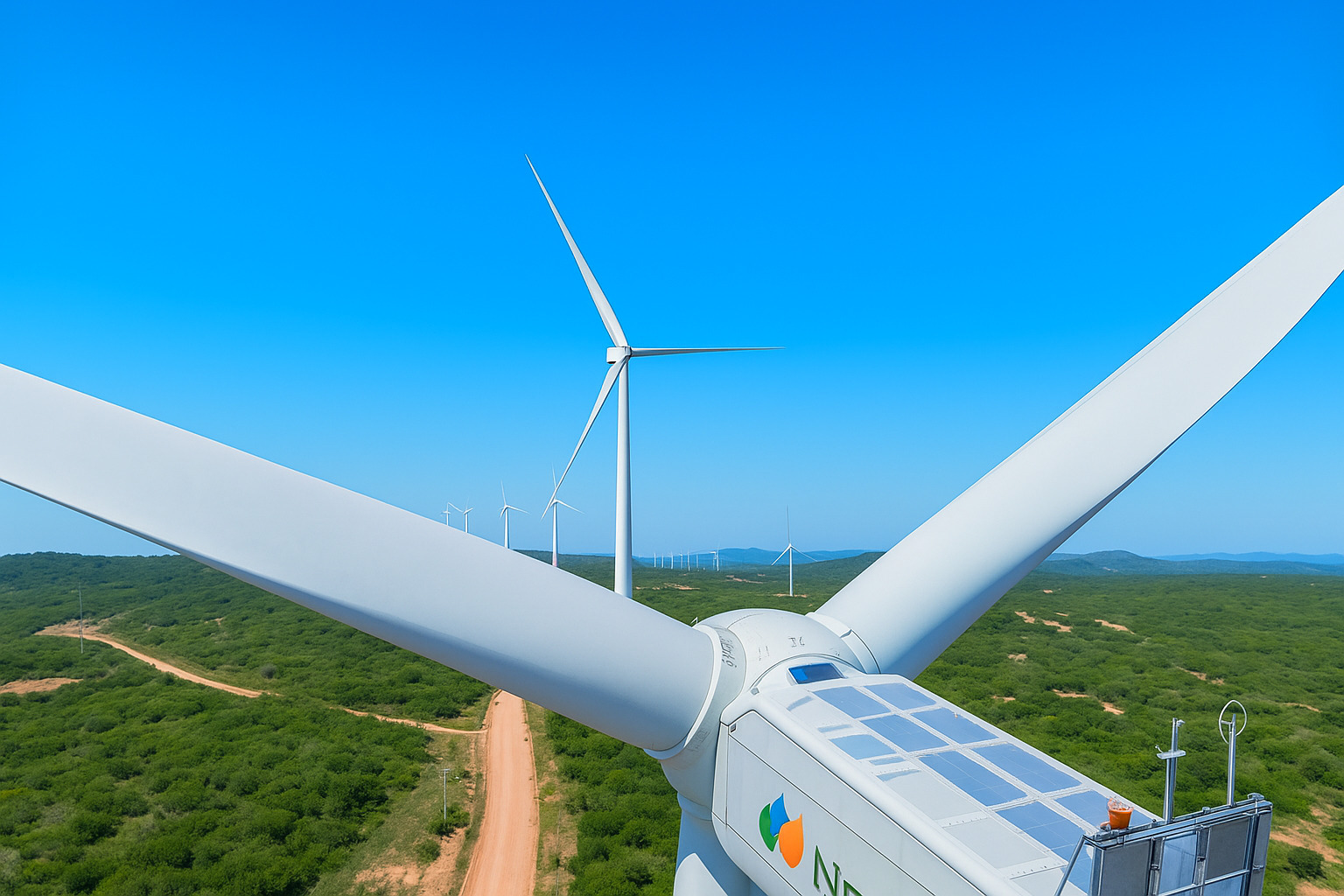
Learn How the Brazilian Industry Uses Renewable Energy Over 64%, Driving Sustainability and Innovation in the Country’s Industrial Sector.
The Brazilian industry uses renewable energy for over 64% of its total consumption, thus consolidating a role of prominence in the global energy transition.
This number, recorded in 2024 by the National Energy Balance (BEN) 2025, prepared by the Ministry of Mines and Energy (MME) and the Energy Research Company (EPE), demonstrates that the country has been advancing consistently in the use of clean and sustainable sources in productive processes.
Historically, the energy matrix of the Brazilian industry has undergone various transformations. For a large part of the 20th century, dependence on fossil fuels, such as coal, fuel oil, and natural gas, predominated in industrial production.
-
The Brazilian Northeast is receiving the largest wave of investments in clean energy ever seen in the country, with R$ 200 billion in wind and solar, 9,000 km of transmission lines, and a promise that could change the economy of 60 million people.
-
Chinese company creates solar cell that breaks the physical limit of silicon with 34.85% efficiency and promises to revolutionize electricity bills with panels that generate 20% more energy starting in 2026.

-
How green infrastructure and renewable energy at the World Cup transform the logistics of the largest sporting event on the planet in North America.

-
The Cagece and UFC project advances in sustainable innovation with biogas by converting waste into renewable energy, reducing environmental impacts, and increasing sanitation efficiency with concrete and measurable results.
However, Brazil has always stood out for having a strong agricultural base, which, consequently, facilitated the incorporation of renewable sources, such as sugarcane bagasse, in energy production.
Thus, the utilization of agro-industrial waste allowed the country to build a more clean and efficient industrial matrix.
Furthermore, the growth in the use of renewable energy in industry did not occur suddenly. It results from decades of investment in research, public policies, and incentives for sustainability.
The National Energy Balance indicates that, in 2024, electricity represented 22% of industrial consumption, with 88.2% of this electricity coming from clean sources, such as hydropower, solar, and wind energy.
Similarly, sugarcane bagasse provided 21.3% of the energy consumption in the industry, thus reinforcing the relevance of renewable sources of agricultural origin.
Therefore, these data indicate that the Brazilian industry uses renewable energy in a strategic and consistent manner, clearly demonstrating a priority for sustainability.
Moreover, this trend is also reflected in the adoption of more efficient technologies, which consequently reduce energy losses during production processes and increase the competitiveness of companies in the national and international markets.
Diversity of the Industrial Energy Matrix
In addition, other renewable and non-renewable sources compose the industrial energy matrix, showing important diversity.
Black liquor, used in cogeneration, represented 9% of consumption, while firewood contributed 8.8%.
On the other hand, fossil fuels like coal (11.9%), natural gas (9.4%), and fuel oil (1.3%) still have a share, but in smaller proportions compared to past decades.
Similarly, charcoal, derived from sustainable management, provided 4%, thus evidencing the search for low environmental impact alternatives.
The growth of renewable energy consumption also appears in strategic sectors of the industry.
The mining and pelletizing sector, for example, increased energy consumption by 8.4%, while the paper and pulp sector grew by 4.6%, and non-ferrous metals, by 3.2%.
Consequently, these figures demonstrate that even in energy-intensive segments, the Brazilian industry maintains a high proportion of clean sources, contributing to the reduction of carbon emissions and the strengthening of the green economy.
Moreover, the importance of the Brazilian industry using renewable energy goes beyond environmental issues.
It is also a economic and social strategy.
The adoption of clean sources reduces dependence on imported fuels, lowers long-term operational costs, and generates employment opportunities in sectors related to sustainable energy.
Likewise, it strengthens Brazil’s position on the international stage as a leader in sustainable industrial practices, offering a development model aligned with global decarbonization.
National Energy Balance and Strategic Planning
Furthermore, the National Energy Balance, published annually since 2004, serves as the main reference to monitor the energy sector.
It presents detailed statistics on supply, conversion, distribution, and consumption of energy in the country, including data on primary resource extraction, imports, and exports.
Through the BEN, the government and energy sector companies can plan public policies, strategic investments, and technological innovation actions, ensuring that industrial growth progresses alongside sustainability.
To enhance society’s understanding of Brazil’s energy evolution, the MME launched the series “Energy of Brazil”.
This initiative presents information in an accessible manner, with explanatory content and infographics detailing advances in decarbonizing the energy matrix, the use of renewable sources in industry and in the residential sector, electrification of transportation, and the expansion of biodiesel, solar, and wind energy.
Thus, this communication helps citizens, managers, and students understand the transformative role of clean energy in the national economy.
Moreover, the country’s historical trajectory shows that the use of renewable energy in industry is not just a trend, but rather a consolidated characteristic of Brazilian development.
From the first investments in hydropower and biomass utilization to the expansion of solar and wind energy, Brazil has demonstrated an ability to align economic growth with environmental responsibility.
Today, the country stands out for using modern technologies, such as cogeneration from agricultural waste and biomass, which increase energy efficiency and reduce environmental impacts.
Integration Between Sectors and Technological Innovation
The Brazilian industry using renewable energy for over 64% also highlights the integration between productive and energy sectors.
Companies from different sectors, such as steel, paper and pulp, mining, and chemicals, implement energy efficiency solutions and adopt clean sources on a large scale.
Thus, this movement strengthens the competitiveness of the industry and contributes to meeting national and international greenhouse gas reduction goals.
In addition, the advancement of renewable energy in the Brazilian industrial sector shows the importance of technological innovation.
New energy conversion methods, such as waste solid utilization, biogas usage, and investment in photovoltaic solar energy systems, reduce costs and increase energy security.
Therefore, these efforts allow the industry to continue leading the path of the energy transition, consolidating the clean matrix as a competitive differential for the country.
Additionally, the expansion of renewable energies generates positive impacts in less industrialized regions, promoting energy decentralization.
Small and medium enterprises leverage technologies like solar panels and biogas microgeneration, becoming part of the energy transition without relying solely on large energy suppliers.
Thus, this scenario expands local development opportunities and strengthens the regional economy.
Furthermore, the future outlook for the Brazilian industry indicates that the trend of increasing the use of renewable sources is expected to intensify.
With the rise of technological efficiency, the encouragement of the circular economy, and the development of public policies promoting clean energy, the proportion of renewable energy in the industrial sector should reach new levels, thus reinforcing Brazil’s commitment to sustainability and global leadership in clean energies.
Commitment to Sustainability and Development
In summary, the fact that the Brazilian industry uses renewable energy for over 64% in 2024 represents decades of investment, technological innovation, effective public policies, and environmental awareness.
Therefore, the country has built a solid trajectory in the use of clean sources, establishing itself as a reference in the global energy transition.
This leadership shows that it is possible to reconcile industrial development with sustainability, ensuring long-term economic, social, and environmental benefits.
The commitment to renewable energy is, therefore, a hallmark of the Brazilian industry, which continues to be at the forefront of innovation and respect for the environment, serving as a model for the world.










Seja o primeiro a reagir!