





 English
  Francês
  Alemão
  Italiano
  Japonês
  Norueguês
  Portuguese
  Spanish
  4 min of reading


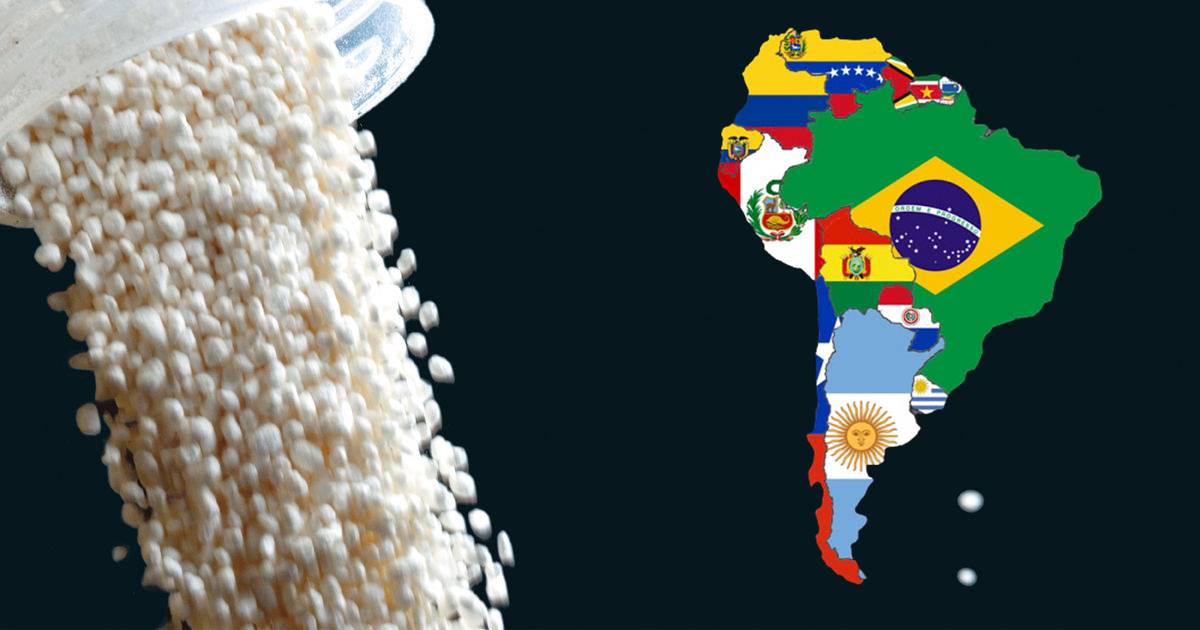
Latin America should start 2021 with optimism regarding the coronavirus pandemic, as the scientific community signals that vaccines may be ready faster than expected.
The region was one of the hardest hit during the first half of 2020 and saw a quick recovery in the second half of the year, a trend that is expected to continue into the first half of 2021.
The pandemic surprised all players, but the negative impacts expected for local economies were revised throughout the year as governments took measures to mitigate the crisis. Plastic consumption is seeing strong demand entering the first semester of 2021, after recovering from an initial downturn.
-
Expansion of Federal Institutes: 38 new campuses and R$ 200 million for public education; see the cities included.

-
Lula’s government changes rule in important benefit and thousands of Brazilians will no longer receive it; see what has changed.

-
New Gripen fighter makes Argentines surrender to Brazil, and the heavy reaction exposes envy, frustration, and shock at Brazil’s technological leap.

-
This discovered deposit near the Andes could change the future of Argentina, attract billions, and even shake up the global metals market.

The International Monetary Fund revised its estimate for Brazil’s GDP growth in 2021 from 3.6% to 2.8%, after revising its estimates for 2020 from a decline of 9.1% to 5.8%. Other regional economies, such as Argentina and Chile, had stronger lockdown measures and slower economic recoveries, but are expected to enter 2021 with improved consumption as industries return to pre-pandemic levels. The IMF estimates that Latin America’s GDP will fall by 8.1% in 2020 and grow by 3.6% in 2021.
These improved outlooks can also be seen in the Latin American polymer markets for the upcoming year.
Market players believe that Latin America’s automotive sector could drive polypropylene consumption in 2021. In Brazil and Argentina, vehicle production levels have recovered since May and have normalized since August, while official associations refrained from making forecasts for 2021. The sectors saw activity nearly paralyzed in April amid widespread shutdowns to contain the spread of the coronavirus.
“Polypropylene prices will remain better than those of polyethylene, but are expected to fall by US$ 100/mt or more in the next six months”, said Robert Stier, senior petrochemicals leader at S&P Global Platts Analytics.
The Latin American construction sector also halted at the beginning of the pandemic but soon saw a strong recovery. The sector is expected to boost plastic consumption throughout the first quarter as infrastructure projects resume.
In 2021, petrochemical operating rates and demand across the region are expected to see increases compared to 2020.
“We expect the fundamentals of ethylene and polyethylene in South America to be very similar to 2019 in terms of plant operating rates and net polyethylene trade”, said Stier.
Higher Demand, Lower Stock
The industry’s struggle with a lack of raw materials was expected to extend into early 2021 before normalization. High demand in the second half of 2020 clashed with low resin stock levels among distributors, leading to stronger prices for both imported and domestic material across the region.
Polyethylene prices in Brazil and on the import markets of the West Coast of South America are expected to fall in the first half of 2021, according to Stier, after declining since early November from historical highs in September and October.
“By June, polyethylene prices are expected to drop by up to US$ 200/mt from the current high levels, which are the result of global disruptions that began with Hurricane Laura in late August”, comments the senior petrochemicals leader at S&P Global Platts Analytics.
Brazil’s and the West Coast of South America’s polyethylene import markets showed a rapid recovery in a V-shape, while prices lagged behind. Between May and June, prices hit record lows for both regions before soaring to record highs.
Market participants do not see room for increases in domestic polyethylene prices in Brazil at the beginning of 2021.
Polyethylene resins hit record domestic prices in Brazil in November, reflecting the higher values in the import market and the strong depreciation of the Brazilian currency, the Real.
Some players, however, were concerned that companies are still restocking, potentially leading to a price recovery.
The expectation for 2021 is for more stable monetary values across the region, an important element to consider in polymer imports.
The Central Bank of Brazil sees the exchange rate for the Real ending 2021 at R$ 5.20 / US$ 1, while the local annual interest rate is expected to rise by 1 percentage point, to 3% from the current 2%. The uncertainty of the pandemic caused the Real to be one of the most devalued currencies in the world in 2020. The exchange rate started 2020 at R$ 4.01 / US$ 1, considered high at the time, but surpassed R$ 5.80 / US$ 1 in the first half.
Brazil was not the only country facing currency devaluation. Argentina’s currency depreciated by more than 30% and Colombia’s by more than 17%. The currencies in Chile and Peru were less affected.
In the Mercosur region, local distributors and traders believe that limited product availability may continue until January, while they hope the situation will be resolved soon, as out-of-zone materials are gaining market share. The region was primarily supplied by regional producers from Brazil and Argentina; high prices were not the issue, as availability became nonexistent during the second half of 2020.
*Analyze from the perspective of Global Platts experts








Seja o primeiro a reagir!