





 English
  Francês
  Alemão
  Italiano
  Japonês
  Norueguês
  Portuguese
  Spanish
  3 min of reading


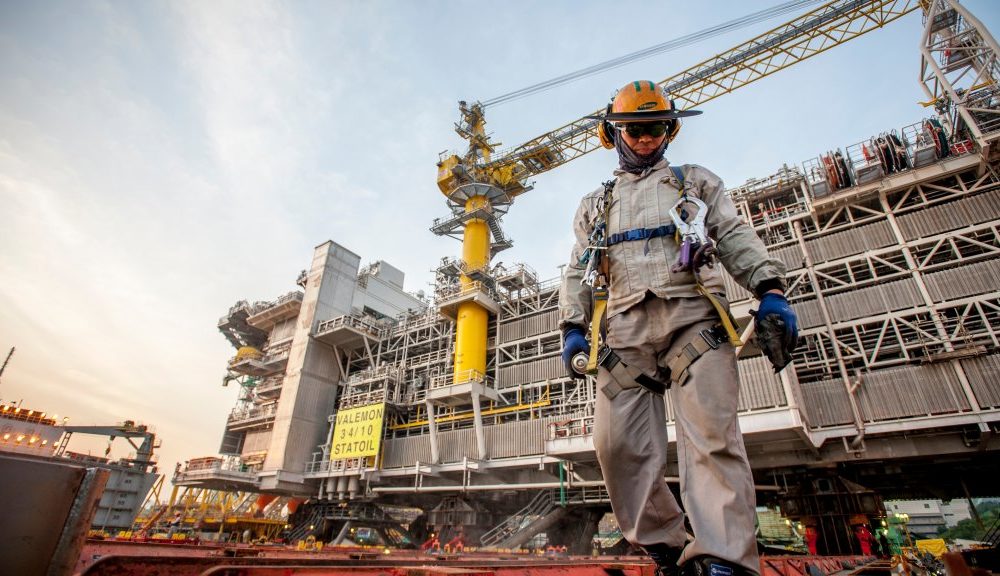
In Response to This Question Worth Billions of Dollars and Thousands of Jobs in the Country: Shipbuilding Industry in Brazil, What Is Missing?
In Brazil, the shipbuilding industry has always been unstable, experiencing periods of prosperity with many projects and job vacancies, and phases of scarcity with high unemployment rates, like what we have been suffering from in the last four years. Metalworking Company with Job Vacancies for Welders and Boilermakers – Resumes at the Door, Mail, or Registration
Read Also
- Seafarers Are Being Called to Work on a 60 x 60 Shift on Tanker and Oil Ships
- Halliburton Starts New Selection Process, Vacancies Today Are for Maintenance Assistants and Engineers
- Universities in Argentina Offer Free Courses in Engineering and Medicine Without Entrance Exams for Brazilians
Globally, countries committed to the shipbuilding sector establish policies for its development and maintenance.
-
New shoe factory in Ceará is expected to create 400 jobs and strengthen the local economy.
-
No one imagined it, but a mixture of sawdust with a mineral that fights fires surprises scientists with a result that changes the course of fire-resistant construction.

-
From empty land to a high-end house, wooden construction uses a lightweight system, metal structure for the foundation, ventilated ceramic cladding, and special windows to create an efficient and comfortable living space throughout the year.
-
From vacant land to a high-end house, wooden construction uses a lightweight system, a metal structure for support, ventilated ceramic cladding, and special windows to create an efficient and comfortable living space throughout the year.

In China, for example, the central government is a partner of the shipyards and intervenes directly in pricing policy, ensuring that they are much cheaper than those observed in the global market. Moreover, Chinese workers do not receive the benefits that are currently paid by the entire Brazilian industry.
In Japan, there is close cooperation between the maritime sector and the country’s banking system, making the interest rates on loans very attractive, reaching almost zero percent per year. The country has invested heavily for more than 20 years in the sector and has a highly efficient ship component industry capable of meeting nearly 100% of needs, making Japan’s shipbuilding industry attractive to international shipowners.
With prices 13% to 40% lower than production costs, South Korea has 30 years of investments in the sector, with government support for the expansion and installation of shipyards, such as state-of-the-art production units (specialized in large vessels, especially VLCCs).
In the U.S., the “Jones Act” is a state program of the American economy committed to job creation and national supremacy. This regulation requires that cabotage be performed by American-flagged vessels built in American shipyards and owned by American citizens.
It is very clear that the countries that have built an effective shipbuilding industry have solidified due to government support. Based on all this information, it is not difficult to see that we will only have a consolidated shipbuilding industry in Brazil if we have the support of a State Policy backed by the Federal Government.
Despite the excellent quality of the Brazilian workforce, we cannot be competitive, as we face labor and tax costs and deficiencies in the country’s logistical infrastructure that increase our costs, along with the lack of ship components in Brazil. We could say that we are only competitive under equal conditions.
The shipbuilding industry in Brazil needs to persist in orders for at least 20 years to achieve international productivity levels. The sector requires competitive lines of credit and a Guarantee Fund for financing structuring, in addition to adequate local content so that we have a ship component industry in Brazil capable of meeting our needs, thus enabling us to reduce our costs.
For this, an effective tax reform is necessary allowing us to have competitive prices compared to those practiced in the international market, so we do not rely solely on local demand.
Those who know our industry are aware that we have delivered over 500 vessels in just over eight years: oil tankers, gas carriers, offshore support vessels (PSVs, AHTSs, PLSVs, and others), as well as several maritime platforms, complete or with assembly and integration of modules. And all this was done with quality far superior to the shipbuilding works we currently receive from China and other Asian countries.
For many years, sectors such as automotive and agriculture have received direct investments from the Brazilian state. In these two sectors, not only the market but also subsidies dictate growth.
Therefore, in response to the question worth billions of dollars and thousands of jobs in Brazil, which the shipbuilding industry is waiting for, it must come from the willingness to create an adequate State Policy on the part of the Federal Government.
By – Ariovaldo Rocha, President of the National Union of Industry for Naval Construction and Repair (Sinaval)









Seja o primeiro a reagir!