





 English
  Francês
  Alemão
  Italiano
  Japonês
  Norueguês
  Portuguese
  Spanish
  4 min of reading
  0 comments


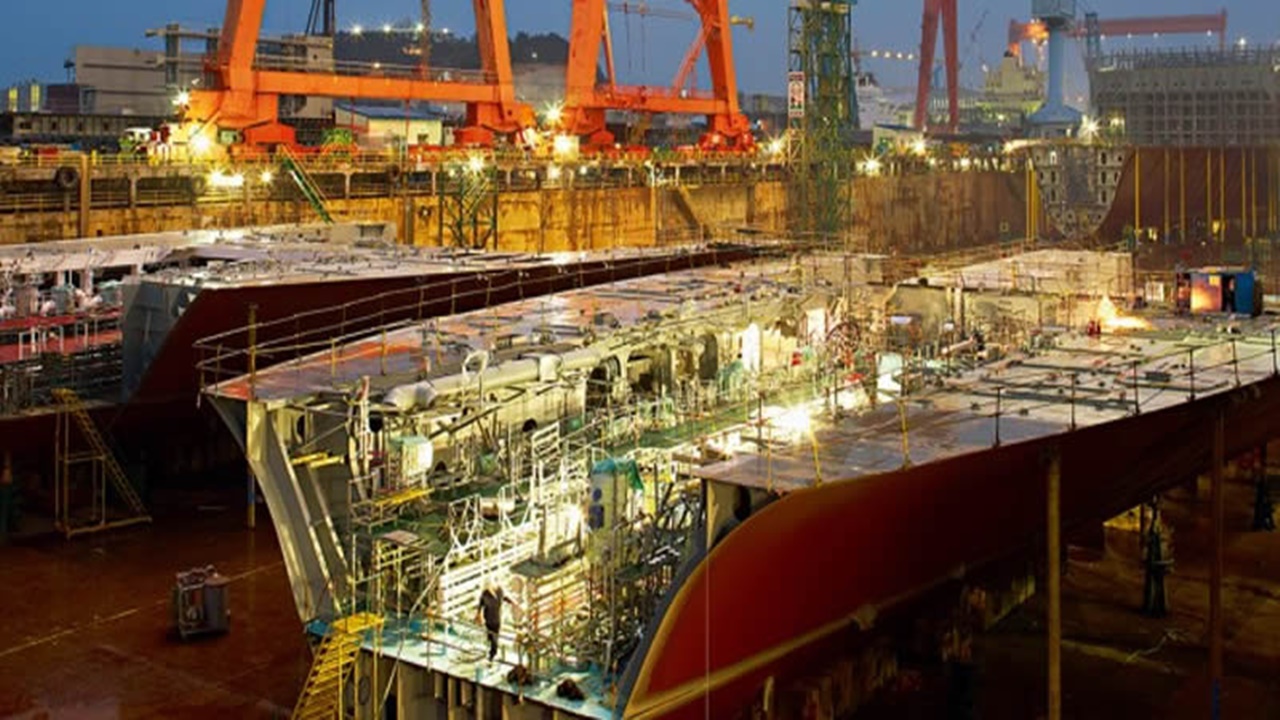
Brazilian Shipbuilding Gained Allies Like Steel and Metallurgy, Which Have Been Fundamental for the Development of the Sector, Starting with the Production of Metal Alloys Like Aluminum
The shipbuilding industry, which was once the protagonist of the Brazilian economy, generating thousands of jobs, has gained allies such as steel and metallurgy to reclaim its prominent role in Brazil’s economy, responsible for producing metal alloys like Aluminum, used in the construction of vessels.
See Also
- Job Openings Today (09/21) for Construction and Assembly Contracts Offshore in Rio de Janeiro
- Technicians and Engineers Are Called by a Human Resources Company to Work Onboard; There Are 49 Job Openings for ROV Operator
- U.S. Company Calls Brazilians for Remote Job Openings with Salaries in Dollars, Without Leaving Brazil, and Various Benefits
- WEG Will Supply the Largest Steam Turbine and the Largest 4-Pole Generator in the World for the Cerradão Ethanol Plant
- After Government Mandate, Petrobras Publishes Call for Access to the Natural Gas Regasification Terminal in Pecém, Ceará
The Main Applications of Aluminum in the Naval Industry and Its Benefits for Sector Development.
In this context, executive Luiz Henrique Caveagna, currently General Director of Termomecanica, a leading company in the transformation of copper and its alloys, explains the main applications of Aluminum in the naval industry and also the benefits of the metal for the development of the sector.
We know that the naval industry has been present in Brazil for centuries, given that we benefit from the geographical position and resources that caught the attention of the Portuguese, who, upon arriving in Brazil, established shipyards for both repairing vessels and constructing new maritime transportation.
-
New shoe factory in Ceará is expected to create 400 jobs and strengthen the local economy.

-
No one imagined it, but a mixture of sawdust with a mineral that fights fires surprises scientists with a result that changes the course of fire-resistant construction.

-
From empty land to a high-end house, wooden construction uses a lightweight system, metal structure for the foundation, ventilated ceramic cladding, and special windows to create an efficient and comfortable living space throughout the year.
-
From vacant land to a high-end house, wooden construction uses a lightweight system, a metal structure for support, ventilated ceramic cladding, and special windows to create an efficient and comfortable living space throughout the year.
More than 500 years have passed, and shipbuilding has become a major protagonist in the Brazilian economy, serving as a significant gateway for job generation in the country.
According to SINAVAL – National Union of the Shipbuilding and Repair Industry, the Institute of Applied Economic Research (IPEA) indicated that, from 2004 to 2014, the naval industry experienced a growth of 19.5% per year. This scenario resulted in the construction of 600,000 vessels and the creation of 80,000 direct jobs and 400,000 indirect jobs.
However, in 2014, the Brazilian shipbuilding industry entered a crisis, and according to SINAVAL, employment in the naval sector drastically decreased, representing over 80%, and today there are fewer than 15,000 jobs in the country’s shipyards. In this context, the major challenge for the naval industry has been to regain its prominent role in the national economy.
For this, Brazilian shipbuilding has gained allies in other market branches such as steel and metallurgy, which have been fundamental for the development of the sector, starting with the production of metal alloys like Aluminum, used as raw material in vessel construction.
Aluminum: The New Ally of the Naval Industry
Aluminum, a versatile metal with numerous applications in the naval segment, allows it to outshine its competitors, such as Steel, for example.
For those who do not know, Aluminum can be employed in the structural parts of small and medium vessels, or even in the interior finishing of any vessel, using Aluminum sheets and extruded profiles, including profiles derived from billets that constitute the masts of ships and boats.
The possibilities for applying the metal are diverse. Aluminum can also appear as decorative articles and in lightweight interior structures, in finishing profiles in boats and yachts, and even in more mechanical details, such as control panels, instrumentation, compartments, and refrigeration systems, as well as other smaller applications where corrosion resistance and good thermal conductivity are required.
Furthermore, in the structure of nautical vessels, such as the hull, for instance, the metal is also used in its special alloys in small and medium-sized vessels, like yachts and boats. However, it is not the most used material for this purpose, as its utilization is more costly compared to competing materials. On the other hand, it offers significant durability advantages.
Aluminum Outperforms Other Materials
Lightness is a fundamental characteristic for the proper functioning of a maritime transport means. In this regard, Aluminum stands out compared to other metals. As it is an extremely lightweight material, it brings significant sustainable benefits by generating less pollutant load in the atmosphere and promoting greater fuel economy, which is similar to how we see Aluminum in other sectors of the economy.
Additionally, aluminum stands out for its corrosion resistance – and greater durability are qualities that justify the choice of metal in the naval industry. An example that proves the superiority of the metal in the sector is the experience recounted by Amyr Klink, a Brazilian sailor known for his journeys to Antarctica. Klink reports that his boat (developed with properties of Aluminum) could endure many more voyages than the boats of sailors from other countries, who needed to replace their vessels more frequently.
The fact is that Aluminum has dominated different spheres of the global economy. It is not difficult to find this metal in construction, refrigeration, automotive, and electricity, as well as, of course, in areas with advanced technology, such as the aerospace and aeronautics sectors. The scenario in the naval industry is no different. Therefore, it is crucial to increasingly stimulate investments in Aluminum within the naval segment, so that these two sectors can work together to meet the most demanding market needs.
by – Luiz Henrique Caveagna is General Director of Termomecanica, a leading company in the transformation of copper and its alloys.








Seja o primeiro a reagir!