





 Portuguese
  English
  Spanish
  5 min of reading
  8 comments


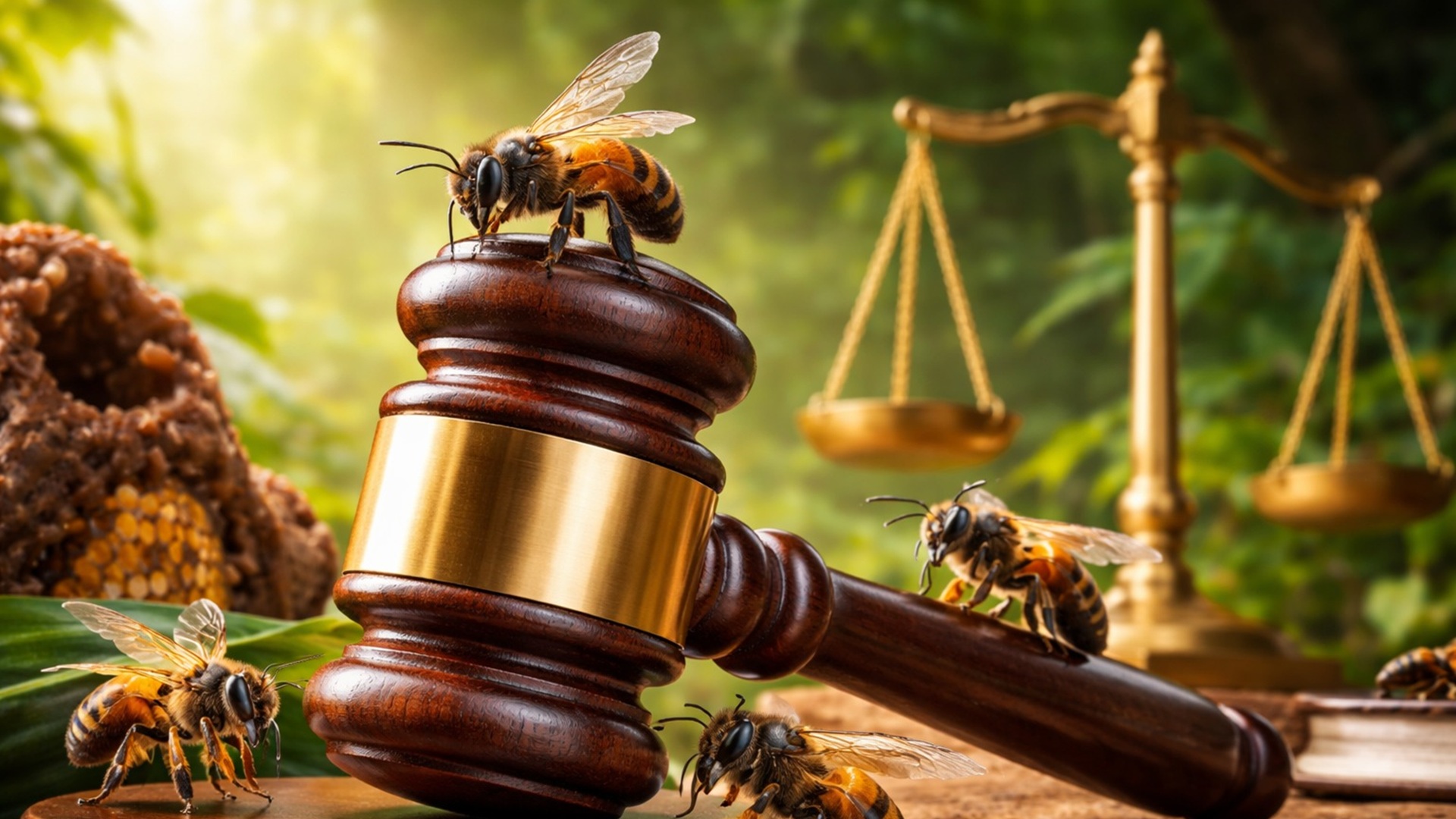


Peru Approves Unprecedented Laws Recognizing Stingless Bees of the Amazon as Rights Holders, Ensuring Legal Protection for Their Habitat, Biodiversity, Indigenous Culture, and Essential Ecological Services
The Peru has legally recognized the stingless bees of the Amazon as subjects of law, ensuring protection for their habitat, survival, and legal representation, in an unprecedented shift involving national legislation in 2024 and pioneering municipal regulations in the rainforest.
This decision establishes, for the first time in the world, explicit legal rights for native insects. Historically overlooked in public policies, the stingless bees now have their right to exist and thrive formally and bindingly recognized. The measure shifts the focus of conservation from a resource-centered logic to one that acknowledges life itself as a subject of protection.
Unlike the European honeybee introduced centuries ago, Amazonian stingless bees do not sting, do not colonize, and do not displace other species. They have coexisted in the ecosystem of the forest for thousands of years. Nevertheless, they remained absent from official censuses, environmental programs, and legal instruments for defense for decades.
-
While the world looks at oil, the war with Iran is already disrupting helium supply from Qatar, affecting car and iPhone chips, threatening AI expansion, and putting pressure on aluminum packaging at the highest value in four years.

-
Global warming will expose a treasure hidden under the ice of Antarctica and may spark an international dispute over gold and valuable minerals.

-
A street vendor from Praia Grande built a robot made of scrap from scooters and washing machines that pulls his popcorn cart on the beach, emits sounds, and interacts with customers, becoming an attraction on the coast of São Paulo.

-
The specifications of the Xiaomi 18 Pro Max have been leaked, and the highlight is a dual 200 MP camera with a new 22-nanometer technology that promises to consume less energy and capture details in shadows and bright areas using LOFIC HDR.


Cultivated by indigenous peoples since pre-Columbian times, these bees sustain the ecological balance of the rainforest. They pollinate a significant portion of Amazonian flora and maintain complex forest cycles, enabling crops such as cocoa, coffee, and avocado in traditional agroforestry systems.
Today, their survival faces simultaneous and interconnected pressures. Accelerated deforestation, widespread pesticide use, climate change, and competition with invasive species act in concert. The result is a silent but consistent decline in native populations.
Legal Recognition and A Paradigm Shift in Conservation
For advocates of the new legislation, the impact goes beyond the legal field. Recognizing rights for a species implies accepting that nature is neither a backdrop nor an inexhaustible resource. It is a living system of which society directly depends for its own survival.
The process did not begin in offices. It developed in the field, through years of collaborative work with indigenous communities. Researchers documented the presence, decline, and ecological value of stingless bees, combining scientific research with traditional knowledge passed down through generations.
The initial interest focused on honey, used as medicine during the pandemic in areas with no access to medical treatment. Chemical analyses revealed a diversity of bioactive compounds with anti-inflammatory, antibacterial, and antioxidant properties. The product was not only food but also medicine and biological memory of the rainforest.
From that point on, expeditions intensified. The goal was not to extract but to learn. How to locate nests, how to care for them, and how to harvest honey without destroying colonies. Precise, refined, and non-industrial practices began to guide the relationship with the bees.
Amazonian Biodiversity and the Ecological Role of Native Bees
The Amazon rainforest is home to approximately half of the nearly 500 known species of stingless bees in the world. They are ancient species, highly sensitive to sudden environmental changes. When they disappear, there is not always a functional substitute capable of fulfilling the same ecological role.
For the Asháninka and Kukama-Kukamiria peoples, these bees are not resources. They are woven into the cultural and spiritual fabric. The ancestral knowledge, unwritten yet practiced daily, resides within them. Losing them would mean losing language, history, and ways of life.
Reports collected from remote communities are consistent. Where a short walk once sufficed to find hives, now hours are required. In some cases, they simply do not appear. When they do emerge, they are not always healthy, indicating growing environmental imbalances.
Pesticide residues have been detected in honey, even in areas distant from industrial agriculture. The contamination crosses geographic and administrative borders, affecting territories that are not directly involved in intensive production chains. Pollution spreads diffusely.
Research, Ecological Mapping, and the Scientific Basis for the Laws
For years, the absence of official recognition blocked scientific advances. Without consolidated data, there was no protection. Without protection, there was no funding. A vicious cycle formed that delayed effective responses. Breaking it required persistence, institutional partnerships, and prolonged patience.
The ecological mapping project initiated in 2023 marked a turning point. It clearly demonstrated the direct link between forest loss and the collapse of native bee populations. Empirical evidence strengthened the legal and technical argument for formal protection.
This work contributed to the approval, in 2024, of a national law that recognizes stingless bees as native to Peru. As a result, environmental protection obligations were automatically triggered, creating a new level of state responsibility.
From the national legislation, some municipalities advanced further. Satipo was the first. Subsequently, Nauta adopted similar regulations. In both territories, bees gained the right to a healthy habitat, stable climate conditions, and protection against poisoning.
A central element is the legal representation in cases of damage or threats. The provision creates a precedent with no clear equivalents in other countries by allowing environmental defense to formally include specific species as subjects of rights.
Invasive Species, Conflicts, and Legal Response
The approved regulations are not symbolic. They demand reforestation, strict pesticide control, climate adaptation, support for scientific research, and the application of the precautionary principle. They are operational mandates that link public policies to local actions.
The underlying problem dates back decades. Experiments to increase honey production in tropical climates led to the development of Africanized bees. More productive but more aggressive, these bees began to displace native species and occupy sensitive ecological niches.
In areas like the Avireri Vraem Biosphere Reserve, the conflict is tangible. Communities that coexisted peacefully with stingless bees began to experience attacks. Fear led to the displacement of traditional practices and the rupture of historical relationships with the forest.
The legal response does not immediately eliminate the problem, but it alters the rules of the game. It imposes limits, requires planning, and provides tools for residents to defend their environment. The law now operates as a tool for direct ecological protection.
International Impact and Legislative Consolidation
International interest arose quickly. Similar initiatives are beginning to be debated in other countries, not as copies but as inspiration. The idea that biodiversity can have its own rights no longer seems abstract.
At the national level, Congress approved a bill by María Acuña Peralta that protects stingless bees and promotes beekeeping in the country. The measure consolidates the legal framework and expands the reach of public policies aimed at the species.
As a result, stingless bees are no longer invisible. They become subjects of rights recognized by law, with direct implications for conservation, indigenous culture, and environmental management. This represents a structural change in the relationship between society and the forest, with effects that are just beginning to emerge.








Tenho duas colmeias no meu quintal, quem quiser pode vir tirar
Bom dia , vc é de onde?
Fantástica iniciativa!!!
Concordo com Ricardo e Luis, deve ser ilustração feita por IA, o que é uma bost., e tem tanta publicidade desconexa com o assunto entre o texto que até fica difícil achar a matéria….🤨🤨😠😠