





 Portuguese
  English
  Spanish
  5 min of reading
  7 comments




Ordinances in Satipo and Nauta Recognize Native Bees as Holders of Rights and Open Pathways for Actions Against Pollution, Deforestation, and Poisons in Peru
In a move deemed unprecedented for insects, two municipalities in Peru approved regulations that recognize native stingless bees as holders of legal rights. The first decision came from Satipo on October 21, 2025, and the second from Nauta on December 22, 2025, both in the Peruvian Amazon.
In practice, the protection shifts from being merely an environmental recommendation to granting rights such as exist, thrive, maintain healthy populations, live in healthy and pollution-free habitats, and even have legal representation in case of threat or harm. The idea is to provide tools for authorities and communities to act before the collapse of populations becomes irreversible.
The local advancement was driven by a recent national change. The Law No. 32235, published on January 9, 2025, amended Peruvian legislation related to beekeeping to include and recognize native stingless bees in the country’s legal framework, opening space for more specific protection regulations.
-
Drought may be creating stronger superbugs in the soil and helping antibiotic resistance reach hospitals, warns a study highlighting a problem that could grow alongside extreme weather.

-
The biggest scam in history: Napoleon’s France deceived the United States by selling them a territory that was Spanish.

-
Why is the Danakil Desert so dangerous? It has unstable terrain and how extreme temperatures and toxic gases turn the region into one of the most hostile environments on Earth.

-
With a height of 221 meters and a capacity for trillions of liters, Hoover Dam still holds a trick that makes water defy logic.


The campaign involved organizations and researchers working with indigenous communities and traditional knowledge, such as the Earth Law Center and Amazon Research International. According to reports gathered by international media, researcher Rosa Vásquez Espinoza delved into the topic following analyses of honey during the pandemic, drawing attention to the ecological and cultural value of these bees.
What Changes with Legal Rights for Stingless Bees in the Peruvian Amazon
The main change is both legal and symbolic at the same time. Instead of treating bees merely as a resource that needs to be conserved, the regulations now frame them as holders of rights, within the logic of the movement known as the rights of nature, which has already been applied to ecosystems and species in other countries.

In the case of Satipo, the approved text is linked to the Avireri VRAEM Biosphere Reserve and was formalized as Municipal Ordinance No. 33-2025-CM/MPS, available in the official record of the Peruvian government. This creates a basis for guiding municipal measures, oversight, and responses to threats, including when pressure comes from human activities in the surrounding area.
The promise from advocates is that recognition will force more concrete policies, such as habitat restoration and stricter rules for pesticides, as well as strengthening the role of indigenous communities that maintain meliponiculture and traditional knowledge associated with the species.
Deforestation, Pesticides, and Climate Crisis Pressure Essential Forest Pollinators
The ecological weight of these bees is one of the central arguments. Estimates frequently cited in scientific outreach materials and by environmental organizations indicate that stingless bees pollinate a large portion of native plants in tropical forests, with figures around approximately 80 percent in some references. Even when the percentage varies according to methodology, the message remains the same: without them, forest regeneration and food production become more fragile.
In the Peruvian Amazon, researchers and communities report reduced sightings and greater difficulty in finding colonies, a sign that often appears before more severe declines. Recent reports also describe how the loss of old trees, where many species nest, can accelerate the decline in areas under pressure from deforestation and timber exploitation.
Another sensitive point is chemical contamination. There are reports of traces of pesticides identified in honey from stingless bees, even in areas far from industrial agriculture, raising suspicions about environmental dispersion and indirect effects. For advocates of the new regulations, this strengthens the need for tougher rules and monitoring.
The historical lack of data has also hindered conservation. Without assessments of species, distribution, and ecology, projects struggle to secure funding, and without funding, the data required to enter risk lists and official plans are not produced. This vicious cycle has been cited as one of the reasons for initially seeking the legal recognition of native bees in the country.
Beyond ecological value, the issue gained traction due to honey. Researchers have reported the presence of many molecules and compounds associated with biological properties, and indigenous communities have used the product for generations in traditional practices. This elevated the debate beyond conservation and also brought in components of health, culture, and knowledge sovereignty.
Competition with Africanized Bees Rekindles Fear of So-Called Killer Bees
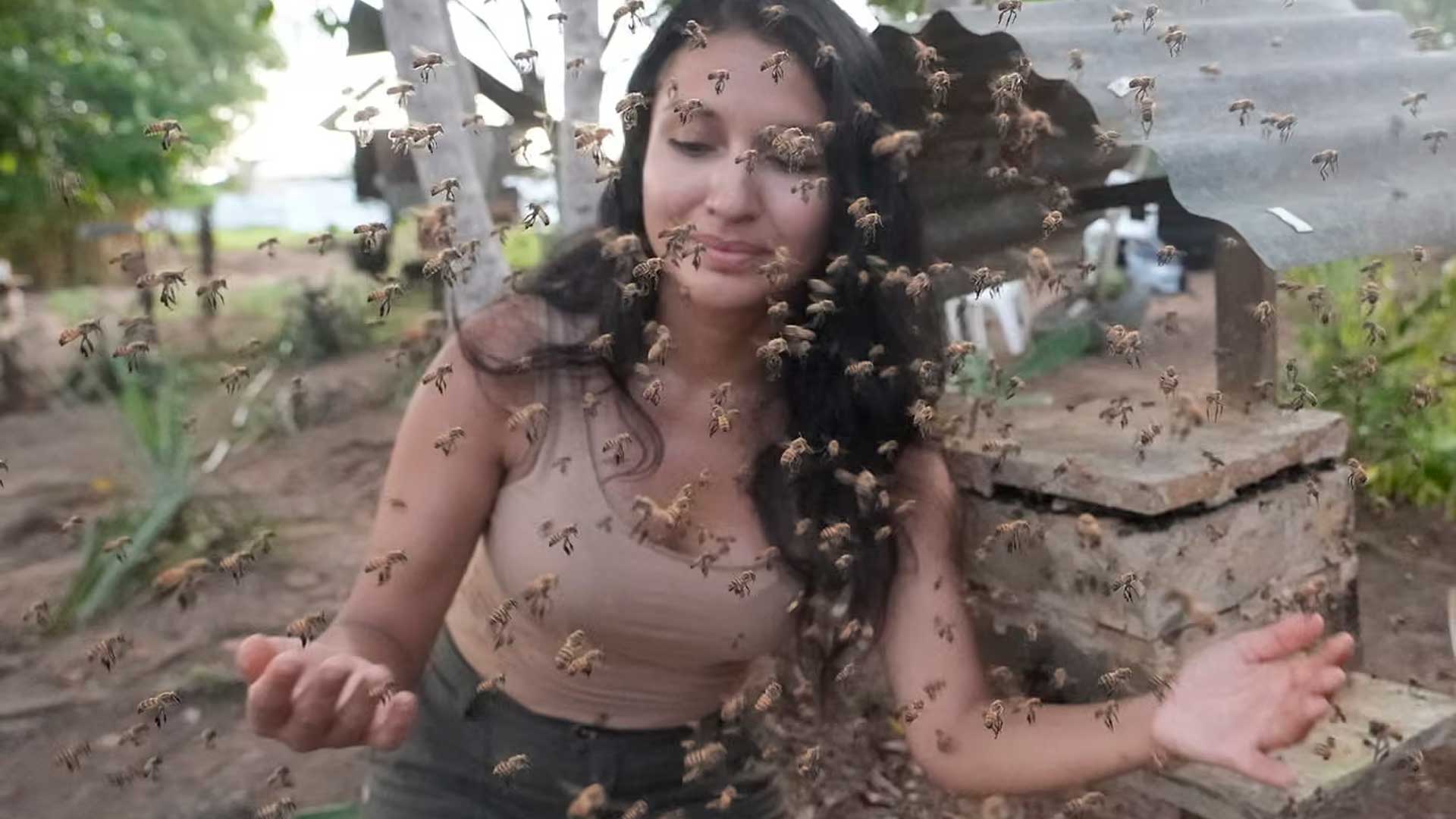
A frequently cited threat is competition with Africanized bees, commonly referred to as killer bees. The origin of this group dates back to an experiment in Brazil, when African bees were introduced in 1956 for breeding with European stocks aiming for greater productivity in a tropical climate, followed by escape and dissemination starting in 1957.
In the Peruvian Amazon, the concern is that more aggressive and adaptable colonies will occupy spaces and further pressure stingless bees, which are already suffering from habitat loss. One of the accounts mentioned by international reports describes communities avoiding breeding areas after episodes of attacks, altering routines and potentially disrupting traditional management practices.
Next Steps and the International Impact of a Law That Could Become a Model
With the municipal ordinances in effect, the debate now turns to the national plan. A global petition from Avaaz calls for Peru to expand recognition on a larger scale, and the campaign was launched in October 2025 with an explicit appeal for a declaration of rights for these bees and for nature.
The international ripple effect is already occurring. Reports highlight the interest of groups in other countries to use the case as a reference and pressure for similar protections for local pollinators, especially where the decline of bees is linked to pesticides and the simplification of agricultural landscapes.
The decisive test will be implementation. Turning rights on paper into ongoing actions requires budget, oversight, and technical capacity, in addition to facing predictable conflicts with sectors that depend on agricultural chemicals or territorial expansion. The dispute is likely to intensify when environmental restrictions factor into production costs.
For advocates, the goal is simple: keep the forest functional by protecting those who perform the silent work of pollination. For critics, the concern is creating a legal figure that is difficult to apply and opening loopholes for frequent litigation, with economic impacts.
Do you agree that insects should have legal rights, or is this a legal exaggeration that could stifle productive activities in the region? Leave your comment stating whether the measure is a historic advance or a controversy that may spiral out of control when it reaches practice.









Sim. A causa é semelhante a dos “nascituros” que tem direitos já estabelecidos e reservados na Constituição
O Equilíbrio homem/natureza só é possível atravéz de Leis Rígidas…
Esse sim é um exemplo a ser seguido por todos aqueles que desejam um planeta um pouco mais saudável, pois de destruidores ele (planeta terra) está mais que saturado.
Parabéns, a essa brilhante iniciativa de parte do povo peruano!