





 Portuguese
  English
  Spanish
  3 min of reading


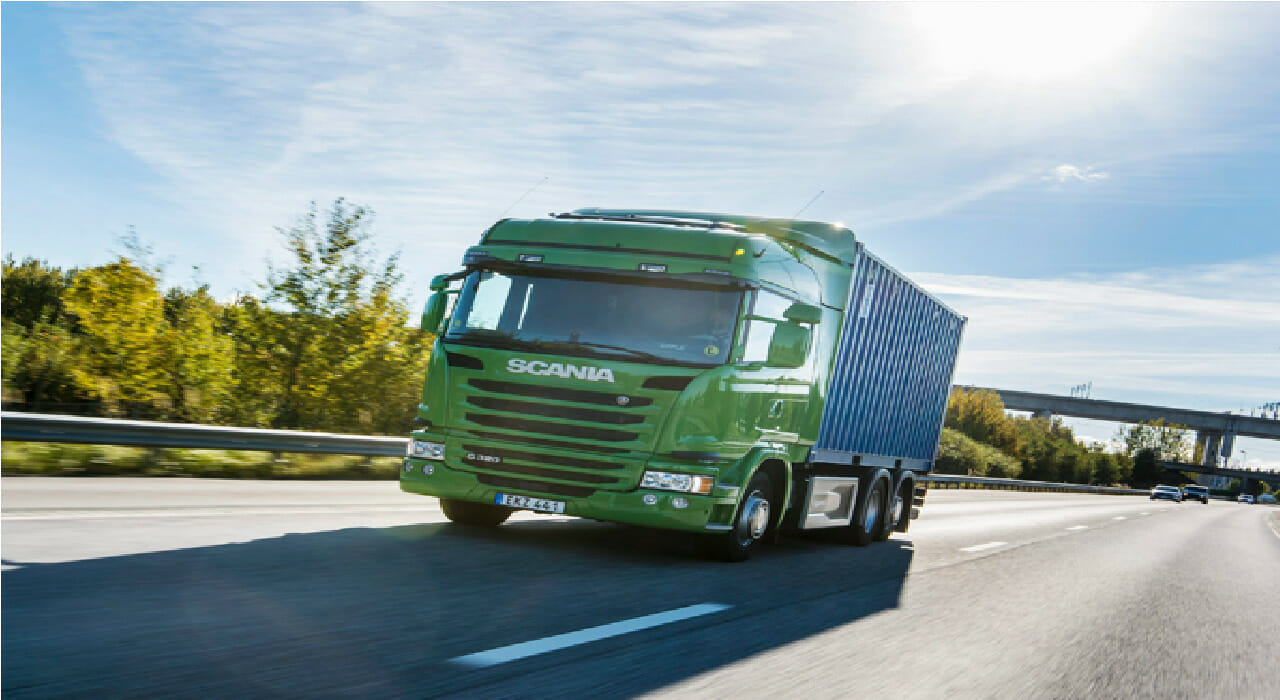
The New Hybrid Truck from Scania Has Not Yet Arrived in Brazil, But Is Already Being Tested in Switzerland and May Soon Arrive in the Country
Scania, in collaboration with transportation and energy companies, is conducting tests in Sweden with a hybrid truck that can travel up to 5,000 kilometers without needing to refuel. This achievement is made possible by a semi-trailer covered with solar panels, resulting not only in a significant reduction in pollutant emissions but also in a more economical operation, according to the Estadão website.
Scania has joined forces with universities, carriers, and clean energy companies to develop this innovative project. The initiative started about two years ago and received financial support from Vinnova, a Swedish innovation agency. The central part of this project is a semi-trailer coated with solar panels.
Economic and Environmental Benefits
The integration of solar panels has proven to be highly effective in reducing energy costs. The Scania adopted a hybrid truck with an R-type cab and a 6×2 configuration for this project. This plug-in hybrid truck has a total power of 560 horsepower.
-
Engineers propose a fourth traffic light for intersections – the change promises to affect crossings, queues, and waiting times.

-
Chevrolet Suburban Z71 lands in Brazil with a V8 engine, off-road design, air suspension, seven seats, and colossal size, a rare version imported for around R$ 1.3 million with luxury and exclusivity.
-
The Chevrolet Onix 1.0 turbo achieves 17.7 km per liter on the highway and ranks among the three most economical cars in Brazil in 2026, alongside two more expensive Toyota hybrids available at dealerships.
-
Little sister of the Hilux: Toyota launches Land Cruiser FJ with 4 radical versions, 2.7 engine with 166 hp and 4×4 traction with locking.

The setup includes batteries with a capacity of 100 kWh in the truck and 200 kWh in the semi-trailer. The solar panels have a maximum capacity of 13.2 kWp. According to Scania, under Swedish conditions, this system can generate 8,000 kWh per year. However, it is important to highlight that solar incidence can vary significantly across different regions.
Design and Operation of the Solar System
The solar panels are strategically installed on the roof and sides of the semi-trailer, covering a total area of about 100 square meters. The system has four axles and measures 18 meters in length. In areas with high solar exposure, such as the south of France, the truck’s range can reach an impressive 5,000 kilometers.
Currently, the truck is in a testing phase in regular operations conducted by the Swedish company Ernsts Express AB. Scania is collecting data for a comparative analysis of operating costs. Although the final results are still being assessed, preliminary studies indicate that this hybrid solution with solar panels has economic advantages over diesel trucks and even compared to battery-powered electric trucks.
An interesting feature of this project is its ability to generate energy that can be harnessed to supply the electrical grid. This means that this solar energy can be used to power businesses and homes during periods when the truck is stationary for loading and unloading goods, making it a versatile source of sustainable energy. Scania is exploring not only energy efficiency but also the potential to contribute to a cleaner and more sustainable world.








Seja o primeiro a reagir!