





 Portuguese
  English
  Spanish
  3 min of reading
  0 comments


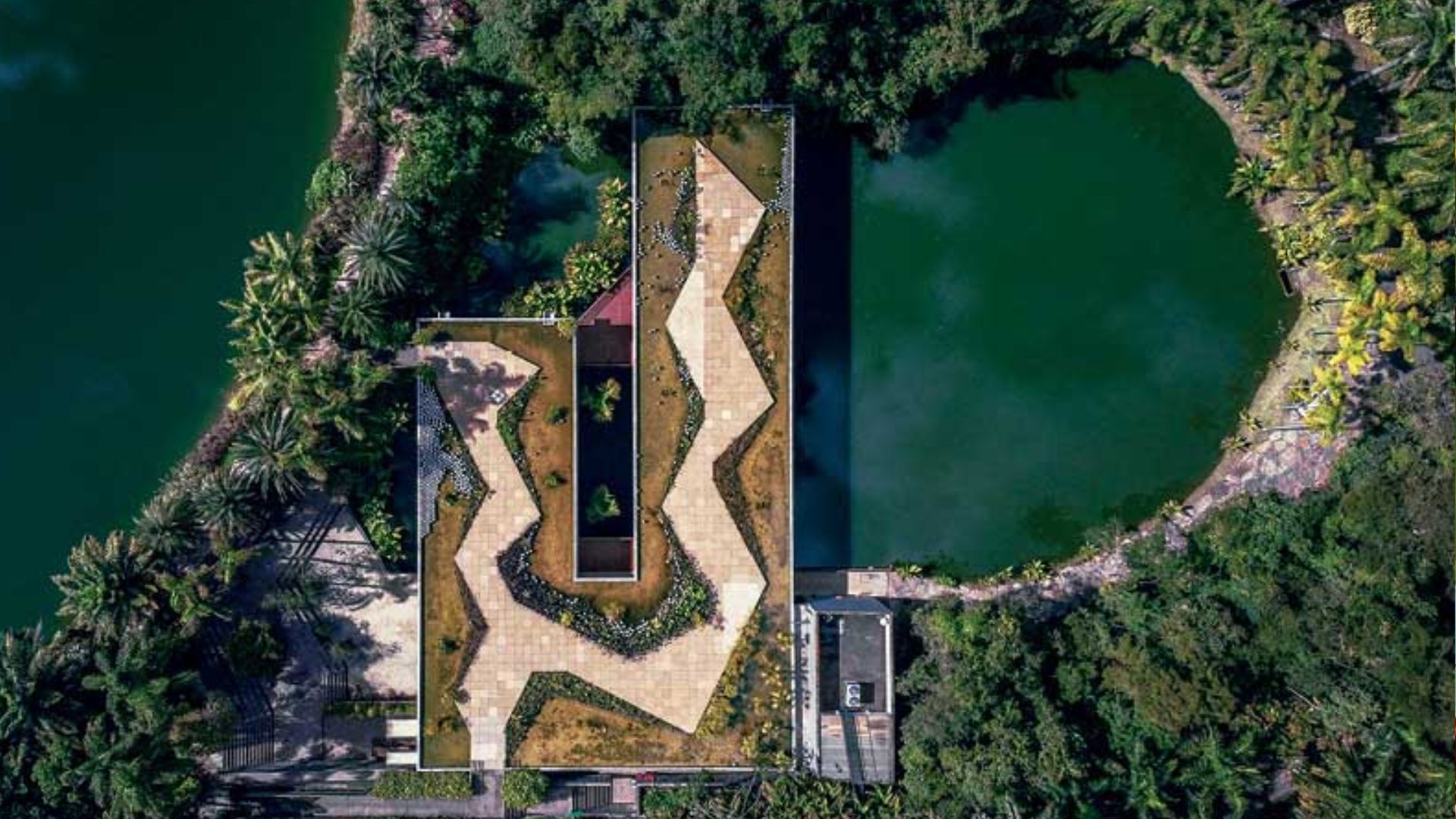
Discover Inhotim, One of the Largest Open-Air Museums in the World, Integrating International Contemporary Art, Rare Botanical Gardens, and Innovative Visiting Experiences in a Unique Environment Among Mountains and Atlantic Forest.
Those who arrive in Brumadinho, just 60 kilometers from Belo Horizonte, find a singular space on a continental scale.
Inhotim occupies 140 hectares of visitable gardens — equivalent to about 200 football fields — and houses over 1,800 works by 280 artists from 43 countries, displayed in galleries, pavilions, and clearings that spread between lagoons and native forests.
Contemporary Art at Inhotim
Interactive installations by Hélio Oiticica, Cildo Meireles, Adriana Varejão, Yayoi Kusama, Olafur Eliasson, and Tunga mark the path.
-
Friends have been building a small “town” for 30 years to grow old together, with compact houses, a common area, nature surrounding it, and a collective life project designed for friendship, coexistence, and simplicity.

-
This small town in Germany created its own currency 24 years ago, today it circulates millions per year, is accepted in over 300 stores, and the German government allowed all of this to happen under one condition.

-
Curitiba is shrinking and is expected to lose 97,000 residents by 2050, while inland cities in Paraná such as Sarandi, Araucária, and Toledo are experiencing accelerated growth that is changing the entire state’s map.

-
Tourists were poisoned on Everest in a million-dollar fraud scheme involving helicopters that diverted over $19 million and shocked international authorities.


Each walk becomes an invitation to contemplation and sensory provocation, integrating contemporary architecture, winding trails, water mirrors, and viewpoints that reveal the lush topography of Serra da Moeda.

Recognized Botanical Garden and Biodiversity
In addition to its artistic collection, Inhotim maintains one of the largest botanical gardens in Brazil, with over 4,300 plant species, including many rare or endangered ones, distributed across thematic collections.
In 2024, the space became the first Brazilian botanical garden to receive certification from Botanic Gardens Conservation International (BGCI), an international recognition that attests to global standards of conservation, research, and environmental education.
Visitation and Democratization of Access
After the resumption of tourism post-pandemic, the Inhotim Institute recorded in 2024 the highest visitor flow in the last seven years: over 335,000 people.
Nearly 60% of this audience entered for free through programs such as Our Inhotim, Free Wednesdays, and Free Sundays.
President Paula Azevedo projects that the number will reach 400,000 annual visitors in the coming years, maintaining a social pricing policy.

Hotel and Exclusive Experiences at Inhotim
For those who wish to spend more time at the forest museum, the Inhotim Institute opened the Clara Arte hotel at the end of 2024, the first hotel venture within the park.
The location offers 46 bungalows inspired by Brazilian modernist design, a restaurant led by chef Leo Paixão, and exclusive itineraries for guests.
This project is part of an expansion plan that includes new auditoriums, artist residences, and an amphitheater for 15,000 people.
Cultural Programming and Educational Activities
The 2025 agenda reinforces Inhotim’s role as a dynamic cultural park.
The museum operates from Tuesday to Sunday, from 9:30 AM to 4:30 PM on weekdays and until 5:30 PM on weekends.
Four Wednesdays and the last Sunday of each month continue to have free entry.
Recent highlights include Homo sapiens sapiens, a video installation by Pipilotti Rist; Only After the Rain, by Rebeca Carapiá, and Tangolomango, an intervention by Rivane Neuenschwander.
The museum also offers daily panoramic tours and workshops in collage, watercolor, and sculpture.

Socio-Environmental Commitment and Restoration
Since the dam rupture in Brumadinho in 2019, the Inhotim Institute has intensified support actions for the local community, expanding the Brumadinho Stage for local artists and investing in ecological restoration programs in Atlantic Forest and Cerrado areas.
These actions consolidate Inhotim as an agent of cultural and environmental development.
How to Visit Inhotim
Tickets can be purchased online or at the ticket office.
The internal electric transport facilitates movement, and the site offers bicycles for rent, restaurants, cafes, a design store, and a hotel for those who want a complete experience.
The park ensures accessibility, with ramps, adapted carts, rest areas, and baby care facilities for families.

Hours: Tuesday to Friday, 9:30 AM – 4:30 PM; Saturday, Sunday, and holidays, 9:30 AM – 5:30 PM.
Access Road: MG-040, Km 44.
Parking: Paid, with covered spaces.
Free Entry: Wednesdays (except holidays) and the last Sunday of the month.
Future of Inhotim
What work or initiative would you like to see in the upcoming seasons of Inhotim, now that the forest museum has gained a hotel, new exhibitions, and record attendance?









Seja o primeiro a reagir!