





 Portuguese
  English
  Spanish
  2 min of reading
  0 comments


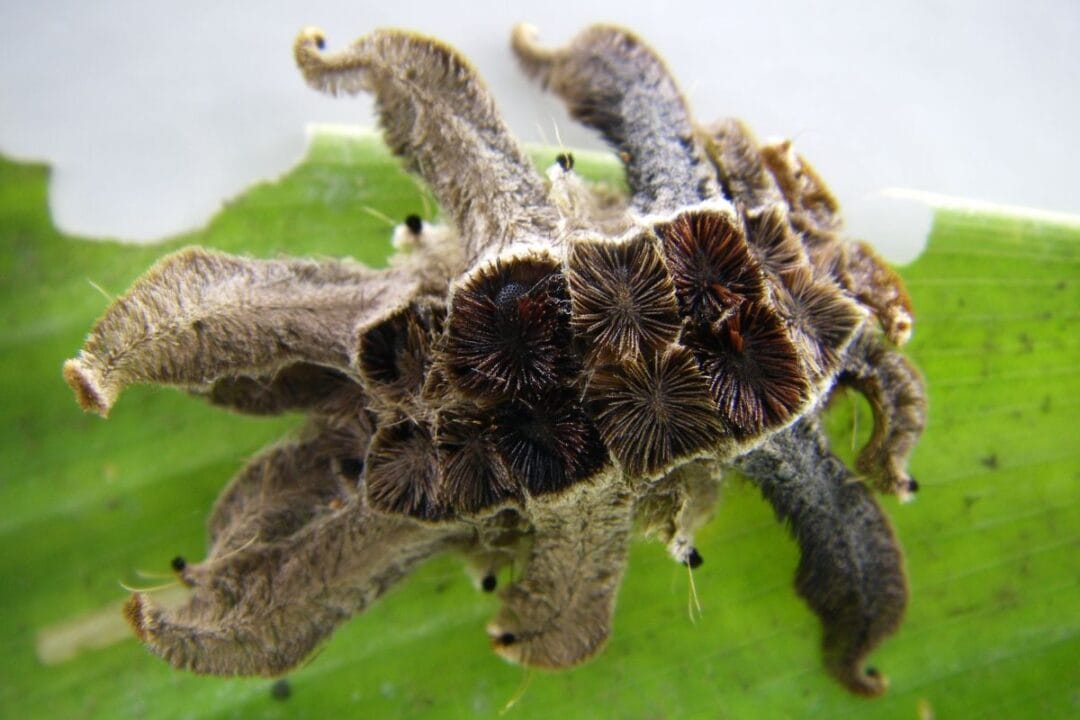
With The Appearance Of A Sea Star And Defense Similar To That Of A Lizard, Mysterious Insect Is Actually A Rare South American Caterpillar
Imagine looking at a mango leaf and finding what looks like a mix of a starfish and an alien creature. That was exactly the scene experienced by administrator Marisa Gonzales, in Piracicaba, inland São Paulo. What she found was a mysterious insect that confused the entire family and generated a wave of curiosity.
Looked Like Anything But An Insect
“It was right there, standing on the leaf, with a weird shape, full of tentacles. We were in shock,” Marisa recalls. The mysterious insect was actually a Phobetron hipparchia, an unusual caterpillar that lives in humid regions of South and Central America, from Mexico to Uruguay.
-
Spain surprises the world by erecting 62 artificial dunes, mixing sand with natural remains of posidonia, and causing the structure to lose only 1.4% of its volume in 1 year.

-
With 16 Bulava missiles, improvements in acoustic stealth, and a design focused on silent patrols, Russia’s nuclear submarine was born to ensure Moscow’s invisible retaliation and has become one of the pillars of its maritime strength.

-
‘Populous’ city in Rio among the worst in Brazil in national ranking and exposes silent development crisis.

-
Couple buys house in the South Zone of São Paulo, opens a hidden door in the garage, and finds a secret wine cellar with dozens of old wines forgotten since the 1970s.

Despite the scare, the creature is harmless. But don’t be fooled: its exotic appearance hides an ingenious defense system.
Tentacles That Detach To Fool Predators
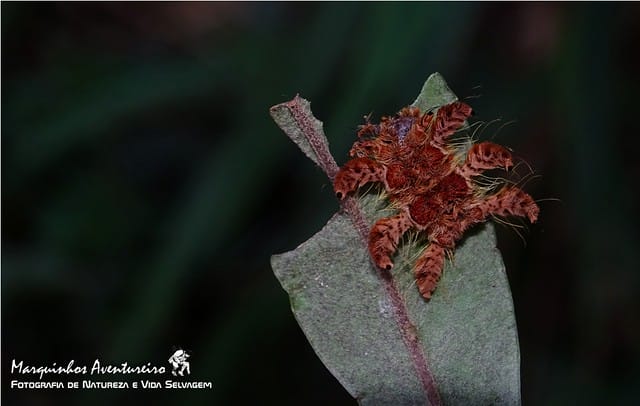
According to biologist Guilherme Fischer, the caterpillar’s body has structures called tubercles, resembling small tentacles. When a predator tries to attack, these parts detach, confusing the enemy — like a lizard’s tail.
“These fragments have no nutritional value, so the predator gets frustrated and the caterpillar escapes,” Fischer explains. In other words, the mysterious insect has a defense worthy of a science fiction film.
Moth Disguised As Bird Droppings? Yes!
After metamorphosis, the caterpillar transforms into an equally peculiar moth. The male is dark and has wings with small translucent windows. The female, on the other hand, is larger and orange. Both share an unusual camouflage: they resemble bird droppings when perched on leaves or trunks.
This visual disguise is the only protection for the mysterious insect in its adult stage. Even so, it remains completely harmless to humans and fundamental for the ecosystem’s balance.
Don’t Kill It, Get To Know It
The discovery reinforces how much we still have to learn from Brazilian wildlife. “When you find a strange animal, take the chance to learn about a new form of life. The mysterious insect may look scary, but it carries a unique beauty and an important ecological role,” concludes the biologist.
In times when even the backyard can surprise, perhaps the biggest mistake is treating the unknown as a threat. After all, how many more mysterious insects are waiting to be discovered?








Seja o primeiro a reagir!