





 Portuguese
  English
  Spanish
  6 min of reading
  0 comments


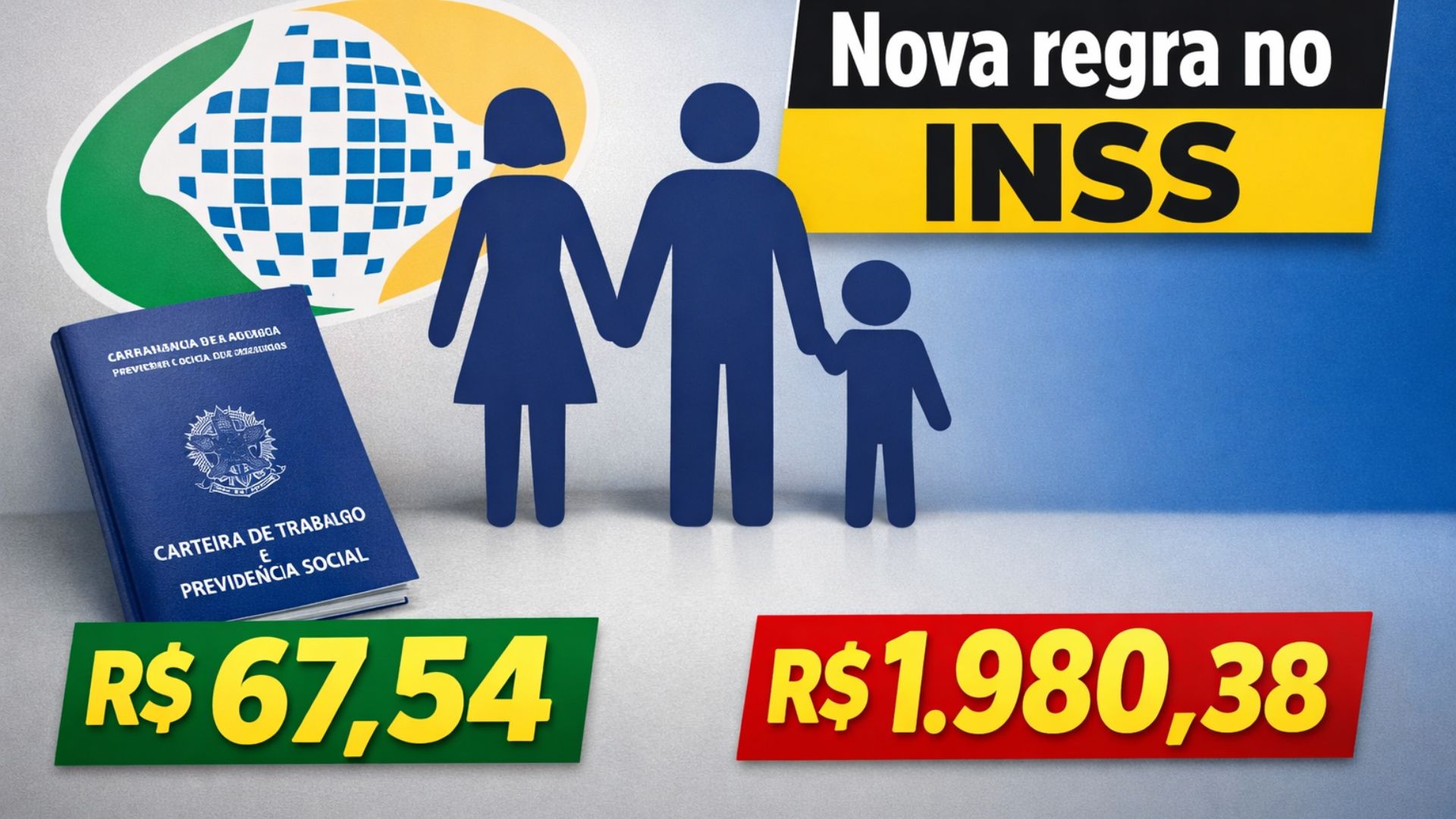
Little-Known INSS Benefit Gains Attention After Update of Values and Income Limit Defining Who Can Receive, Creating a Targeted Segment for Workers with Children. Change Directly Affects Those Close to the Monthly Ceiling and Who Need to Monitor Remuneration, Dependents, and Verification Requirements.
The family salary, a little-known benefit in everyday life and surrounded by doubts, has drawn attention after the update of the amount paid per dependent and the income limit that defines who can receive.
Under the current rule, the quota has been set at R$ 67.54 per child or equivalent, provided that the insured is within the income ceiling of R$ 1,980.38 per month, which creates a specific cutoff: those who exceed this limit, even slightly, lose the right to the benefit.
INSS Adjustment and Reference Values for Family Salary
The adjustment is linked to the pension values defined in inter-ministerial ordinance and published by the National Institute of Social Security.
-
The government requests the Federal Revenue Service for a new system to automate the income tax declaration, reducing errors, time, and bureaucracy for millions of Brazilians.

-
Pix in installments, international Pix, and contactless payment without internet: the Central Bank revealed the new features coming to the tool that is already used by almost every adult in Brazil.

-
Mercado Livre has just started selling medications with delivery in up to three hours to your door, and this move could completely change the way Brazilians buy medicines on a daily basis.

-
In Dubai, rising tensions from the war in the Middle East are causing super-rich individuals to leave the Gulf and direct their fortunes to a new financial refuge in Asia.


According to the INSS, the set of updates includes the ceiling of benefits and other reference values used in the system, including the family salary quota and the income limit that allows receipt.
Who Is Entitled to the Family Salary and Which Categories Are Included
In practice, the family salary is not a universal benefit for all families and is not paid to just any worker with children.
It is directed, according to INSS guidance, to the employee — including domestic workers — and to casual workers, always according to the number of children or equivalents.
The logic is simple but often generates confusion: it is not enough to have dependents; it is necessary that the monthly remuneration falls within the range stipulated by the federal government for that period.
Income Limit and What Happens When the Worker Exceeds the Ceiling
The surprising aspect is how the limit works.
The INSS guidance page about the income limit clarifies that, if the monthly remuneration exceeds the maximum range, the worker will not be entitled to the family salary.
This is not a proportional calculation or a gradual reduction: leaving the income ceiling means that the benefit is no longer due, making monitoring the paycheck a decisive factor for those close to the limit.
Monthly Remuneration, Contribution Salary, and Sum of Links
Another relevant detail is what is meant by “monthly remuneration” for this purpose.
The INSS considers the total contribution salary of the insured, and this value can result from the sum of contribution salaries from simultaneous activities.
Thus, those with formal links or who have more than one contribution source within the system may end up exceeding the ceiling, even if each salary, in isolation, seems to fit within the limit.
Age of Dependents and Rule for Disability Without Age Limit
The age of dependents is also a central part of the rule.
The INSS states that payment is made in proportion to the number of children, stepchildren, or minors in custody up to 14 years of age, with an important exception: when there is disability, there is no age limit for the dependent.
This cutoff appears as one of the largest sources of misinformation, as many people associate the benefit with “having children” in a generic way, without realizing that there are criteria regarding the age and situation of the dependent.
How to Request Family Salary and Where to Make the Request
The way to request the family salary varies according to the category of the insured.
According to the INSS explanation in informational material, the employee requests it directly from the employer, while the casual worker requests it from the union or the labor management body to which he is linked.
However, there are cases where the request is made at the INSS, such as when the worker is receiving a benefit for temporary incapacity, retirement due to permanent incapacity, or rural age retirement, situations in which the inclusion of the family salary may occur as an addition within the benefit itself.
Required Documents and What Usually Prevents Payment
The required documentation is another point that often hinders receipt.
The official federal government service aimed at registering or updating dependents for family salary lists items that, in practice, end up being forgotten: birth certificate of the child for the first registration, vaccination booklet for children up to 6 years and school attendance proof for children from 7 years old.
When the dependent is over 14 years old and the exception applies due to disability, the request requires documents that prove this condition, confirmed by a medical examination from the INSS, as the service advises.
Vaccination and School Attendance: Maintenance Requirements for the Benefit
Even after granting, there are maintenance requirements.
In an institutional news release, the INSS emphasizes that responsible parties need to periodically present documents related to vaccination and school attendance for the continuity of payment.
The guidance indicates that proof of vaccination for dependents up to 6 years must be presented annually, and school attendance for ages 7 to 14 must be proven at specific times of the year so that the benefit is not suspended due to lack of updates.
Both Parents Can Receive and the Cutoff That Changes the Right
The family salary also brings an interesting fact that attracts the attention of many families: both parents can receive, as long as each meets the requirements.
This possibility is mentioned by the INSS as one of the recurring questions, as in other tax and dependency situations, there are often restrictions to just one responsible party.
In the case of the family salary, the rule is linked to the individual classification of the insured within the income limit and the conditions of the dependent.
Paycheck Near the Ceiling and the Effect of Salary Variations
Behind the values, the “effect” that appears for the reader is the contrast between the quota per dependent and the income ceiling, which can be exceeded by small salary variations, bonuses, and changes in employment links.
Since the benefit is not paid when the remuneration exceeds the maximum range, the topic often generates direct comparisons between workers in very similar situations, where one receives the quota and the other, due to a small difference in monthly remuneration, loses the right, even having the same number of children.
With the quota set at R$ 67.54 and the income limit at R$ 1,980.38, the family salary is on the radar of those seeking to verify if they are receiving correctly and if the dependents remain registered and updated.
The check tends to cover three fronts: the contribution salary for the month, the situation and age of dependents, and the submission of maintenance documents when required, as any failure in these areas could prevent the credit or cause suspension until regularization.
If your paycheck fluctuates near the ceiling of R$ 1,980.38, have you checked if a bonus, accumulation of links, or lack of document updates could be changing your right to the family salary?








-

Uma pessoa reagiu a isso.