





 Portuguese
  English
  Spanish
  3 min of reading
  0 comments


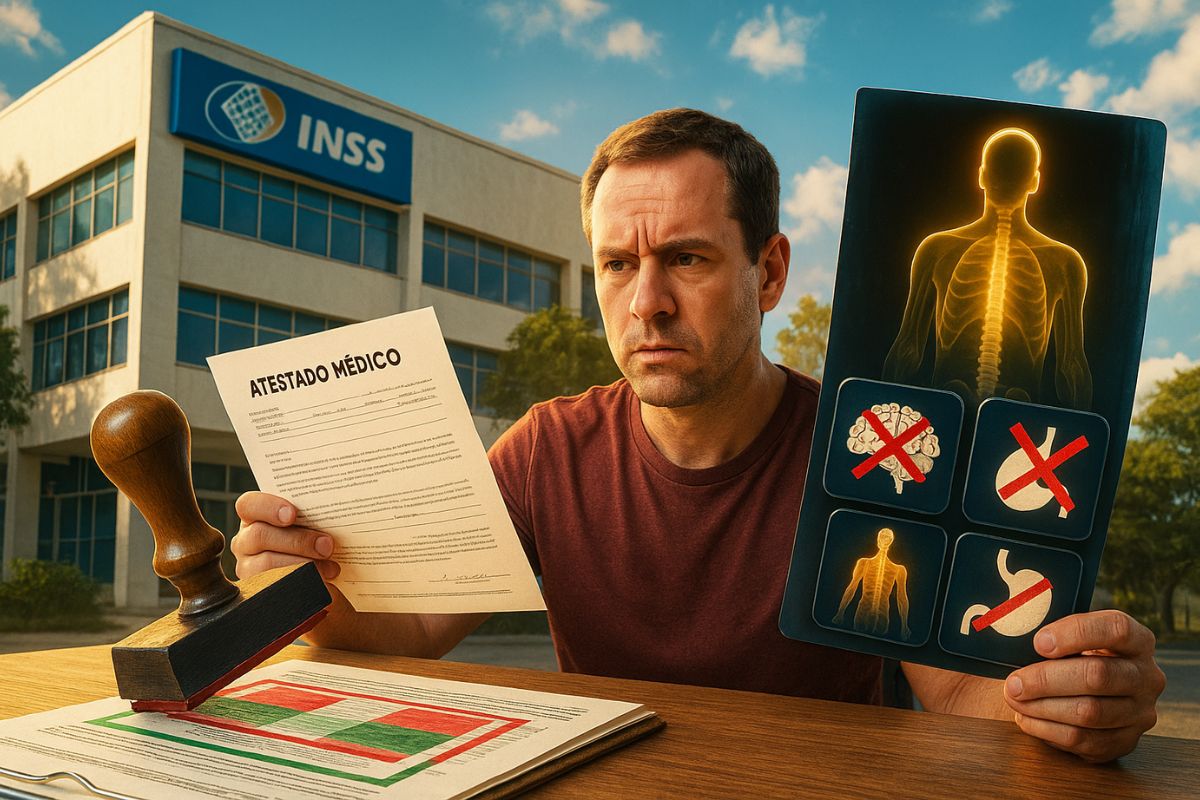
Many People Still Believe That There Is a List of Diseases That Automatically Qualifies for the Benefit, But the INSS Analyzes the Actual Inability to Work, Not the Diagnosis Itself, Explains Specialist Lawyer Tais Santos.
Receiving a serious diagnosis can be frightening, but when it comes to the INSS, it is not the disease itself that guarantees a social security benefit, but rather the proof of incapacity to work. Even conditions like HIV, cancer, or multiple sclerosis do not guarantee sick leave or retirement on their own.
According to specialist lawyer Tais Santos, this is exactly the point that still raises doubts among insured individuals: the INSS does not operate with a closed list of diseases that guarantee the benefit. What matters is the assessment of the impact of that condition on the insured’s work capacity, and this distinction completely changes the pathway to obtaining the right.
What Really Grants the INSS Benefit?
The central point is to prove that the person is unable to work, whether temporarily or permanently. The name of the disease alone, even if serious, does not guarantee automatic granting of the benefit.
-
Piauí will produce a new fuel that replaces diesel without needing to change anything in the truck’s engine and reduces pollutant gas emissions by half: truck drivers from all over the Northeast are already celebrating the news that will arrive later this decade.

-
A new Brazilian shopping center worth R$ 400 million will be built in an area equivalent to more than 4 football fields, featuring 90 stores, 5 cinemas, a supermarket, a college, and parking for 1,700 cars, potentially generating 3,000 jobs.

-
Larger than entire cities in Brazil: BYD is building a 4.6 km² complex in Bahia with a capacity for 600,000 vehicles per year, but the discovery of 163 workers in conditions analogous to slavery has shaken the entire project.

-
With an investment of R$ 612 million, a capacity to process 1.2 million liters of milk per day, Piracanjuba inaugurates a mega cheese factory that increases national production, reduces dependence on imports, and repositions Brazil on the global dairy map.


Practical example: a worker diagnosed with malignant neoplasm (cancer) can continue performing their duties normally and, therefore, will not be entitled to assistance.
On the other hand, someone with a less known disease that actually incapacitates them may indeed receive the benefit.
Is There a List of Diseases? Yes, But for Another Purpose
There is an official list of diseases that exempt the insured from fulfilling the minimum grace period (12 contributions).
In other words, if the person is affiliated with the INSS and is diagnosed with one of these conditions, they may have access to the benefit even if they have only contributed for a few months, as long as they are unable to work.
This list includes, among others:
- Active Tuberculosis
- Leprosy
- Severe Mental Disorder
- Malignant Neoplasm
- Blindness (in both eyes)
- Irreversible Paralysis
- Severe Cardiopathy
- Multiple Sclerosis
- Parkinson’s Disease
- HIV/AIDS
- Cerebrovascular Accident (CVA)
- Acute Surgical Abdomen
Important: being on this list does not mean that the person will automatically receive the benefit. They will only not need to fulfill the grace period but will still have to prove their incapacity.
How to Prove Inability?
The main document is the detailed medical report, which should include:
- ICD of the disease
- Clear description of functional limitation
- Indication of the estimated time for leave (temporary or permanent)
- Relation to the insured’s professional activities
- CRM and doctor’s signature
Crucial tip: the doctor needs to understand what your profession is and what is preventing you from performing it.
Often, it is the medication and not the disease that causes the incapacity, such as excessive drowsiness that prevents operating heavy machinery.
Additionally, compile medical records, tests, and hospital documents.
The more evidence you present, the higher the chances of approval. If the benefit is denied even so, it is possible to file a lawsuit, where the examination may be more rigorous.
INSS Denied? Know How to Act
Many cases are denied administratively because the INSS examiner does not evaluate all the documents thoroughly.
In these cases, the judicial route may be more effective, as the judge can appoint a specialized expert to analyze the case more attentively.
Seeking a lawyer specialized in Social Security Law may be the fastest way to ensure the right to the benefit.


Do you know someone who had their benefit denied even with a serious illness? What happened in their case? Share in the comments!








Seja o primeiro a reagir!