





 Portuguese
  English
  Spanish
  4 min of reading
  3 comments


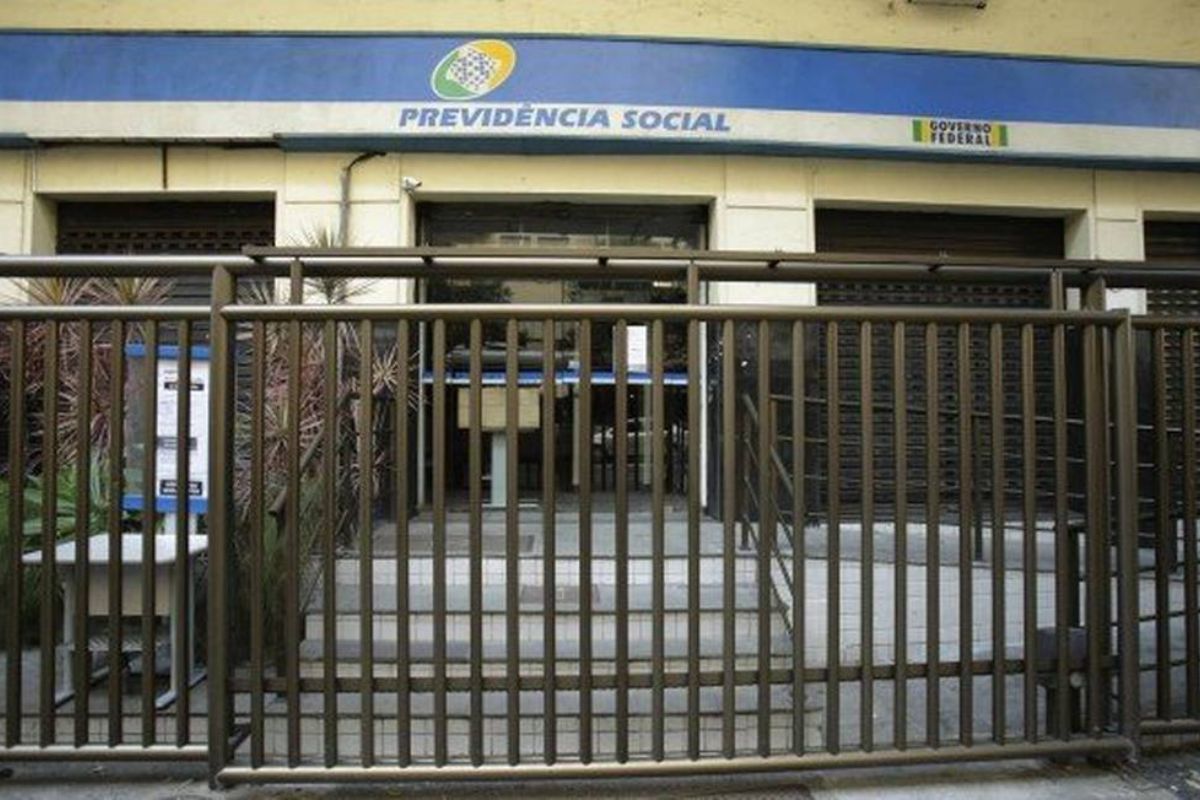


INSS Will Close Agencies on January 28, 29, and 30 in Brazil, Halting In-Person Services and Taking Down Digital Services During System Updates. The Institute Plans Cancellations or Rescheduling of Appointments and Promises Extra Services Afterwards. Employees React to Compensation Pressure, Citing Unique Legal Framework and Legislation
The INSS will close agencies throughout Brazil on January 28, 29, and 30, with a simultaneous halt of physical and digital channels. This measure includes the unavailability of the Meu INSS app and the Central 135, blocking access specifically for those who rely on consultations, scheduling, and tracking requests.
The temporary closure was presented as part of a modernization effort to update the systems, promising greater efficiency and security after completion. The immediate issue is the cost: scheduled in-person appointments will be canceled or rescheduled, millions of policyholders will be left without instant responses, and internal pressure is growing, with unions pointing out abuses in demands for compensation outside business hours.
What Changes in Service and Which Dates Are Offline
The total shutdown occurs on three specific dates: January 28, 29, and 30.
-
A new Brazilian shopping center worth R$ 400 million will be built in an area equivalent to more than 4 football fields, featuring 90 stores, 5 cinemas, a supermarket, a college, and parking for 1,700 cars, potentially generating 3,000 jobs.

-
Larger than entire cities in Brazil: BYD is building a 4.6 km² complex in Bahia with a capacity for 600,000 vehicles per year, but the discovery of 163 workers in conditions analogous to slavery has shaken the entire project.

-
With an investment of R$ 612 million, a capacity to process 1.2 million liters of milk per day, Piracanjuba inaugurates a mega cheese factory that increases national production, reduces dependence on imports, and repositions Brazil on the global dairy map.

-
Brazilian city gains industrial hub for 85 companies that is equivalent to 55 football fields.


During this period, the INSS will close physical agencies and also disable the main digital services, including the Meu INSS app and Central 135.
In practice, citizens lose both ends of service: they cannot resolve issues at the agency and also cannot turn to the app or phone.
This affects everything from basic inquiries to tracking processes, reviewing information, and requests that normally require interaction with the system.
Why INSS Decided to Halt: System Updates and Promise of Efficiency
The official justification presented is the need to update the institute’s systems focusing on efficiency and security.
Modernization is treated as a package that, once completed, should improve the service provided by the INSS.
Even with this promise, the critical point is the method: the update requires shutting down operations for three days, creating an attendance gap that affects policyholders who already operate under strict deadlines and routines, especially those who depend on quick feedback to organize expenses and documents.
What Happens to Appointments Already Scheduled at the Agencies
During the three days, scheduled in-person appointments will be canceled or rescheduled.
The term used indicates that there will be no maintenance of the regular schedule, and the citizen needs to deal with rescheduling, without a guarantee of an immediate solution.
To lessen impacts, the INSS reported that it plans to conduct extra services on future dates, but those dates were still to be confirmed.
This detail is crucial because, without a defined calendar, the policyholder is left with uncertainty about “when” and “how” the queue will be reorganized.
Meu INSS and 135 Down: The Practical Effect on Millions of Policyholders
The unavailability of the Meu INSS app and phone 135 eliminates the support channel that, for many, has become the only point of entry.
In a scenario of nationwide paralysis, the digital blockage amplifies the sense of blackout.
The result is that millions of policyholders are left without immediate responses not only for new requests but also for routine actions: checking transactions, tracking stages, seeking guidance, and checking pending issues.
When the system disappears, the policyholder loses reference and lacks confirmation of what is moving forward or stalled.
Uprising Among Employees: Pressure for Compensation and Legal Dispute
The decision has heightened internal tension.
Employees, through their unions, expressed dissatisfaction with demands for work outside normal hours, especially with the possibility of compensating hours on weekends.
The central argument is that employees do not consider themselves responsible for the failures that led to the need to pause the systems.
The reaction includes the organization of measures against the demands and willingness to seek legal avenues if managers insist on pressures deemed undue.
What Fenasps Claims About the Unique Legal Framework and Targets
The National Federation of Health, Labor, Social Security, and Social Assistance Workers Unions (Fenasps) asserts that any pressure for weekend work violates the Unique Legal Framework and current legislation.
The entity argues that system interruptions should be deducted from goals and hours, without transferring burdens to employees.
In other words, the shutdown would be a technical event that should not result in indirect punishment through rigid goals or additional work demands.
What Could Happen After January 30 and Why the Problem Doesn’t End After the Blackout
Even with a return anticipated after January 30, the bottleneck is likely to worsen.
A three-day pause nationwide means accumulating demands and reorganizing schedules.
If extra services are indeed implemented, the question becomes how, when, and with what structure.
At the same time, the crisis exposes a sensitive point: modernizing may be necessary, but shutting everything down generates social and institutional wear.
For the policyholder, the anxiety remains about reopening and still facing a longer queue. For employees, the conflict over working hours, targets, and the legality of demands lingers.
Do you think it’s fair for INSS to close everything and take down Meu INSS and 135 for three days, or should there be a plan to keep at least a minimal channel operating during the update?










Absurdo isso! Não consigo concluir minha solicitação no aplicativo, no 135 foi confirmado “ajustes”, não consigo reclamar na Ouvidoria do INSS, é vergonhoso esse descaso!
Hoje ainda é dia 20 e não consigo entrar no Meu INSS e nem no gov.br
Assim como corpor infectados com alguma doença , a auto preservação necessita de anticorpos que ajam na defesa das nossas instituições e mostrem onde o mal está instalado , e o enfrente .