





 Portuguese
  English
  Spanish
  5 min of reading
  0 comments


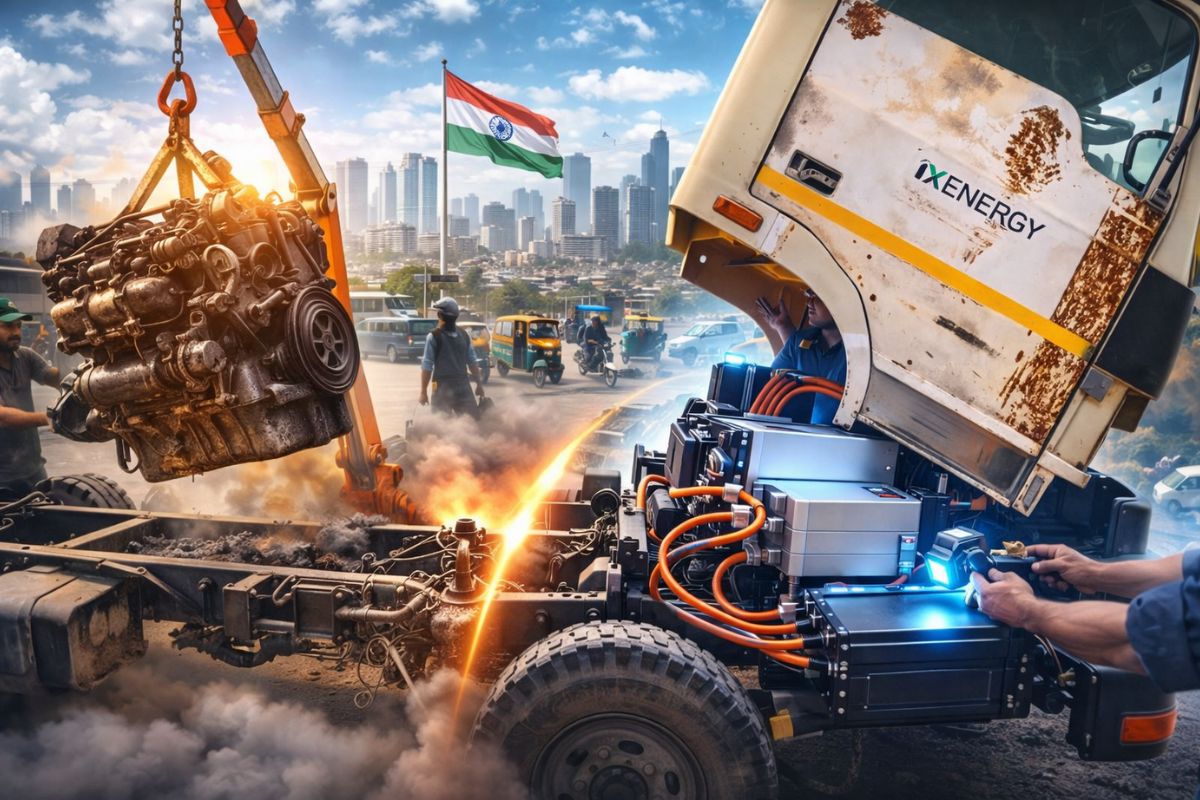
The conversion of diesel trucks to electric through retrofit costs 40% less than a new vehicle, reduces operational costs from 12 to 4 rupees per kilometer, and extends the useful life by up to seven years in an approach that Delhi is testing as an alternative to electrify millions of vehicles without replacing the entire fleet.
Instead of spending billions to buy new electric trucks, India is betting on an idea that seems too simple to work but does. According to the DW Rev channel, In workshops near Delhi, old diesel trucks are being dismantled, having their polluting engines removed and receiving new electric propulsion systems, in a process that transforms fossil vehicles into electric ones for about 40% of the price of a zero-kilometer truck. The procedure, called retrofit, takes approximately two weeks and could be the missing piece in the transition to clean mobility in megacities choked by pollution.
The context explains the urgency. More than 15 million vehicles clog the streets of Delhi, and less than 8% are electric, far from the goal of 30% by 2030. Vehicles are responsible for nearly half of the particulate pollution in the Indian capital and are among the largest CO2 emitters in the city. Every winter, air quality reaches dangerous levels. The question India is trying to answer is straightforward: if it’s not possible to replace millions of vehicles at once, why not convert the ones that already exist to electric?
How the conversion of diesel trucks to electric works
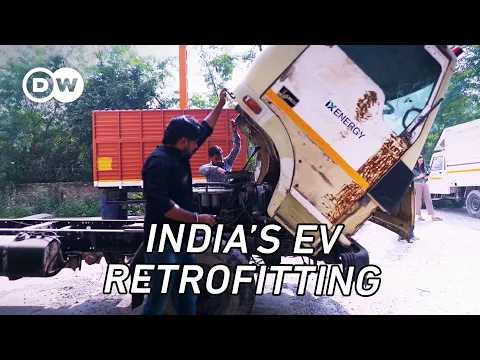
The process is more straightforward than it seems. From an existing diesel truck, the chassis, cabin, and body are utilized—all that does not pollute.
-
Circles in the Sahara plantations: ISS reveals Sharq El Owainat, in Egypt, irrigated by a center pivot with water from the Nubian Sandstone Aquifer, growing between 1998 and 2019, 290 km from the nearest city.

-
40% still call it a fraud: Soviets monitored Apollo, mirrors on the Moon still return lasers today and rocks confirm it; in 2026, 4 astronauts will return to lunar orbit and the race restarts against China.

-
New list shows over 50 cell phones compatible with Starlink without an antenna: direct connection to satellites in low orbit, coverage in areas without signal, initial support for SMS and emergencies, and forecast for global mobile internet.

-
Not even Starlink, Elon Musk’s internet, has succeeded: Iran enters the 37th day of a digital blackout with over 864 hours without internet, surpassing all previously recorded blockades and forcing millions to use the isolated national network after military attacks.

The combustion engine and associated components are removed, and in their place, a complete electric propulsion system developed by IX Energy, an Indian company that created its own motor and software set for this type of conversion, is installed.
The transformation into electric takes about two weeks. The result is a zero-emission truck that maintains the same load capacity and can run for up to seven years beyond its original useful life.
The operational cost drops dramatically: from about 12 rupees per kilometer with diesel to approximately 4 rupees per kilometer with electric. For fleet operators who drive hundreds of kilometers a day, this difference translates into significant savings over months and years.
Why converting to electric is smarter than buying new vehicles
The economic argument is strong, but the environmental one is even stronger. Manufacturing a new electric truck requires raw materials, energy, and industrial processes that generate emissions even before the vehicle travels a kilometer.
Converting an existing vehicle to electric repurposes all the mechanical structure already manufactured and only eliminates the polluting component—the combustion engine. From a life cycle perspective, retrofit is environmentally superior to complete replacement.
The cost also weighs in. The conversion costs about 40% less than a new electric truck, making it affordable for small fleet operators and independent drivers who would not be able to finance a zero-kilometer vehicle.
For a country like India, where millions of old trucks and buses circulate daily, providing a way to transform them into electric without requiring the purchase of new vehicles is the difference between a viable energy transition and an impossible goal. Some companies have already adopted the approach and report that retrofit has emerged as a more sustainable option than new vehicles or natural gas.
What prevents India from converting all trucks to electric now
Despite the potential, the conversion to electric faces real barriers. There are few certified professionals to carry out the retrofit of electric systems, regulations are unclear, and government incentives for this modality are still limited. The Indian government intends to convert part of the older vehicles in the coming years, but progress has been slow.
Charging infrastructure is another bottleneck. Delhi still has a shortage of public charging stations, and it is pointless to have thousands of converted electric trucks if there is nowhere to refuel them.
If electric vehicles are being promoted, there needs to be sufficient charging infrastructure to support them, and this construction requires coordinated investment between government and the private sector.
Moreover, simplifying certification processes is crucial: as long as each conversion depends on lengthy bureaucratic approvals, the scale will never reach where it needs to.
What Delhi is doing today while the conversion to electric does not scale

In the absence of a comprehensive retrofit policy, Delhi authorities resort to circulation bans when pollution worsens. Older diesel and gasoline vehicles are taken off the roads during air quality crises.
For drivers who are still paying installments on their vehicles, these bans cause direct losses—days without work mean overdue bills, compromised rent, and school fees at risk.
Some experts argue that banning vehicles based on age is unfair and uneconomical.
Instead of banning trucks because they are old, it would make more sense to assess whether they meet emission standards and offer retrofit to electric as an alternative for those that do not comply. Transforming a 2019 truck into electric is more rational than taking it off the streets permanently while its chassis and body still have years of useful life ahead.
Why this idea of converting vehicles to electric could work in any megacity
Delhi is not the only city in the world choked by old, polluting vehicles. São Paulo, Mexico City, Lagos, Cairo, Jakarta—all face the same dilemma: fleets too large to replace and insufficient budgets to finance the purchase of millions of new electric vehicles.
The retrofit model that India is testing could serve as a global reference because it addresses the problem where it exists—in the vehicles that already exist—without waiting for the entire fleet to be renewed over decades.
The logic is pragmatic. Converting existing vehicles to electric for 40% of the price of a new one, with savings of two-thirds on operational costs and extending useful life by up to seven years, is an equation that works for any megacity in the developing world.
The question is whether governments will treat retrofit as a serious public policy with simplified certification, tax incentives, and investment in charging infrastructure, or if they will continue to rely exclusively on new vehicles that most of the population cannot afford.
Delhi may be writing the first chapter of a solution that the rest of the world will want to copy.
Do you think converting old vehicles to electric should be public policy in Brazil as well? Would it make sense for the reality of our cities?






Seja o primeiro a reagir!