





 Portuguese
  English
  Spanish
  4 min of reading
  12 comments





It Is Possible to Conclude Extrajudicial Inventory in 25–30 Days Even With a Minor or Incapable Heir, Provided There Is a Total Agreement, No Valid Will Exists, and the Active Debt of the Deceased’s CPF Is Parcelled With the 1st Instalment Paid.
The process of dividing assets can be a torment for many families, but, according to lawyer Ruy Carvalho, the extrajudicial inventory has been consolidating as a quick and accessible solution to resolve inheritance issues. When specific requirements are met, the procedure can be concluded in just 25 to 30 days, quite different from judicial inventories, which often drag on for years.
The main innovation is to allow the conclusion of the inventory even when there is a minor or incapable heir, provided that everyone agrees on the division, no valid will exists, and the CPF of the deceased is regularized or has active debt parcelled.
In these cases, it is sufficient to pay the first instalment of the debt to proceed with the process at the notary office.
-
Oil surged to $115 a barrel due to the war in the Middle East, and diesel in Brazil has already risen to R$ 7.45 per liter, while the United States…

-
Brazilian city bets on the business environment to generate jobs and attract investments in the energy sector — secretary reveals strategy at Macaé Energy 2026.

-
50 viaducts, 4 tunnels, 28 bridges, and 40 kilometers of bike paths: BR-262 in Espírito Santo will receive 8.6 billion reais for the largest engineering project in the state’s history, inspired by the Immigrant Highway in São Paulo.

-
Brazil produces too much clean energy and doesn’t know what to do with it: over 20% of solar and wind capacity was wasted in 2025 while investors flee and 509 renewable generation projects were abandoned in the last year.


How Does the Extrajudicial Inventory Work?
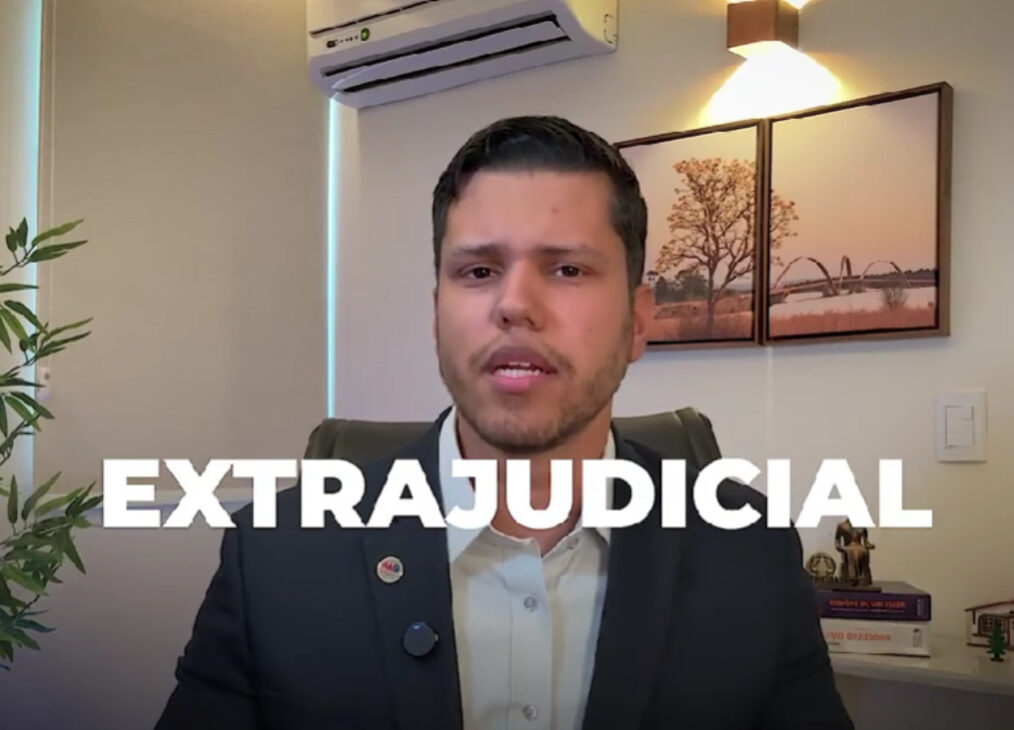
Unlike judicial inventory, the extrajudicial inventory is conducted at a notary office, through a public deed.
The act is drafted by the notary and does not involve judges, which reduces bureaucracy and shortens timeframes.
According to Ruy Carvalho, the procedure requires compliance with three central conditions: total agreement among heirs, no valid will existence, and tax regularization of the deceased’s CPF.
If there are tax pendencies, it is possible to parcel the active debt and initiate the inventory right after paying the first instalment.
What Is the Role of the Lawyer in This Process?
Even without judicial intervention, the lawyer is a mandatory figure in the extrajudicial inventory.
He is responsible for guiding the heirs, gathering necessary documentation, drafting the deed, and ensuring that the division complies with the law.
Additionally, the presence of a specialist helps to avoid unnecessary costs with taxes and fees.
In practice, the lawyer’s technical role ensures that the process, while quick, maintains legal security and full validity for all involved.
How Long Does It Take and What Are the Costs?


While a judicial inventory can take years, the extrajudicial inventory typically takes 25 to 30 days, according to experiences reported by Ruy Carvalho.
The time mainly depends on document gathering and scheduling at the notary office.
Costs include transfer taxes (ITCMD), notary fees, and attorney fees.
In comparison to judicial inventory, costs tend to be lower since there are no legal fees.
Moreover, the speed reduces indirect expenses, such as the prolonged maintenance of assets in the deceased’s name.
What If There Is a Minor or Incapable Heir?
One point that stands out is the possibility of conducting the extrajudicial inventory even with a minor heir.
In these cases, the condition is that there is a complete agreement among all heirs and that the division does not harm the rights of the incapable.
The technical guidance of the lawyer and the drafting of the deed by the notary ensure the legality of the procedure.
This flexibility represents a practical innovation for families that were previously obliged to judicialize the process, even in peaceful situations.
Is It Worth Choosing Inventory at the Notary Office?
In Ruy Carvalho’s assessment, yes. When the requirements are present, the extrajudicial pathway represents a faster, more economical, and less exhausting alternative for families.
It also allows assets to be formally transferred in a few weeks, avoiding prolonged asset freezes and facilitating heirs’ lives.
The step-by-step process is simple: hire a lawyer, gather certificates and documents of the assets, draft the deed, go to the notary office with all the heirs, and sign the deed.
Then, it’s just a matter of registering the division in the property titles and completing other transfers.
The extrajudicial inventory shows that the legislation can be applied practically and efficiently, reducing bureaucracies without sacrificing legal security.
Resolving an inheritance in 25 to 30 days, even with minor heirs, represents a breakthrough for thousands of Brazilian families needing to unlock assets quickly.
What about you? Do you believe that inventory at the notary office is the best way to avoid years of judicial process? Or do you fear that speed may compromise the protection of the heirs? Leave your opinion in the comments — we want to hear from those who have gone through this experience.










Não tem dúvida que o inventário extrajudicial é muito mais célere e econômico.
Mas ainda existem muitos pedidos de documentos exigidos pelos cartórios, que ao meu ver são indispensáveis.
Ex. O bem se encontra regularmente matriculado, mas na prefeitura, apesar de endereço completo não costa o número da matrícula e nesse caso o cartório exige que também conste o número da matrícula no documento “dados do imóvel” na prefeitura.
Para isso vai mais de 15 dias para esse registro.
Absurdo inventariança, presentes incapazes, sem intervenção do ministério público e judiciário!!!
Bacana esta possibilidade de inventário extra judicial. Via cartório vai agilizar muito.