





 Portuguese
  English
  Spanish
  4 min of reading


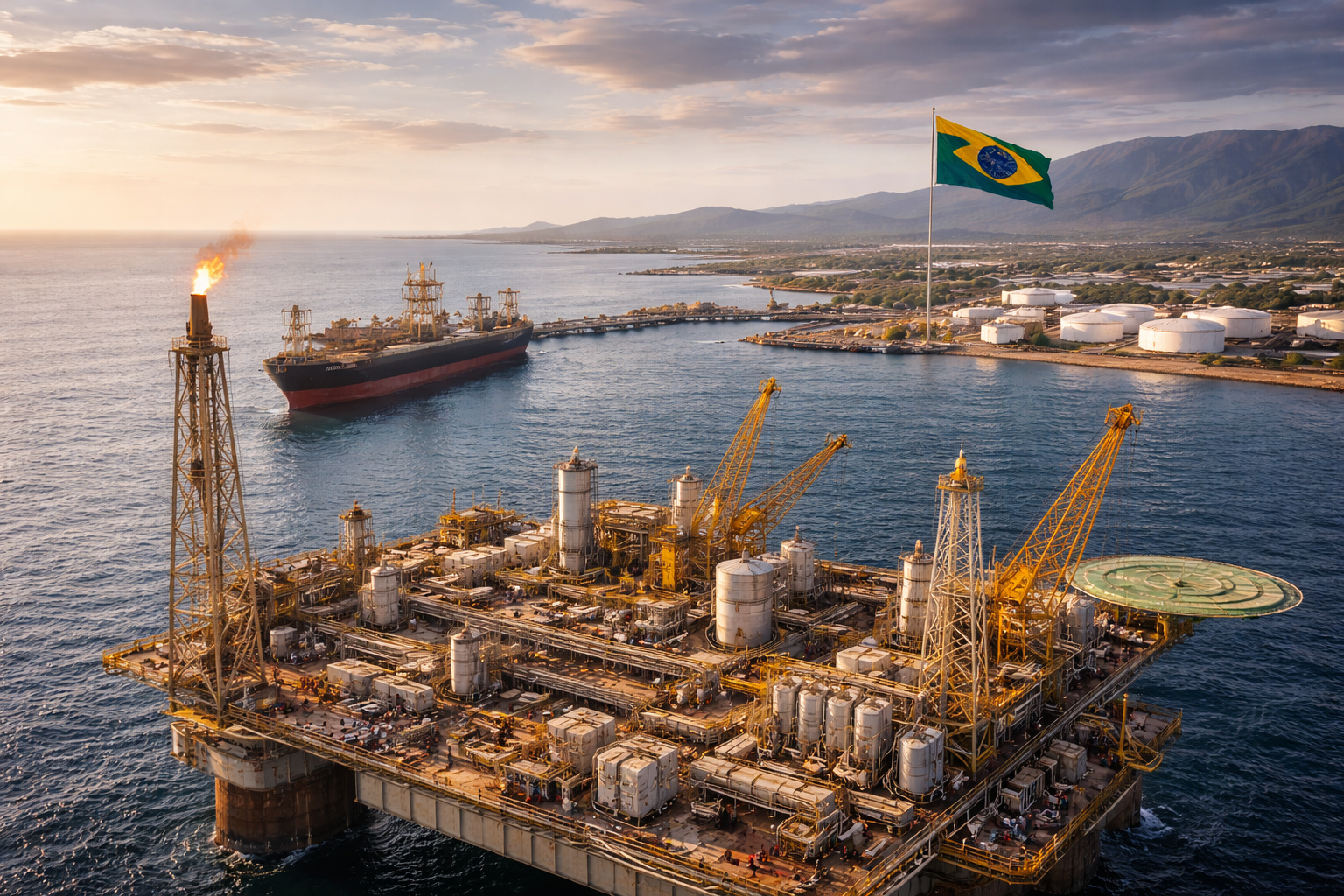
The oil continues to hold a central position in the Brazilian economy. According to a study released by the Brazilian Institute of Oil and Gas (IBP), Brazil is expected to invest US$ 21.3 billion in 2026 in the oil sector. This significant volume of resources confirms the importance of the segment not only for energy generation but also for economic growth, the trade balance, and the country’s insertion into the international market.
According to the IBP, oil remains the main item in the Brazilian export agenda, surpassing other traditional products from agribusiness and mining. Thus, even in a global scenario of energy transition, the country continues to bet on the expansion and modernization of its oil industry.
Oil as the Foundation of the Brazilian Trade Balance
Historically, oil gained increasing relevance in the national economy following the advancement of offshore production. The discovery and development of the pre-salt layer, starting in the second half of the 2000s, changed Brazil’s status in the global energy market.
-
Lula reveals a masterstroke by Petrobras to undo a deal made by Bolsonaro, which involves the return of an important refinery that currently produces less than half of what was expected and makes Brazil dependent on international diesel.
-
A study confirms that the natural gas sector will reduce greenhouse gas emissions in Brazil by 0.5% and accelerate the energy transition by 2026.

-
Petrobras implements a severe adjustment and confirms a 55% increase in the price of aviation kerosene with a proposal for installment payments for the companies.

-
The rise in oil prices could ensure an extra revenue of R$ 100 billion for the Federal Government, indicates a recent economic study.


Since then, national production has recorded consistent growth. As a result, the country has ceased to be a net importer and has emerged among the world’s largest exporters. According to the IBP, this trajectory explains why oil has established itself as the main product exported by Brazil.
Moreover, revenue from oil exports directly contributes to the balance of external accounts. In this way, the sector exerts structural influence over the macroeconomic stability of the country.
The Investment Cycle Expected for 2026
The amount of US$ 21.3 billion projected for 2026 reflects an investment cycle focused primarily on exploration and production. According to the IBP study, a large portion of the resources will be directed to offshore projects, particularly those located in deep and ultra-deep waters.
Additionally, the investments encompass the modernization of platforms, expansion of productive capacity, and adoption of technologies that increase operational efficiency and safety. In this way, the sector aims to maintain competitiveness even in an increasingly demanding international environment.
Consequently, this volume of investments also generates significant indirect effects. Associated production chains, such as shipbuilding, metallurgy, logistics, and specialized services, are likely to be boosted.
Jobs, Income, and Technological Development
Another central aspect of investment in oil involves its social and economic impacts. According to the IBP, the oil and gas sector is capital, technology, and skilled labor-intensive. Therefore, each new project mobilizes specialized professionals and stimulates technical training.
Moreover, the technological advancement associated with deep-water exploration strengthens the country’s capacity for innovation. Over the past decades, Brazil has developed internationally recognized competencies in this segment, which enhances its global competitiveness.
Thus, the investments projected for 2026 are not limited to oil production. They also contribute to job creation, income increase, and strengthening of the Brazilian industrial base.
Oil and Energy Transition: A Strategic Coexistence
Although the energy transition progresses, the IBP study emphasizes that oil will remain relevant in the coming decades. Even with the expansion of renewable sources, global demand for oil remains high, especially for transportation, petrochemicals, and the production of derivatives.
In this context, Brazil occupies a strategic position. Domestic oil has competitive costs and lower emission intensity compared to the global average, especially in pre-salt fields. Thus, the country is able to align production with more demanding environmental standards.
Therefore, investment in the sector does not contradict the sustainability agenda. On the contrary, it occurs in parallel with the development of renewable sources, composing a diversified energy matrix.
A Key Sector for Economic Future
By projecting US$ 21.3 billion in investments for 2026, Brazil signals confidence in the potential of the oil sector. According to the IBP, regulatory predictability and a more stable business environment contribute to attracting domestic and foreign capital.
Furthermore, the strengthening of oil exports helps position the country as a relevant supplier in an international scenario marked by geopolitical tensions and the pursuit of energy security.
Thus, oil remains a strategic asset of the Brazilian economy, capable of sustaining investments, generating foreign exchange, and driving technological development. Even in the face of transformations in the global energy sector, Brazil continues to bet on a model that combines natural resources, innovation, and integration into the international market.








Seja o primeiro a reagir!