





 Portuguese
  English
  Spanish
  2 min of reading


Even Though It Is On The Divestment List, The Government Has Managed To Swap Contract Extensions And Authorizations For Improvements In The Ports
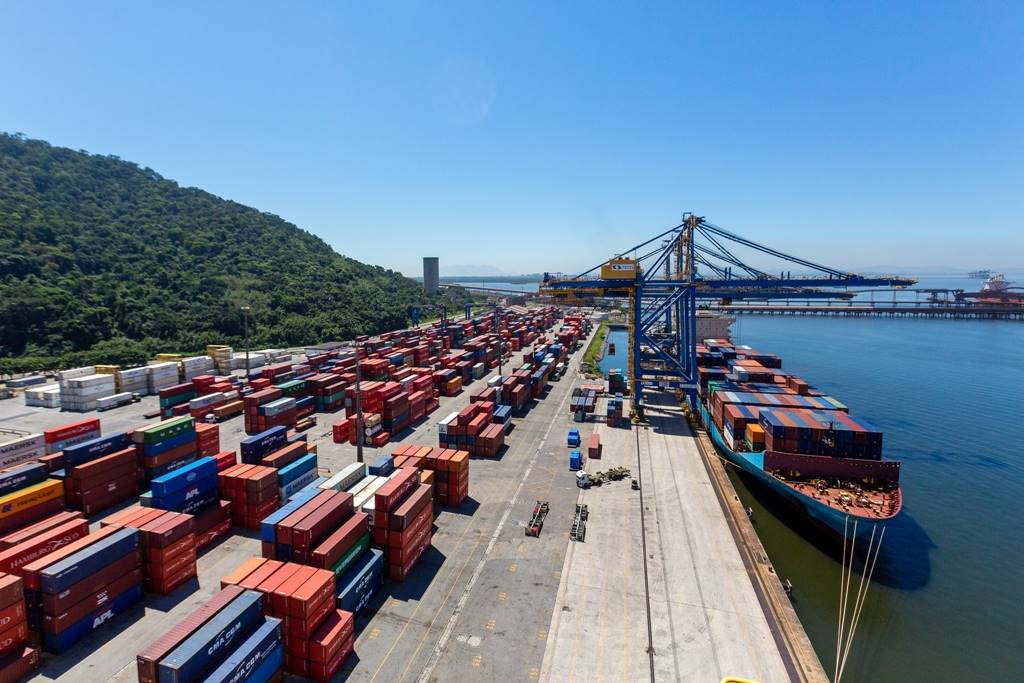
Although the government wants to hand over the administration of the ports to the private sector, investments in this area are nearing R$ 5 billion since the beginning of the year.
The reason for private investments is due to the government’s negotiations with the port administrations, authorizing, for example, the operation of new Private Use Terminals (TUPs).
In addition to authorizations for the TUPs, the government has offered areas for leasing in the managed ports and extensions of contracts in exchange for infrastructure improvement works.
It is worth remembering that the government’s intention is to hand over port administration to companies in the port sector, believing that bureaucracy and the state management model hinder the sector’s growth.
-
Government unlocks R$ 554 million for a highway that has been requested for decades and accelerates the duplication of BR.

-
Without bricks, without cement, and without endless construction: the cardboard house that is assembled in modules and can be moved.

-
Billions of barrels on the equatorial margin could lead Amapá to double its oil production in Brazil — the state aims to enter the route of companies in the Campos Basin, attract investments, and boost jobs and businesses in the oil and gas sector.

-
Without bricks, without cement, and without endless construction: the cardboard house that is assembled in modules and can be moved.

However, the government does not rule out the PPP (Public-Private Partnership) model if there is no economic feasibility in private administration, in some cases, with the public authority providing financial supplementation.
This hypothesis is remote, but it could happen, as the national secretary of ports, Diogo Piloni, made clear.
The Privatization
The government’s exit from the administration of the ports aims for greater agility in governance to make the sector more competitive.
The government itself has already commissioned a study for the privatization of the Companhia Docas do Espírito Santo (Codesa).
In addition to the port of Espírito Santo, others will likely follow the same path, such as the port of São Sebastião (SP), Suape (PE), and Itajaí (SC), with studies for these other ventures to be contracted this year.
Regarding the São Paulo ports, discussions are underway with BNDES to contract studies on the capital opening of Companhia Docas de São Paulo (Codesp), which manages Santos.
What is defined for Codesa should serve as a model for the others, with definitions on whether all the responsibilities of the Docas can be absorbed by private ports.
Today, 18 Brazilian ports are managed by federal Docas companies, and another 19 are under the responsibility of states and municipalities.
see also here on your CPG portal! Petrobras will decommission its base at Edinc in Macaé!









Seja o primeiro a reagir!