





 Portuguese
  English
  Spanish
 5 min of reading
  0 comments


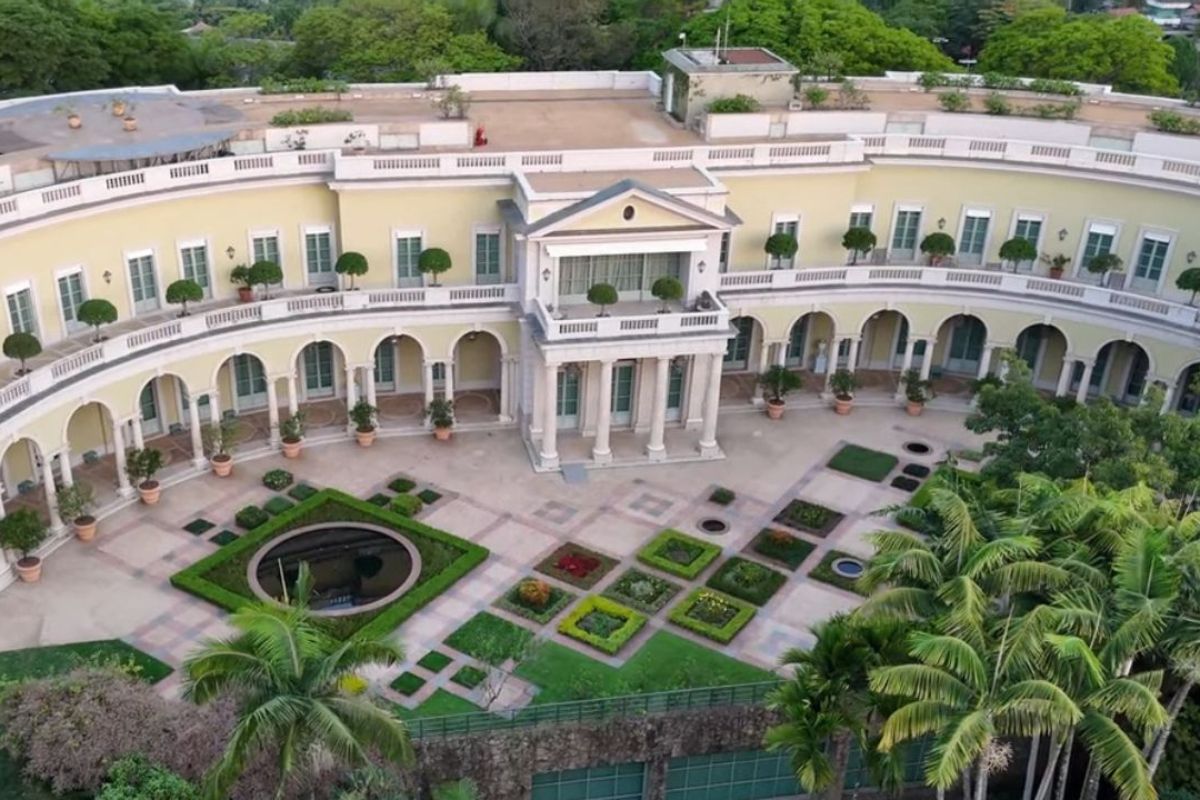
The Most Expensive Property Tax in Brazil, Attributed to the Called Mansão Safra in Morumbi, Returns to Debate by Combining Estimated Value of R$ 2.89 Billion, 22 Thousand m² and More Than 130 Rooms, While Owner Vicky Safra Maintains Secrecy, Extreme Security, and an Annual Tax Above R$ 1 Million.
The most expensive property tax in Brazil returned to the news when associated with a property described as a residential palace in Morumbi, the southern zone of São Paulo. The report states that Mansão Safra would have an estimated value of R$ 2.89 billion and would generate an annual tax in the range of R$ 1 million.
The case reignites an urban debate that goes beyond curiosity about luxury. When an annual tax exceeds seven digits at a single address, the conversation inevitably touches on extreme wealth, assessment criteria, and inequality. At the same time, the topic exposes how property tax functions as a thermometer of market value, even when internal details remain shielded by secrecy.
What Is Known About the Mansion and Why Morumbi Is at the Center of the Discussion

According to Diário do Comércio, the mansion associated with the most expensive property tax in Brazil belongs to Vicky Safra, 73, described as the richest woman in Brazil, with a fortune estimated at R$ 120.5 billion after the death of banker Joseph Safra in 2020.
-
The government requests the Federal Revenue Service for a new system to automate the income tax declaration, reducing errors, time, and bureaucracy for millions of Brazilians.

-
Pix in installments, international Pix, and contactless payment without internet: the Central Bank revealed the new features coming to the tool that is already used by almost every adult in Brazil.

-
Mercado Livre has just started selling medications with delivery in up to three hours to your door, and this move could completely change the way Brazilians buy medicines on a daily basis.

-
In Dubai, rising tensions from the war in the Middle East are causing super-rich individuals to leave the Gulf and direct their fortunes to a new financial refuge in Asia.


The construction is presented as a project conceptualized in the 1990s, envisioned as a symbol of family legacy and economic power.
In physical terms, the numbers are the main verifiable element within the set of information: approximately 22 thousand square meters of built area, more than 130 rooms distributed across five floors, and a set of items cited as high-standard infrastructure.
Morumbi appears not only as a backdrop but as a component of the price, because location directly weighs on the logic of the market value that supports the tax.
How an Annual Tax Approaches R$ 1 Million
The most sensitive point of the most expensive property tax in Brazil, in this case, is the direct relationship between estimated value and annual tax. The publication states that the mansion, valued at R$ 2.89 billion, would generate an annual tax around R$ 1 million.
Even without detailing rates or calculations, the implicit mechanism is known: property tax is charged based on the market value attributed to the property, defined by municipal criteria, and not by emotional price, history, or the mystique of the address.
This difference explains why the annual tax makes headlines even when the interior remains inaccessible.
The annual tax is a public or traceable figure in registries and bills, while what exists inside the mansion can remain invisible for decades.
It is in this contrast that the most expensive property tax in Brazil gains strength, as it transforms an abstract discussion about wealth into an annual and recurring number.
Architecture, Scale, and the Comparison with Power Centers
The publication states that Mansão Safra would be larger than the White House in the United States and would also surpass the Palácio da Alvorada in Brazil, using the metric of area and number of rooms.
The comparison, besides drawing attention, serves a narrative function: translating 22 thousand m² and more than 130 rooms into references that the reader recognizes, even without internal images.
Número e influências também são citados para explicar por que a mansão ganhou aura de monumento: projeto atribuído ao francês Alain Raynaud, com inspiração em palacetes romanos e no Palácio de Versalhes, e paisagismo atribuído a Burle Marx.
When a residential address begins to be described as a palace, the discussion escapes the real estate market and enters the symbolic field, where wealth and inequality become inseparable themes.
Secrecy, Security, and What Remains Out of Reach
The publication describes a level of secrecy that limits photos and internal records, reinforcing the idea of extreme security.
The list of highlighted items includes an Olympic-sized pool, helipad, nine elevators, and extensive green areas with centennial trees, in addition to the distribution across five floors.
These elements do not appear as gratuitous ostentation but as a technical justification for the scale: internal logistics, vertical movement, and circulation autonomy.
This type of shielding also alters how the city perceives the mansion.
Instead of becoming a tourist attraction, the property becomes a subject of speculation, as almost everything circulating about it are numbers, not images.
Morumbi, in this context, appears as a neighborhood where high income, infrastructure, and urban perception disputes coexist, and inequality emerges as an inevitable backdrop.
Rankings, Extreme Wealth, and Public Discomfort
The publication states that Mansão Safra appears in international rankings of architecture and luxury properties, citing Architectural Digest magazine.
In this framing, the São Paulo property would be placed ahead of the White House and behind historical buildings like Buckingham Palace and the Palace of Versailles, elevating the mansion to an emblematic building rather than just a residence.
This type of positioning amplifies social discomfort.
When extreme wealth gains endorsement from rankings, inequality stops being an idea and becomes direct comparison with state structures and national symbols.
The most expensive property tax in Brazil then functions as a trigger: for some, proof that taxation reaches the top; for others, a reminder that the urban fabric coexists with realities that rarely intersect.
Who Is Cited and Why This Story Repeats
The publication associates the mansion with the legacy of Joseph Safra, presented as a Lebanese immigrant who arrived in Brazil in the 1960s to work in the family business alongside his brother Moise Safra and transformed Banco Safra into one of the largest financial conglomerates in the country.
The chain is clear: financial rise, consolidation of wealth, and materialization in a property that, due to its scale, becomes a symbol.
The effect of repetition comes from the property tax itself. While the property remains in the same place, the annual tax returns every year, and the discussion returns with it, because large numbers do not age silently.
Therefore, the most expensive property tax in Brazil tends to reappear in cycles, as a sort of thermometer of inequality in Morumbi, even when nothing changes in the address’s routine.
The most expensive property tax in Brazil, when associated with a mansion in Morumbi valued at almost R$ 3 billion, transforms a curiosity about luxury into a technical and urban debate.
The annual tax close to R$ 1 million works as a recurring data point, capable of revealing the scale of wealth and tensioning the discussion about inequality without needing internal images.
If this annual tax existed in your neighborhood, what kind of effect do you think it would have on the city: more transparency, more pressure on wealth, or just more noise? And for you, what should weigh more in the property tax: location, area, construction standard, or the social function of urban land?









Seja o primeiro a reagir!