





 English
  Francês
  Alemão
  Italiano
  Japonês
  Norueguês
  Portuguese
  Spanish
 5 min of reading
  2 comments


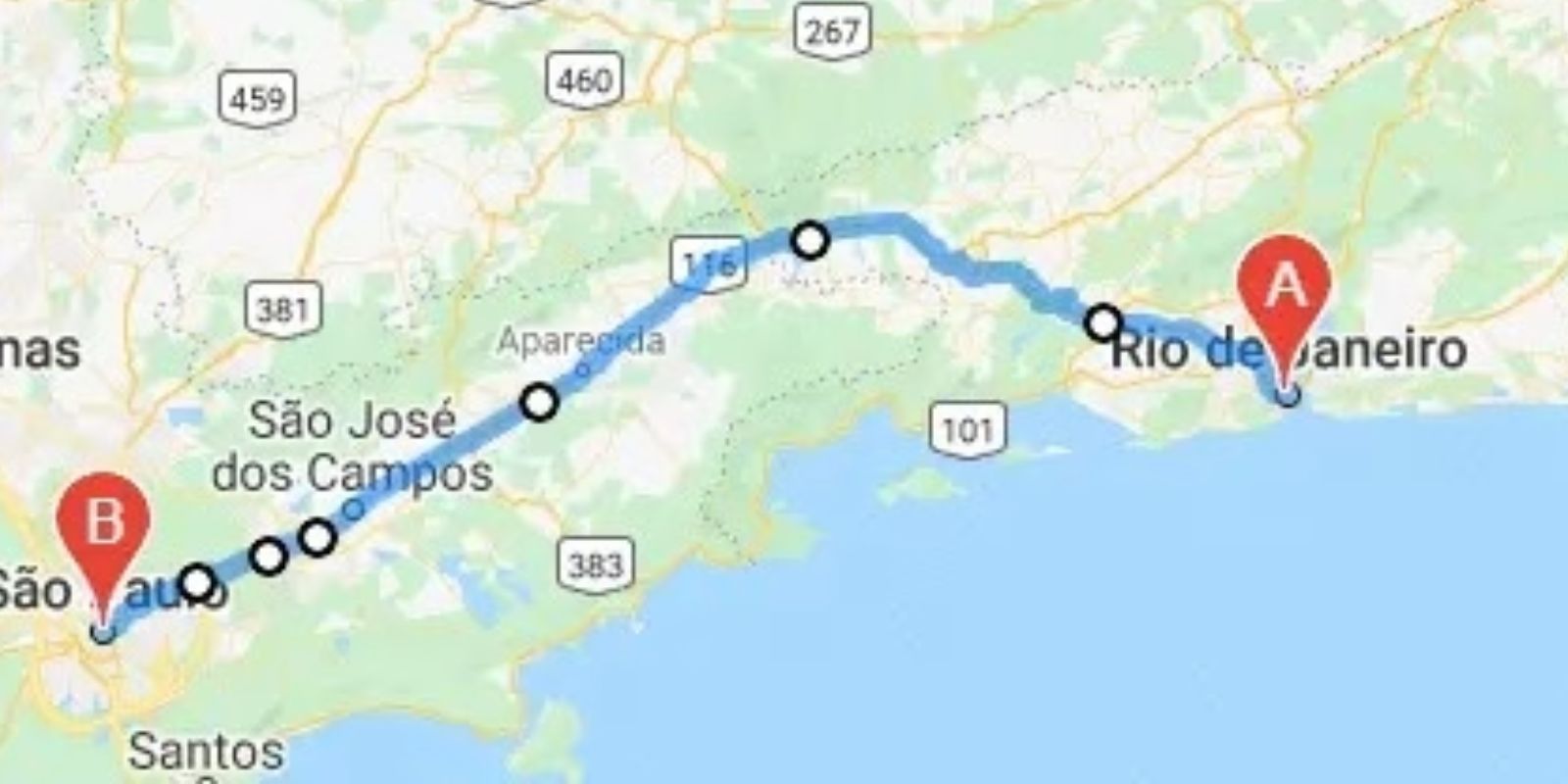


Imagine Traveling From Rio to São Paulo in Exactly 8 Minutes While Enjoying Extreme Luxury and an Executive-Class Buffet
Rio to São Paulo is a route that symbolizes speed, economic integration, and urban mobility in Brazil. Every day, thousands of passengers traverse this path for professional, family, and institutional reasons.
The idea of reducing this journey to a few minutes may seem distant, but it has technically been possible. For nearly three decades, a commercial airplane demonstrated to the world that flying faster than the speed of sound was viable.
The Concorde was not only a fast aircraft but a technological landmark that transformed the perception of time and distance, according to a report published.
-
Seen from space, a colossal ‘Y’ cuts through the largest desert in China, blending a jade-filled river, red and white mountains, and revealing the absurd scale of the transformation of the Taklamakan surrounded by a green wall with billions of trees.

-
The Pacific Ocean reveals what the cliffs of Big Sur have hidden for millennia: Pfeiffer Beach, in California, features swirling purple sand formed by garnet crystals and displays a stone arch that is illuminated by the sun in winter for just a few days each year.

-
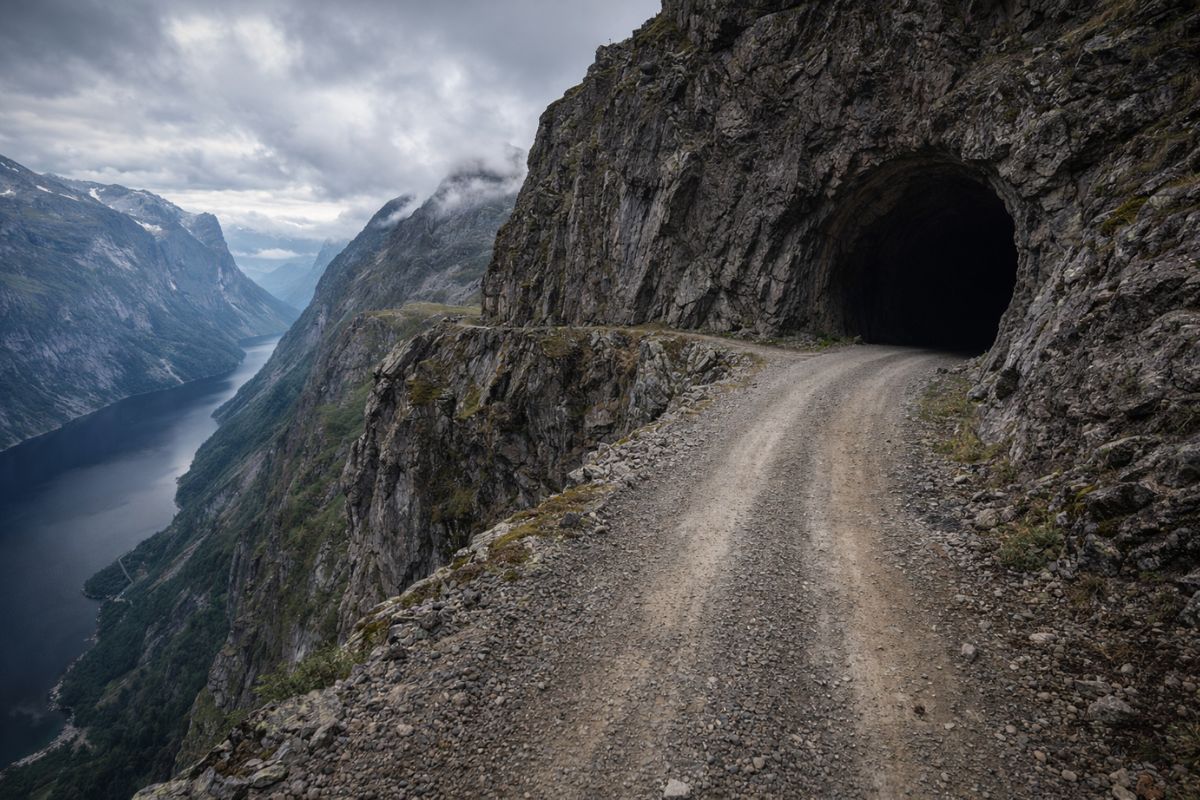
Aursjøvegen in Norway is a 100-kilometer gravel road that crosses chasms and dark tunnels carved into the rock at an altitude of 947 meters in the fjords and is only open for four months a year.
-
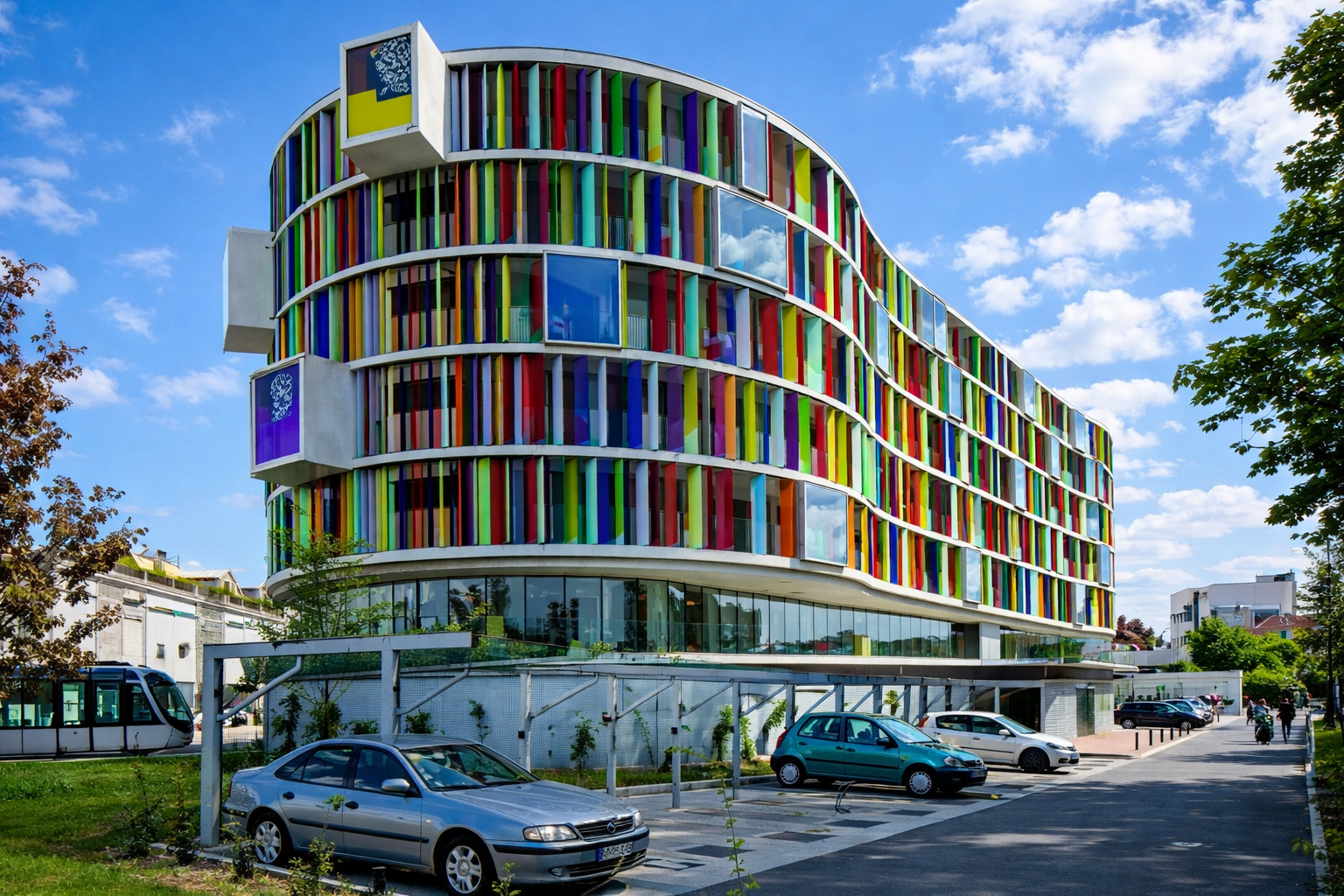
With about 4,000 m², the building constructed in a traditional neighborhood in France looks like a rainbow, has a colorful facade, mixes vibrant glass, and creates one of the most unusual visuals in Bordeaux.

By understanding how it worked, why it was created, and the reasons it stopped flying, it becomes easier to comprehend how short trips could be radically shortened and why that never became a reality in domestic transport.
The Origin of the Concorde and European Technological Ambition
The Concorde emerged in a historical context marked by a technological race between great powers. In the early 1960s, France and the United Kingdom signed a bilateral agreement to develop a supersonic commercial airplane.
The goal was to create an aircraft capable of flying above Mach 2, surpassing any existing civil competitor. The project was led by engineers from the British Aircraft Corporation and Aérospatiale, with direct funding from the governments. The name Concorde symbolized unity and international cooperation between the British and the French.
The first flight took place in March 1969, and commercial operations began in January 1976. The aircraft used four Olympus 593 engines designed to maintain a constant speed above the sound barrier. Its delta wing shape, elongated fuselage, and movable nose were not aesthetic but functional.
Every detail was designed to reduce air resistance, control the heating of the structure, and ensure stability in different phases of flight.

Rio to São Paulo and the Calculation of a Supersonic Route
The average distance between the capitals of São Paulo and Rio de Janeiro is approximately 400 kilometers. On traditional commercial flights, this route takes about 60 minutes.
The Concorde, flying at about 2,180 kilometers per hour, could travel from Rio to São Paulo in just 8 minutes, considering cruise speed. This estimate helps visualize the real impact of technology. The video below provides more details:


When talking about flying from Rio to São Paulo, it’s important to consider that supersonic aircraft need additional time for takeoff and landing. Even so, the time gain would be significant.
The problem is that the Concorde was designed for long distances, such as transoceanic flights. On short segments, the high fuel consumption and operational costs made the model economically unfeasible, even with extreme speed.
The Concorde in Brazil and the Logic of the Airline Market
Between 1976 and 1982, the Concorde operated in Brazil connecting Rio de Janeiro to Paris, with two weekly flights. The flight included a technical stop in Dakar, Senegal, for refueling, and the journey took about 6 hours.
At the time, this duration was considered revolutionary. The operation put the country in direct contact with the most advanced commercial aviation in the world.
Despite this, there were never any domestic flights. The intense Rio-São Paulo corridor already concentrated significant demand, but urban airports were not prepared for such noisy aircraft.
Furthermore, the business model of the Concorde did not fit the profile of local passengers, especially considering the price of tickets for the time.
The aircraft catered to a very specific audience willing to pay high amounts to save time, something incompatible with frequently traveled internal routes with high turnover. It is worth noting that there was never a route from Rio to São Paulo on the Concorde.
Why Were Concorde Tickets So Expensive?
The cost of a ticket on the Concorde reflected a combination of technical and operational factors. Fuel consumption was significantly higher than that of subsonic airplanes.
To maintain Mach 2, the engines had to operate in extreme conditions, using large volumes of aviation kerosene.
Maintenance was also complex and frequent, as the heating of the fuselage during supersonic flight caused material expansion.
In 2003, a ticket between New York and London on the Concorde could cost around $12,000. This price limited access to executives, businesspeople, and government officials.
For those thinking about traveling from Rio de Janeiro to São Paulo, this cost model would make the operation unfeasible on a domestic scale. The Concorde was not designed to democratize air travel but to serve a very specific niche.

Noise, Sonic Boom, and the End of Operations
One of the biggest operational obstacles of the Concorde was the sonic boom. Upon exceeding the speed of sound, the aircraft produced a shock wave that propagated down to the ground, generating intense noise. This is why this iconic plane could travel from Rio to São Paulo in less than 10 minutes.
For this reason, many countries prohibited supersonic flights over populated areas. The Concorde was allowed to fly above Mach 1 (the speed of sound) mainly over the ocean.
On July 25, 2000, the only fatal accident involving the model occurred. Flight 4590 of Air France crashed shortly after takeoff in Paris, resulting in 113 deaths.
The investigation found that a metallic object on the runway punctured a tire, and its fragments hit a fuel tank, causing a fire. Although modifications were made, the impact on the aircraft’s image was quite significant.
After the September 11, 2001 attacks, the scenario changed dramatically. The fear of flying sharply reduced business travel, the Concorde’s main audience. Many flights, especially those of Air France, crossed the Atlantic with very low occupancy (about 15 to 20 passengers), making the operation unsustainable.
In 2003, Air France and British Airways permanently ended services with the Concorde. Even out of operation, the legacy of the aircraft remains alive. The possibility of traveling from Rio to São Paulo in 8 minutes continues to symbolize what avionic engineering has achieved in this era.








O que é bom, dura pouco!
No ano 3000, talvez