





 Portuguese
  English
  Spanish
  5 min of reading
  0 comments



In the first two weeks of the war involving the United States, Israel, and Iran, the conflict released almost 5.6 million tons of CO2 and other greenhouse gases, with the destruction of houses, schools, medical centers, and oil facilities appearing as the main source of climate impact
The first two weeks of the war involving the United States, Israel, and Iran released nearly 5.6 million tons of CO2 and other greenhouse gases, according to a new analysis. The volume, recorded between February 28 and March 14, 2026, already exceeds the total annual emissions of Iceland and places the destruction of civilian buildings at the center of the climate impact of the conflict.
The survey indicates that the direct and indirect emissions from the conflict are advancing at a pace sufficient to, if maintained for a year, equal the annual total of the 84 countries with the lowest emissions on the planet. The analysis and a complementary opinion piece from the researchers were published on March 21 by the Climate and Community Institute.
Patrick Bigger, co-author of the study and research director of the Climate and Community Institute, told The Guardian that “each missile attack is another initial payment for a hotter and more unstable planet, and none of this makes anyone safer.” His assessment reinforces the climate dimension associated with military operations and the damage to infrastructure.
-
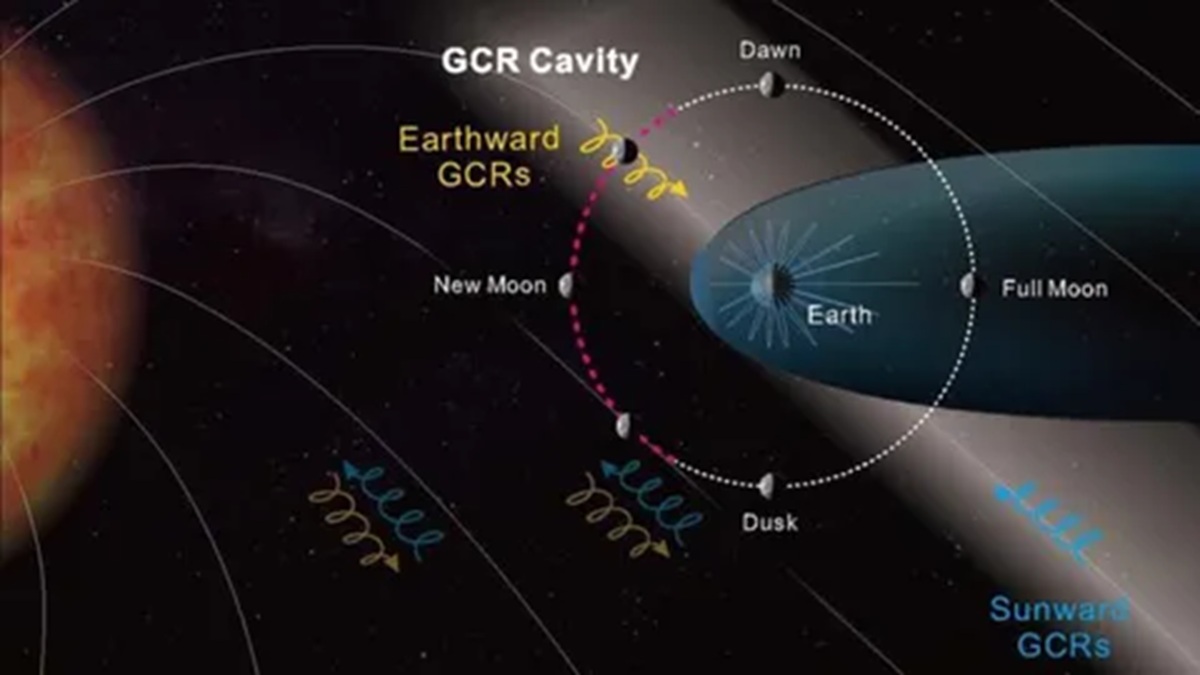
Lunar exploration may change after a Chinese probe finds a “cavity” of radiation that reduces the impact on astronauts by up to 20% at certain times on the Moon.
-
Artemis 2 sends four astronauts on a historic mission to the Moon after 50 years, with a launch on April 1 and a record flight to the far side of the Earth’s natural satellite.

-
Scientists drilled 523 meters of ice in Antarctica with water at 75 degrees and found 218 meters of sediments that prove that where there is now half a kilometer of ice, there was once an open ocean millions of years ago.

-
Scientists create a new propulsion system that allows satellites to use the air from Earth’s atmosphere as fuel to operate in space with lower costs and longer operational time.

Destruction of houses, schools, and buildings leads emissions in Iran
The main source of CO2 identified in the conflict with Iran in the first two weeks was the destruction of houses, schools, and other buildings. According to the researchers, the removal of debris and the future reconstruction of these spaces represent about 2.7 million tons of CO2, a volume comparable to the annual emissions of the Maldives.
Based on data from the Iranian Red Crescent Society, the authors listed 16,191 destroyed residences, in addition to 3,384 commercial establishments. Also included in this count were 77 medical centers and 69 schools affected during the analyzed period.
This set of damages was treated as the largest share of the initial climate liability of the war. The analysis considers that the impact does not end with the bombings, as the reconstruction of infrastructure will also require carbon-intensive processes.
The conclusion emphasizes the indirect effect of the conflict on the climate. Instead of being limited to what was burned at the time of the attacks, the study projects future emissions associated with the recovery of what was destroyed.
Burning oil appears as the second largest source of CO2
The second largest share of emissions came from the attacks by the United States, Israel, and Iran on oil storage facilities, refineries, and oil tankers in the Gulf region. The researchers estimated that between 2.5 million and 5.9 million barrels of oil were exploded between February 28 and March 14.
This volume released approximately 2.1 million tons of CO2 and other greenhouse gases into the atmosphere. The amount is presented as approximately equivalent to the annual emissions of Malta.
The analysis highlights that the pace of these attacks is particularly concerning due to the potential for accelerating emissions as the war progresses. Fred Otu-Larbi, co-author of the study and researcher at Lancaster University in the UK and the University of Energy and Natural Resources in Ghana, told The Guardian that emissions could grow rapidly due to the alarming speed at which oil facilities are being targeted.
According to him, it is still not possible to accurately know what the total costs of the conflict will be. For the researcher, this uncertainty is precisely one of the reasons that make studies of this kind necessary.
Military fuel and logistics amplify the climate impact of the war
The third largest source of CO2 identified in the analysis was the fuel used in combat and support operations. The study calculates about 583,000 tons of emissions associated with this consumption, a volume comparable to the annual emissions of Greenland.
The researchers state that the United States and Israel attacked more than 6,000 targets in Iran with fighter jets and bombers during the studied period. This was equated to about 2,500 flights of three hours each, in addition to involving troop transport and other support activities.
The estimate is that these actions consumed between 150 million and 270 million liters of fuel. This data helps explain why military logistics appears with significant weight even while falling behind the destruction of buildings and the fires in structures related to oil.
The analysis also includes the losses of equipment that will likely have to be replaced through manufacturing. In the first two weeks of the war, the United States lost three F-15 fighter jets and one KC-135 refueling aircraft, while Iran reportedly lost 28 planes, 21 ships, and about 300 missile launchers.
This potential replacement is treated as the fourth largest source of CO2 in the survey. The total estimated reaches 190,000 tons, at a level comparable to the annual emissions of Tonga.
Missiles, drones, and rearmament are also in the count
The researchers also calculated the emissions incorporated into the arsenal fired and the need to replenish that stock. According to the analysis, the United States and Israel launched 9,000 missiles in the first 14 days of the war.
In the same period, Iran reportedly launched 1,000 missiles and about 2,000 drones. The count also considers interceptor missiles, as the replenishment of this material tends to require new industrial production.
According to the study, this share represents about 61,000 tons of CO2. The volume is compared to the annual emissions of a small cement factory.
Although it is the smallest among the major categories identified, this source reinforces the idea that the climate impact of the war is not limited to the immediate burning caused by the attacks. Rearmament appears as a relevant part of the accumulated environmental cost.
Researchers warn of emission expansion and new fossil dependence
Otu-Larbi stated that, at the current stage, “burning the annual emissions of Iceland in two weeks is something we really cannot afford to do.” The researchers added that the entry of more countries into the conflict could significantly raise this volume.
The analysis also argues that the consequences of the war could produce an even greater climate impact than the conflict itself. This would occur as countries seek to protect themselves from shocks in fuel and fertilizer prices caused by the Iranian blockade of the Strait of Hormuz.
According to the authors, a possible response would be to expand drilling for fossil fuel extraction, in search of greater energy self-sufficiency. Bigger stated that, historically, every energy shock caused by the United States has been followed by an increase in the opening of new wells, new LNG terminals, and new fossil fuel infrastructures.
For him, the current war risks consolidating another generation of carbon dependence. In this scenario, the impact of the conflict between the U.S., Israel, and Iran on CO2 would cease to be just an immediate effect of the bombings and would also begin to influence long-term energy decisions.









Seja o primeiro a reagir!