





 Portuguese
  English
  Spanish
  5 min of reading
  4 comments





Announced by the Ministry of Defense, the Iron Beam is operational as the world’s first laser air defense system, a directed energy system with high-energy laser to intercept rockets and drones at short range
With development led by Rafael, in partnership with other defense companies and official bodies, this world’s first laser air defense system enters operation after more than a decade of tests, adjustments, and integration with the sensor network that Israel already uses to monitor its airspace, opening an unprecedented chapter in the history of air defense.
What Is Iron Beam and Why It Matters
The Iron Beam is a ground-based directed energy system that uses a high-energy solid-state laser, around 100 kW or more, to destroy airborne threats. Instead of launching a missile, the system directs a highly concentrated beam of light at the target and literally burns its structure until it causes critical failure.
This new technology was created to address short-range targets: simple rockets, mortars, small artillery projectiles, and small to medium drones. The world’s first laser air defense operates connected to existing radars and command centers that detect, track, and relay the exact target position to the Iron Beam so that the laser beam can be aimed with surgical precision.
-
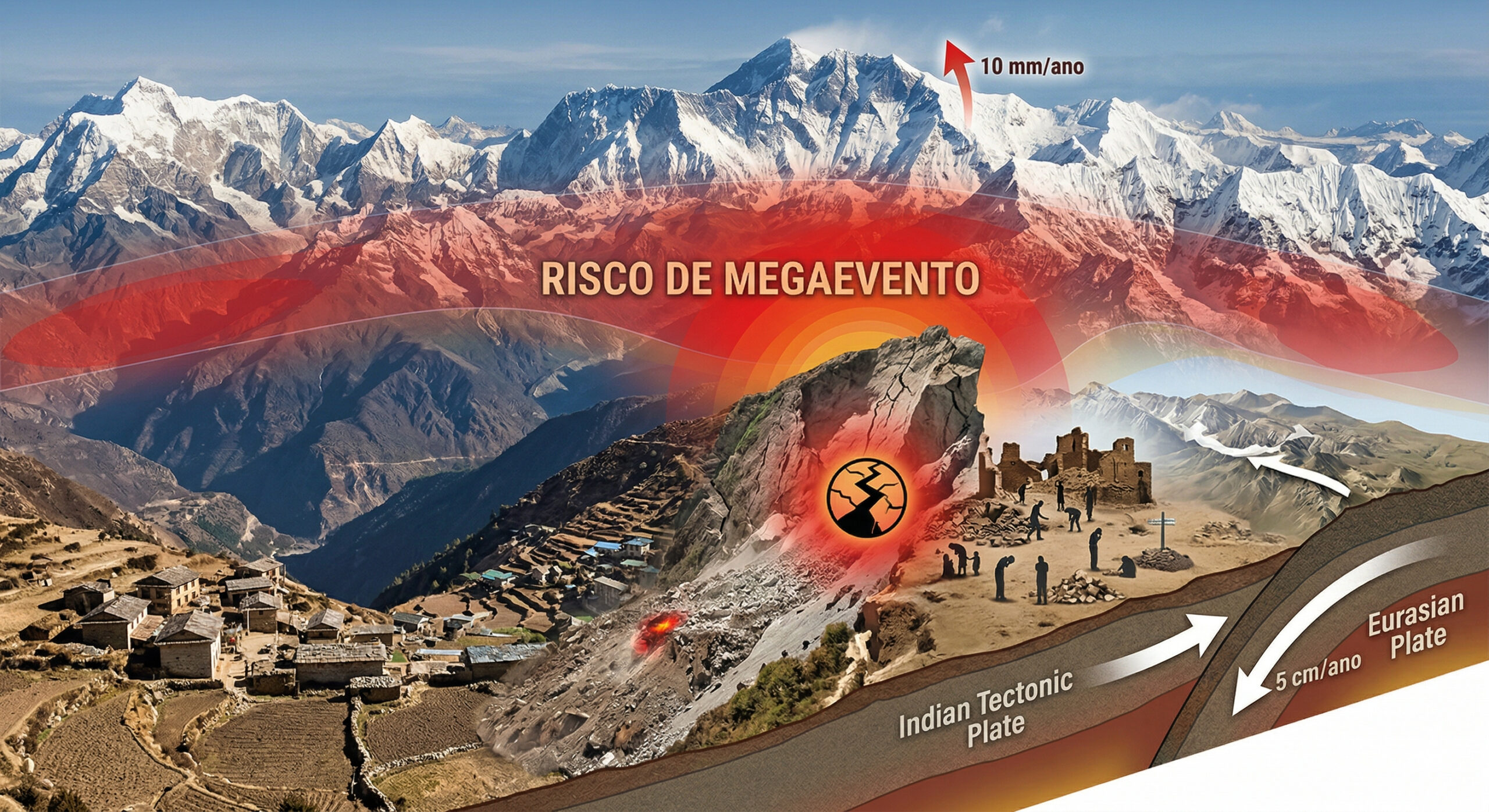
The Himalayas continue to grow to this day, with tectonic plates advancing 5 cm per year, mountains rising up to 10 mm annually, and the 2015 earthquake that killed 9,000 people may have increased the risk of an even larger seismic mega-event.
-
At an altitude of 400 km by astronauts from the International Space Station, Paris transforms at night into a golden mesh so precise that it reveals the outline of the Seine River, avenues, and entire neighborhoods like a luminous map drawn over the Earth.

-
iPhone 17 reaches historic low price with 256 GB, 120 Hz display, and drops to R$ 5,703 on Shopee, featuring A19 chip, dual 48 MP cameras, battery life of up to 30 hours, and advanced AI features.

-
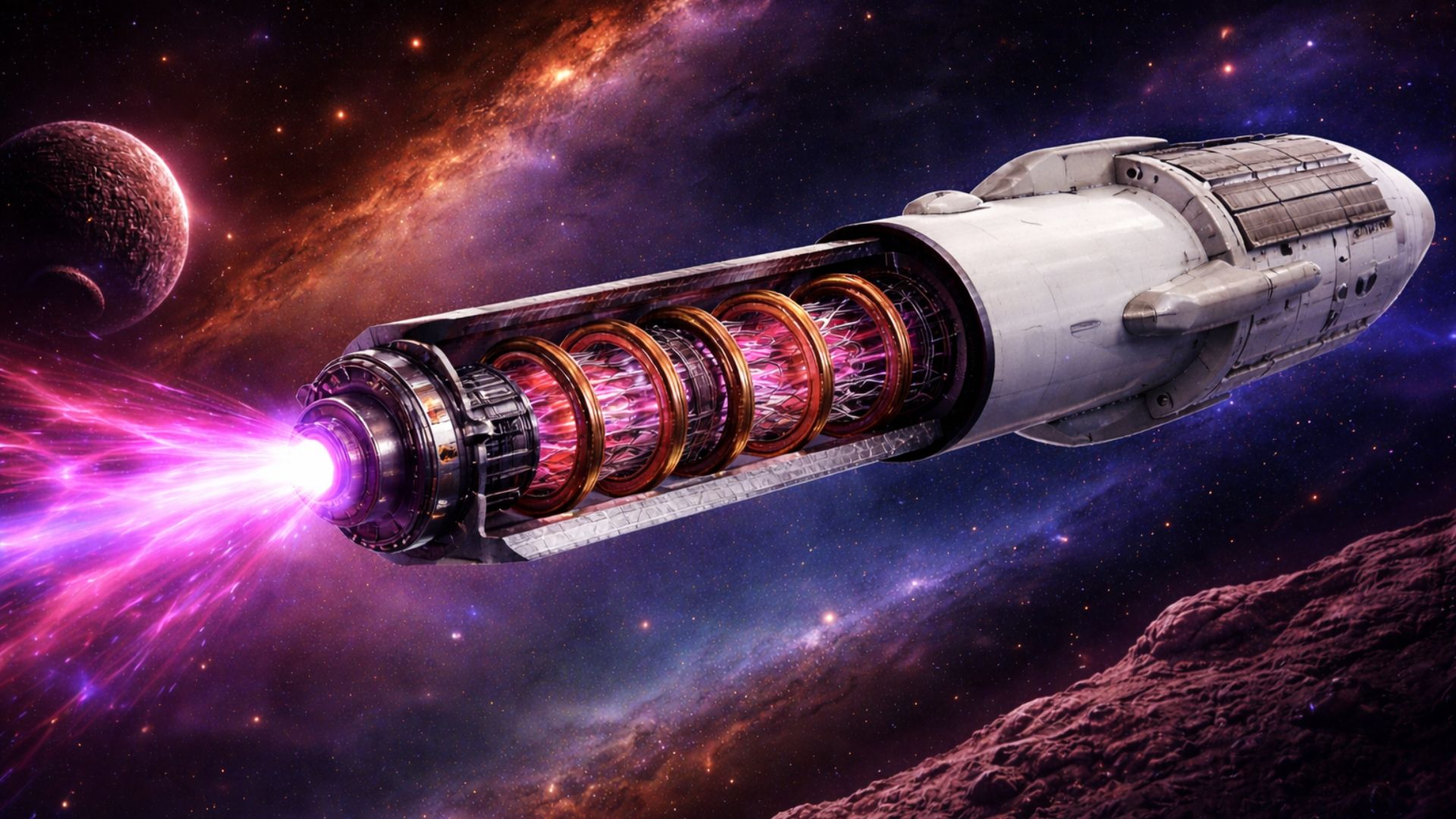
Trip to Mars getting closer: Pulsar Fusion, from the UK, advances with plasma ignition in fusion engine and could drastically reduce space travel time, making crewed missions faster, safer, and economically viable.

How the World’s First Laser Air Defense Works in Practice

When a rocket or drone is detected, the command system assesses whether it is worth engaging that target with the laser. Once the decision is made, the Iron Beam locks the beam on the threat and maintains concentrated energy for a few seconds, enough to heat the fuselage, damage internal components, or cause premature explosions.
In theory, the beam travels at the speed of light, so the “time of arrival” is virtually instantaneous. What takes time is the beam’s duration on the target, especially if there are clouds, rain, fog, smoke, or dust in the way. Therefore, the performance of the world’s first laser air defense system heavily depends on atmospheric conditions, something that designers have considered since the beginning of the program.
Tactical Range and Fit within Israel’s Defense Network


The Iron Beam was designed to operate at a tactical range, in the range of about 7 to 10 kilometers against most threats. This positions this world’s first laser air defense at a lower layer of defense, well below the Iron Dome’s main range, which remains responsible for intercepting at greater distances.
Israel already operates a layered system that includes:
- Iron Dome for short and medium range with interceptor missiles
- David’s Sling for more sophisticated medium-range threats
- Arrow 3 for ballistic missiles at high altitudes
Within this architecture, the Iron Beam acts as a close “filter,” relieving the Iron Dome’s load in saturation scenarios, when hundreds of rockets, mortars, or drones are launched simultaneously.
Cost Per Shot and “Infinite Ammunition”

One of the most revolutionary aspects of the world’s first laser air defense is the operational cost. While a traditional interceptor missile can cost tens of thousands of dollars per shot, the Iron Beam primarily consumes electrical energy for each engagement.
This means that it can destroy a rocket for a fraction of the cost of a conventional missile, reversing the current logic where armed groups use cheap projectiles that force the defender to spend expensive ammunition for protection.
Another advantage is the so-called “infinite ammunition.” As long as there is energy available and the system is cool enough, the Iron Beam can continue engaging target after target without relying on physical missile stocks, something critical in long or repeated attacks.
Limitations: Weather, Energy, and Swarms of Targets
Despite the advancements, the world’s first laser air defense is far from perfect. The laser is very sensitive to the environment: fog, dense clouds, smoke, or dust storms can scatter or absorb the energy, reducing range and effectiveness.
Moreover, the system requires:
- Robust power source, capable of powering a high-power laser for extended periods
- Constant cooling system, to prevent component overheating
These requirements can limit the use of the Iron Beam in very remote locations or those without adequate electrical infrastructure.
Another critical point is the capability against swarms. Each laser beam can only focus on one target at a time, unlike missile launchers that can fire multiple interceptors nearly simultaneously. To handle extremely dense attacks, it is necessary to combine multiple laser modules and integrate the Iron Beam with other systems, such as the Iron Dome itself.
Complement, Not a Replacement for the Iron Dome
A common question is whether the world’s first laser air defense will replace the Iron Dome. The answer is no. The Iron Beam was designed to complement, not to take the place of the missile system.
The Iron Dome remains more effective at:
- Engaging multiple simultaneous targets
- Operating at greater distances
- Functioning in virtually any weather condition
The Iron Beam, in turn, gains relevance at short ranges, in saturation scenarios, and in reducing interception costs, protecting bases, cities, and critical infrastructures while conserving missile ammunition for more complex or distant threats.
What Changes with the World’s First Laser Air Defense

The commencement of Iron Beam’s operations represents a turning point in the use of directed energy weapons in real combat. For the first time, a high-powered laser becomes an active part of national air defense, not just a technological demonstrator in a test field.
This paves the way for:
- Development of more powerful versions with greater range
- Integration into other ground platforms and, in the future, possibly naval or aerial
- Development of specific doctrines to employ lasers alongside missiles and anti-aircraft artillery
At the same time, technical challenges remain. Weather, energy demand, and the need for swarm coverage still ensure a vital role for traditional systems, which will coexist with lasers for a long time.
In the end, the Iron Beam is a concrete first step into a new generation of defenses, a technological showcase that the whole world is watching.
And you, do you think systems like this world’s first laser air defense will, in the future, completely replace interceptor missiles or will they always coexist side by side on the battlefield?








Israel levou uma surra dos mísseis iranianos, não foi pior porque os americanos foram ao socorro, como sempre.
Vai ser uma ótima alternativa, pois um complementa a ação do outro, tornando o país muito mais eficiente tanto no ataque quanto na defesa.
Será que esse sistema consegue parar um missil ORESHINIC DA RUSSIA ?