





 Portuguese
  English
  Spanish
  6 min of reading
  0 comments


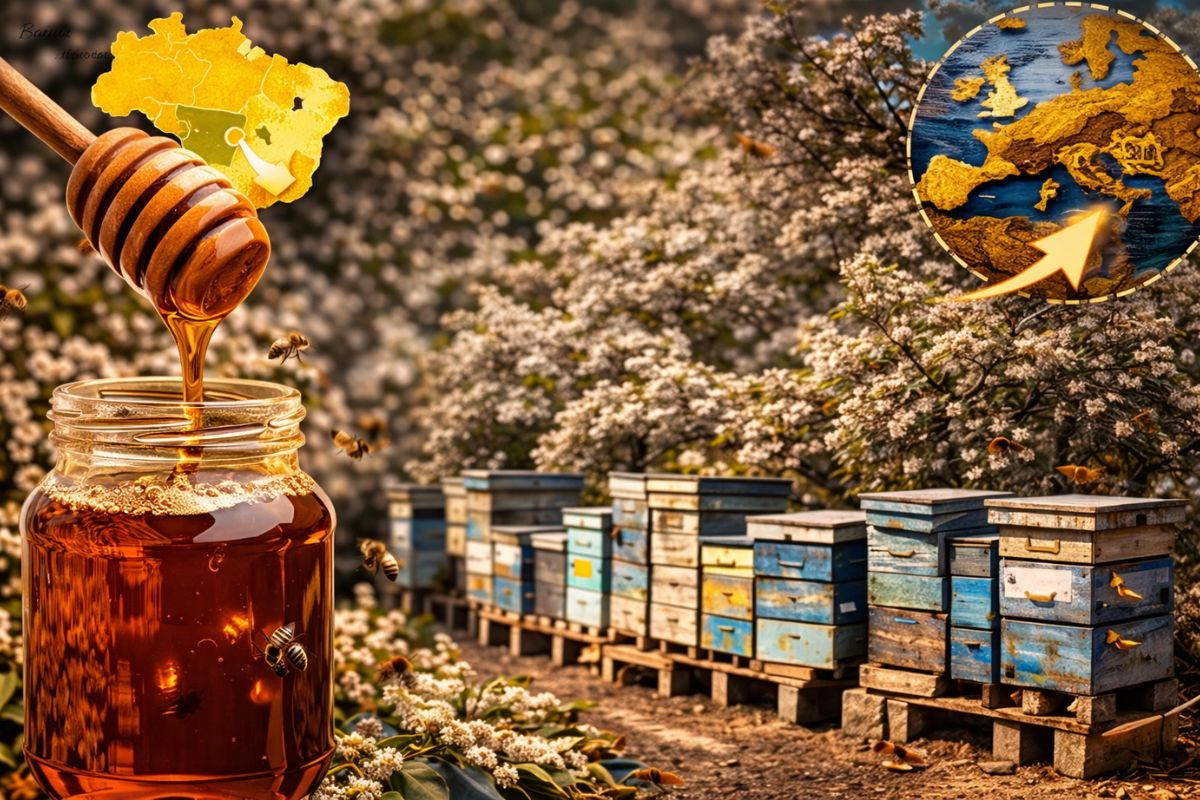
The bracatinga honeydew honey is considered one of the rarest in the world, produced exclusively in the South of Brazil every two years and yielding up to 80 kilos per hive, but Santa Catarina exports more than 90% to Europe, especially Germany, because the Brazilian market still prefers light honey and ignores this extraordinary product.
There is a type of honey that does not come from flowers, is not harvested every year, and has as its main ingredient the sap of a native tree from the South of Brazil. The bracatinga honeydew honey is produced on a large scale almost exclusively in Santa Catarina, especially in the region of São Joaquim, in the Serra Catarinense. Its color is darker, its flavor is less sweet, and its nutritional composition can have ten times more minerals than conventional honey but most Brazilians have never heard of it.
The reason for the lack of knowledge is as curious as the product itself. Brazil, culturally, values light and sweet honey. The honeydew honey, dark and with a more complex flavor, was rejected for years by the beekeepers themselves. Meanwhile, Europe, especially Germany, discovered its properties and became the main destination for more than 90% of the production from Santa Catarina. The result is a paradox: the country that produces one of the rarest types of honey in the world is the one that consumes it the least.
How a honey that does not come from flowers is produced in bracatinga

The story begins with a tree. The bracatinga is a native species of the Atlantic Forest, found in the states of Santa Catarina, Paraná, and Rio Grande do Sul.
-
They said no to 26 million dollars and would do it all over again: mother and daughter from Kentucky reject a million-dollar offer from a mysterious company that wants to build the largest data center in the state on more than 2,000 acres of rural land.

-
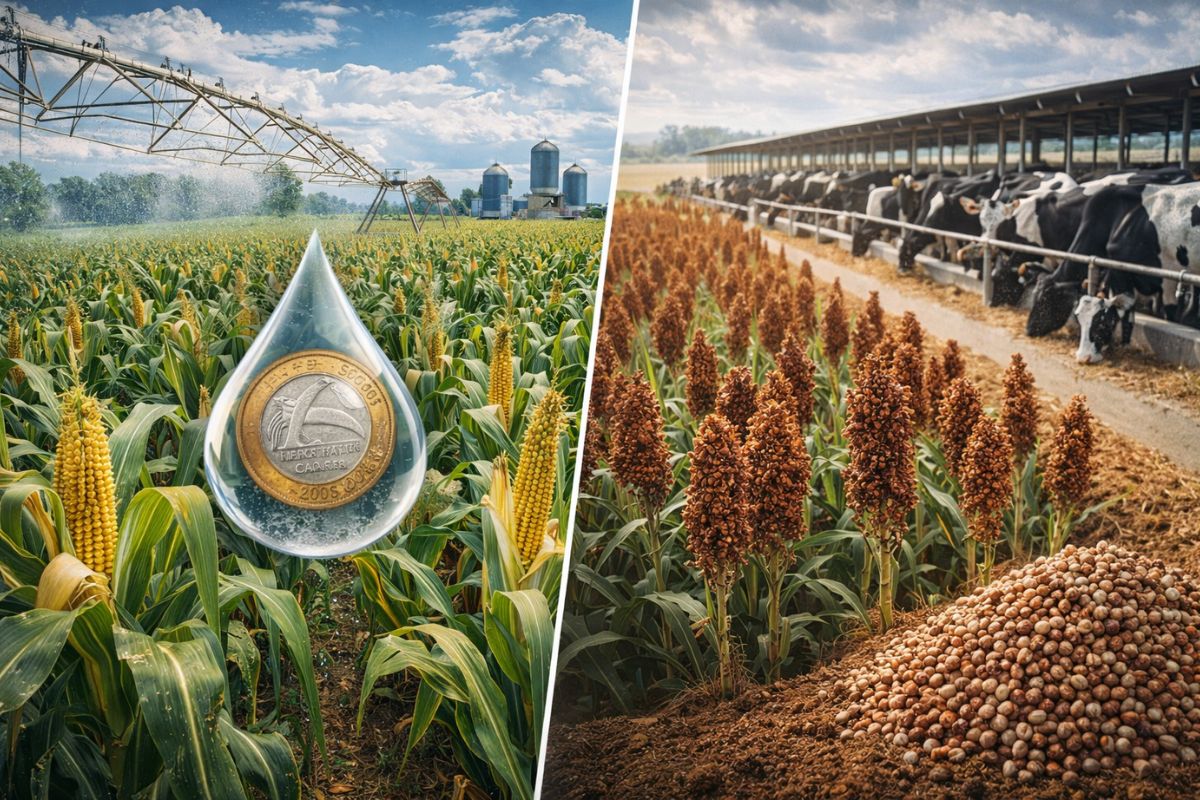
While corn requires rain and is expensive, sorghum produces almost the same volume per hectare at a cost up to 80% lower and uses less water, and it is revolutionizing dairy farming in the Triângulo Mineiro, where producers save hundreds of reais per hectare.
-
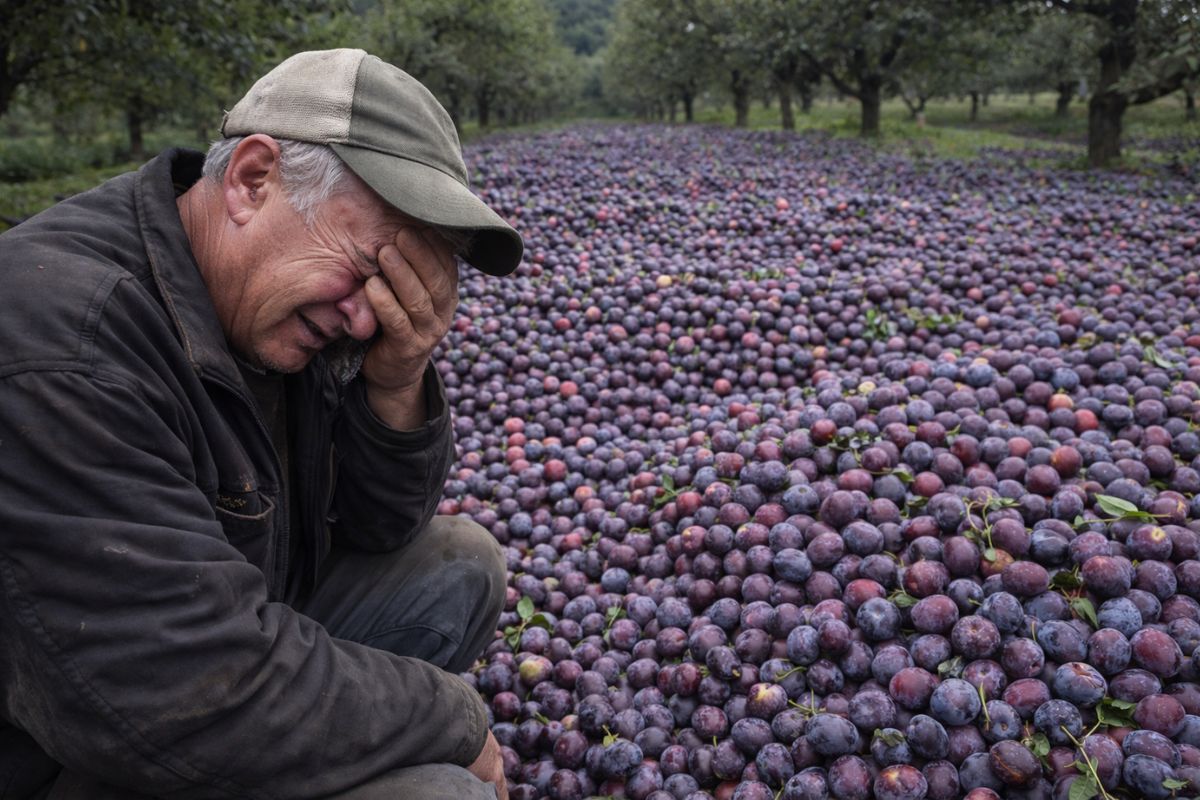
A rural producer from Urubici cries as he shows 50 tons of plums thrown on the ground because no one wanted to buy them, and in desperation, he records a video asking anyone to come to the property to pick the fruits before they rot.
-
Unable to pass through Hormuz, Brazil activated a plan B that uses Turkey as a gateway to the Middle East: the route through Gibraltar and the Mediterranean is longer and more expensive but ensures that chicken, beef, and corn continue to reach Arab markets.


What makes this tree special for beekeeping is not its flowers, but small insects called scale insects that live on its bark. The scale insects pierce the trunk of the bracatinga to feed on the sap and, in this process, release a sugary liquid called honeydew.
It is this honeydew that the bees collect. The main producers are bees of the species Apis mellifera, known as European bees, which gather the liquid and transform it into honey inside the hives. The process is fundamentally different from floral honey production: instead of flower nectar, the raw material is the processed sap of the tree. This gives the bracatinga honeydew honey unique characteristics in flavor, color, and composition.
Production occurs only every two years. The reason is biological: the scale insects need a complete reproductive cycle to infest the bracatinga in sufficient quantity.
Harvest usually occurs between January and March and depends on favorable weather conditions; dry weather is ideal, while periods of heavy rain harm the entire harvest. In good years, a single hive can yield up to 80 kilos of honey. In bad years, the maximum does not exceed 10 kilos.
Why Santa Catarina dominates the production of this rare honey

Santa Catarina is the world’s largest producer of bracatinga honeydew honey, and the epicenter of this production is in the Serra Catarinense, especially in the municipality of São Joaquim. The region has the ideal conditions: high altitude, abundant presence of native bracatingas, and a consolidated beekeeping tradition developed over decades in the Southern Plateau.
In 2021, the honeydew honey from São Joaquim received the Geographical Indication (GI) seal for the Brazilian Southern Plateau, covering a production area of 58,987 square kilometers with 134 cities from Santa Catarina, Paraná, and Rio Grande do Sul.
The seal guarantees traceability, authenticity, and proves that this production can only occur in this specific region—a recognition that adds value and differentiates the product in the international market.
According to Rodrigo Durieux da Cunha, head of the Beekeeping Studies Division of Epagri (Agricultural Research and Rural Extension Company of Santa Catarina), there is organized associativism among the producers in the region.
“There are institutions that provide guidance to producers; Epagri provides information for quality production, in addition to other partnerships”, he states. This structure allows Santa Catarina to maintain production at scale even with the natural limitations of the biennial cycle.
Why Brazil rejects honeydew honey and Europe pays dearly for it

The Brazilian rejection of honeydew honey has cultural roots. “Our culture values light honeys, and until a while ago, beekeepers did not like it because it was honey that was not utilized, it had no value”, explains Rodrigo Durieux da Cunha from Epagri. For years, producers considered the dark honey from bracatinga as a byproduct with no market.
The turnaround happened when European laboratories analyzed the composition of bracatinga honeydew honey and discovered remarkable properties.
The product is rich in minerals—up to ten times more than floral honey—has low glucose and fructose content, and exhibits antioxidant, anti-inflammatory, and antibacterial functions. For the European consumer, accustomed to paying more for functional and traceable foods, this honey has become a luxury item.
Germany is the largest buyer. More than 90% of the production of honeydew honey from Santa Catarina crosses the Atlantic, and the product reaches European shelves at prices much higher than would be practiced in the Brazilian domestic market. The paradox is evident: Brazil produces but does not consume; Europe does not produce but values. Santa Catarina has been working to change this scenario, but the national preference for light honey still prevails.
Floral honey and honeydew honey: the differences that explain the rarity
The difference between the two types of honey begins with their origin and extends to the shelf. Floral honey—what most Brazilians know—is produced from flower nectar. It is harvested two to three times a year, has a light color, a mild flavor, and tends to crystallize over time due to its higher glucose content. It is the standard honey in the national market.
The bracatinga honeydew honey follows a different logic. Its raw material is the sap of the tree, processed by the scale insects and collected by the bees. The color is dark, almost amber. The flavor is less sweet and more complex, with notes reminiscent of malt.
The chemical composition is marked by high mineral content and low simple sugar content, making it a honey that does not crystallize as easily and offers superior nutritional benefits.
The rarity is a direct consequence of the production cycle. While floral honey can be harvested multiple times a year in practically any region of Brazil, bracatinga honeydew honey is only produced every two years, in a geographic area restricted to the South of the country, and depends on climatic conditions that do not always cooperate. This set of factors makes each harvest valuable and each kilo contested.
The challenges that threaten the future of production
Despite its international prestige, honeydew honey production faces concrete problems. Joel de Souza Rosa, a beekeeper at Apiários Real in São Joaquim, points out that the bracatinga begins to dry out after five years of life and that there is no program for renewing the plantations.
“Something from the government or some environmental agency for us to renew the plants. Otherwise, we will worry because it is decreasing a lot; they are drying out”, warns the producer.
Without the replacement of bracatingas, the forest base that sustains the entire honeydew honey production chain shrinks with each cycle.
It is a silent threat: while European demand grows and the Geographical Indication seal adds value to the product, the raw material that feeds the scale insects and, consequently, the bees is diminishing. The lack of public incentive for replanting puts at risk not only the honey but the very beekeeping tradition of the Serra Catarinense.
The climate is another factor of uncertainty. Entire harvests can be compromised by excessive rain, something that becomes more unpredictable with climate change.
For Santa Catarina to continue being a global reference in the production of this rare honey, investment in forest renewal and adaptation to climatic conditions that are no longer the same as decades ago will be necessary.
With information from the portal NDMAIS.
Have you ever tried bracatinga honeydew honey or knew this story? Do you think Brazil should value this product more instead of exporting almost everything to Europe? Share your thoughts in the comments about what the country produces best and does not recognize; your opinion matters.








Seja o primeiro a reagir!