





 Portuguese
  English
  Spanish
  5 min of reading
  0 comments


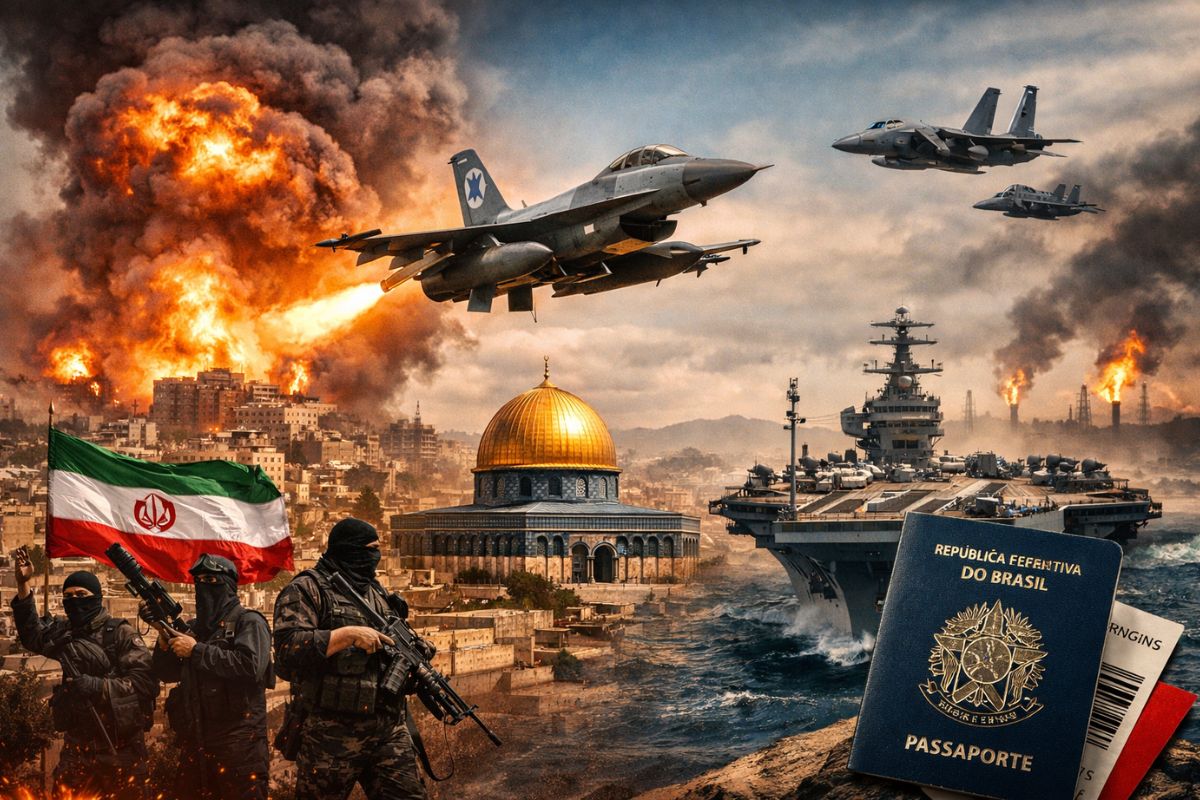
With the Escalation of the Conflict Involving Iran, Israel, and the United States, the Itamaraty Advised Against Travel to 11 Countries in the Middle East Due to Security Risks. The Ministry Reminds That There Are About 70,000 Brazilians in the Region, An Estimated Number, and Details Which Destinations Are on Alert and What Changes.
The Itamaraty issued an alert to Brazilians in the Middle East and also to those planning to travel to the region, by advising against travel to 11 destinations, citing security risks due to the escalation involving Iran, Israel, and the United States. The measure draws attention because it is usually activated when the situation becomes more unpredictable for civilians, including tourists.
At the same time, the Itamaraty itself emphasizes that there are about 70,000 Brazilians in the Middle East, but that the number is just an estimate, as consular registration is not mandatory. This helps to understand why a consular alert affects routes, plans, and family decisions: it is not always simple to know how many people may be impacted and where they are.
What Motivated the Alert and Why It Weighs on the Decision to Travel
The main point of the Itamaraty’s warning is the combination of high military tension and increased risk for the movement of people, especially in regions where the situation can change rapidly. In practice, when the Itamaraty “advises against,” it indicates that the chance of a tourist facing interruptions, local instability, travel restrictions, or episodes of insecurity increases, and that the trip ceases to be “routine.”
-
If the USA were to go to war with Brazil, Washington’s greatest fear would not be the attack itself, but facing a vast territory, prolonged resistance, and a costly, chaotic, and unpredictable occupation.
-
In 2013, Nicaragua sold the concession for a canal to rival Panama to a Chinese billionaire who lost 85% of his fortune, disappeared, and was declared bankrupt. Now the project resurfaces with a new route, a new Chinese partner, and a cost of $64.5 billion.
-
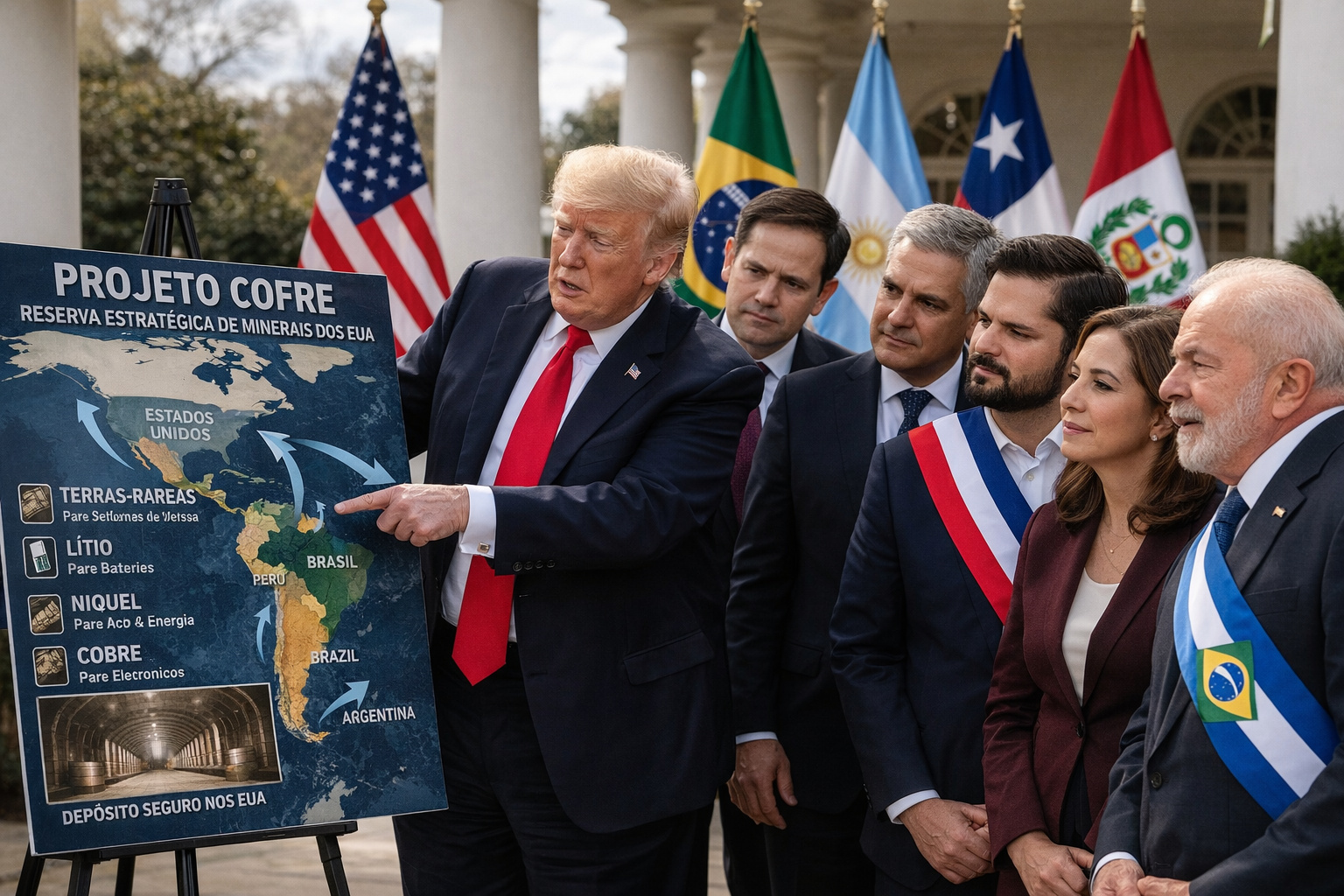
The USA announces a mysterious billion-dollar vault project to store critical minerals, but what intrigues experts is not just the plan itself, but why Latin America, including Brazil, has entered the center of this global dispute against China.
-
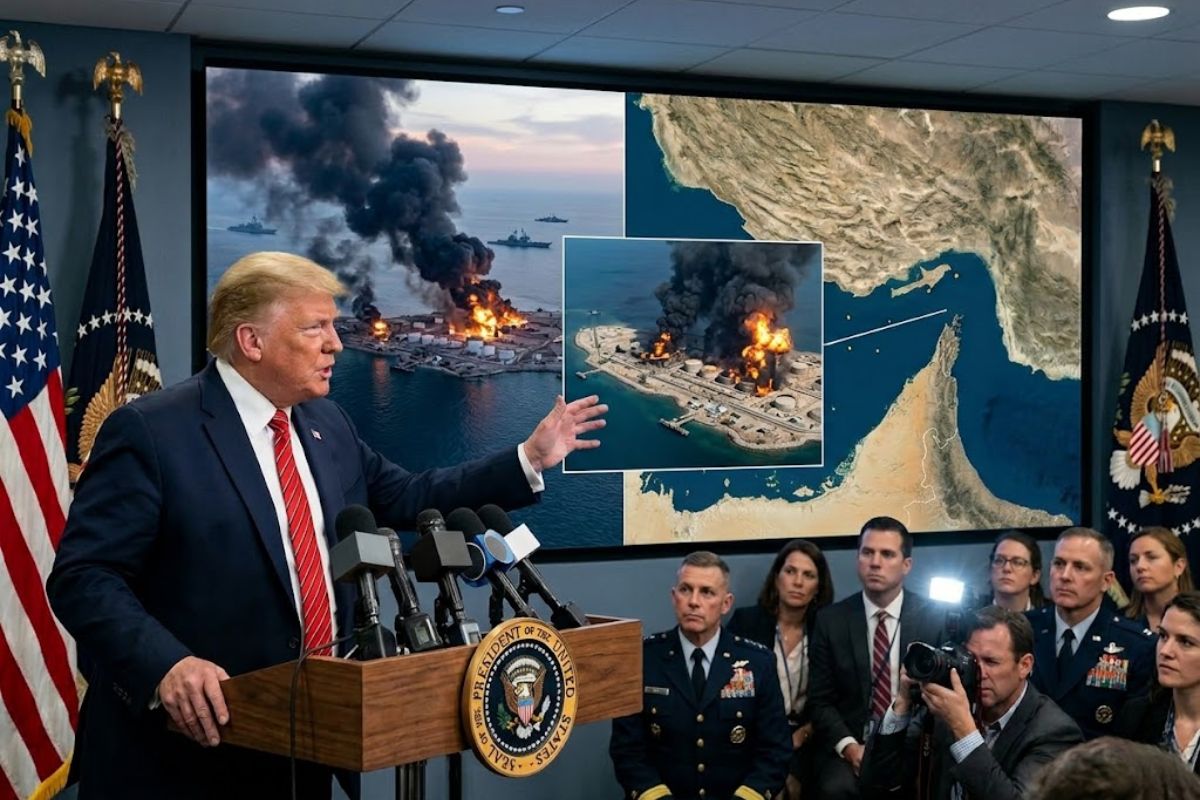
Trump Announces Bombing of U.S. Military Targets on Iranian Island Responsible for About 90% of Iran’s Oil Exports, Warns of Further Attacks if Navigation in Strategic Strait of Hormuz Is Threatened

There is also a very concrete aspect that often gets hidden in the headlines: consular assistance is not an emergency button that solves everything.
In times of conflict, local decisions, area closures, flight changes, service reductions, and changes in the security environment can happen with little notice. Therefore, the alert acts as a “brake” for each person to reassess risk, necessity, and ability to react to unforeseen events.
What Are the 11 Countries Mentioned by the Itamaraty
The list indicated in the Itamaraty’s alert includes: Iran, Syria, Qatar, Israel, Iraq, Lebanon, Kuwait, Bahrain, Jordan, Palestine, and the United Arab Emirates.
It is important to read this set not as “equal” destinations, but as a selection of countries and territories where the current moment has been classified as more sensitive for travel.
Even when tourists do not intend to stay in one of these places, the list can influence plans for a simple reason: many people cross the Middle East in transit.
An itinerary that “would only pass through the airport” or that would use a regional hub may be affected by operational adjustments, route changes, and rebookings, and the Itamaraty’s alert tends to increase caution for those traveling for leisure, work, or to visit family.
What Changes for Tourists and for Those Who Already Have Tickets Purchased
For the tourist, the main “change” is the way to decide: the Itamaraty’s alert shifts the trip to the category of non-recommended travel, especially when it is not essential. This does not mean that there is an automatic prohibition, but it indicates that the planning needs to be redone based on real risk: assessing whether it is possible to postpone, change the destination, shorten the stay, or reduce internal travel.
For those who already have a trip booked, the most sensible path is to turn anxiety into a practical checklist. Reviewing connections, schedules, and routes, checking change policies, understanding travel insurance conditions (when applicable), mapping useful contacts, and keeping family informed about the itinerary become part of the “security package.” And, if the trip continues, the logic shifts from “free” tourism to tourism with room for maneuver, with clear alternatives and contingency plans.
Security Measures That Reduce Risk Without Fueling Panic
In unstable scenarios, what protects the most is the basics done well: consistent information, a routine of communication, and prudent choices. The Itamaraty’s alert exists precisely to prevent people from underestimating the context.
Avoiding crowds, unnecessary travel, and high-tension areas, as well as keeping documents and contacts organized, are simple actions that make a difference when the environment becomes volatile.
It also helps to think of security as behavior, not as fear. This means combining common sense with discipline: keeping the cellphone charged, having copies of documents, knowing where to go in case movement is interrupted, and following official guidelines.
The goal is not to “see what happens,” but to reduce exposure while maintaining the ability to react to rapid changes, something the Itamaraty tries to signal by advising against travel.
And for Brazilians Who Are Already in the Region: Organization and Communication First
For those who are already in one of the mentioned destinations, the Itamaraty’s alert is usually interpreted as a direct request for caution: reducing movement, observing the environment, and avoiding unnecessary risk situations.
In such moments, the most valuable thing is to maintain a routine of informing family and having clarity about how to ask for help, so as not to improvise under stress.
The fact that there are about 70,000 Brazilians in the Middle East, even though estimated, gives an idea of the challenge: many people may be spread out, in different situations, with varying levels of vulnerability.
Therefore, a practical stance usually works better than impulsive decisions. If possible, registering presence with consular channels and keeping information updated can facilitate guidance and contact, especially when news and rumors mix.
How to Use the Itamaraty’s Alert to Decide “Stay, Go or Postpone”
The Itamaraty’s alert should be treated as a decision-making tool. The main question shifts from “can I travel?” to “is it worth traveling now, with this level of risk?.” Those traveling for leisure generally have more freedom to postpone.
Those traveling for necessity may need to reinforce planning, reduce exposure, and prepare alternatives in case the situation changes.
It is also useful to understand that, in escalation scenarios, the “change” can be daily. Therefore, the decision is not a one-time thing: it needs to be reassessed frequently, especially close to the departure date and during the stay.
The Itamaraty’s alert does not eliminate risk, but helps to see it clearly, so that each person can choose responsibly and without romanticizing improvisation.
If you had a trip planned to any of the 11 destinations mentioned by the Itamaraty, would you postpone, change the itinerary, or proceed with adaptations and more safety?
Share in the comments which country was in your plan and what weighs most in your decision (family, work, flight connection, cost, fear of unforeseen events) your response can help others who are facing the same dilemma now.









Seja o primeiro a reagir!