





 Portuguese
  English
  Spanish
  4 min of reading
  0 comments


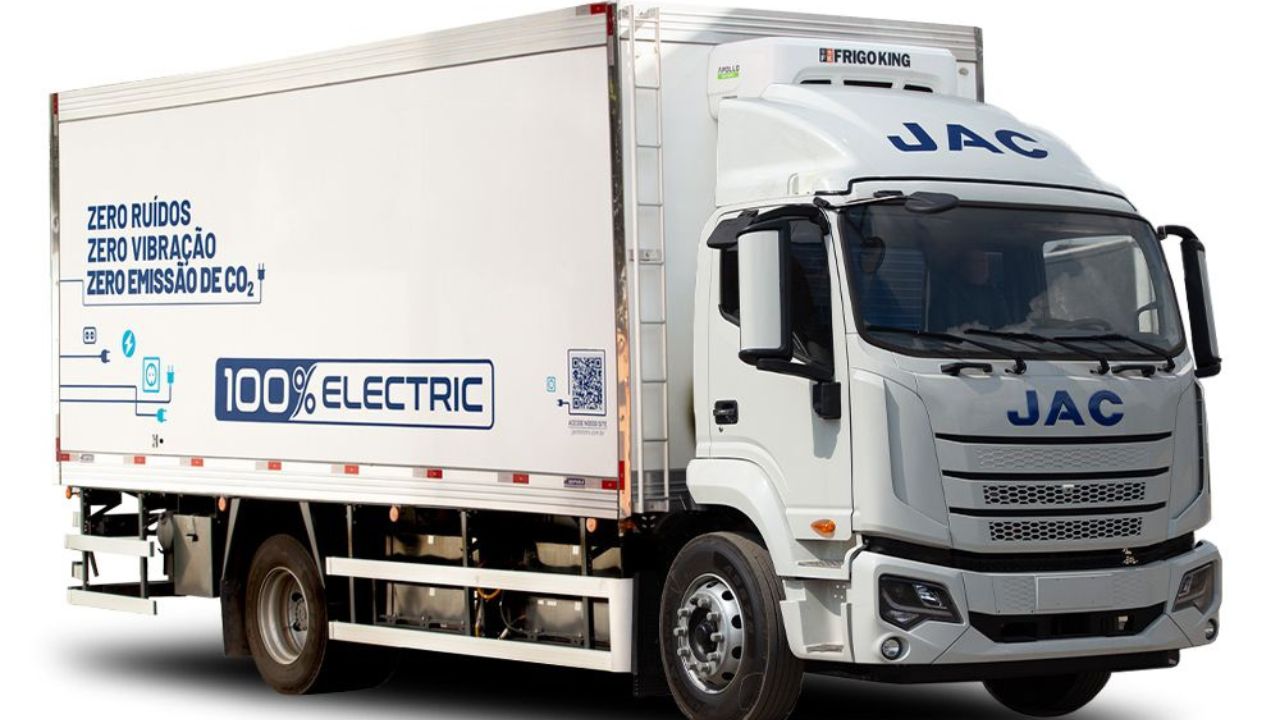
Discover How JAC Motors Redefines Cargo Transport with 100% Electric Vehicles, Promising Unprecedented Economy and Sustainability.
JAC Motors is innovating in the Brazilian market with the launch of its first 100% electric truck. The novelty promises a cost per kilometer traveled up to five times lower than diesel. This initiative marks a significant advancement in the electrification of cargo transport in the country.
JAC Motors and the Electrification of Cargo Transport in Brazil
The cargo transport in Brazil is undergoing a “silent revolution”. JAC Motors stands out as a key player in this transformation. The company has established a robust presence in the electric commercial vehicles (ECVs) segment. Its diversified portfolio meets the urban logistics needs.
Analysis confirms: JAC electric trucks generate substantial savings. Specific models demonstrate a cost per kilometer traveled up to five times lower than diesel vehicles. This is due to reduced energy and maintenance expenses. JAC, through the SHC Group, positions itself as a leader in electric vehicles in Brazil. Its trajectory, shifting to EVs since 2019, reflects recognition of structural changes in the sector. Environmental regulations and cost efficiencies drive this vision.
-
The government puts R$ 8.6 billion on the table to change the highway (BR) with 50 overpasses, 28 bridges, 4 tunnels, and 40 km of bike lanes in 180 km of historic duplication.

-
BRL 20.1 Million Bridge Project Kicks Off: 200-Meter Construction to Improve Access in Three Cities in Minas Gerais

-
‘Endless Road’ In Brazil Is One of The Largest In The World: 145 Km Stretch On An Important Highway (BR) Crosses The West Of Bahia And Had 135.9 Km Revitalized With R$ 35.3 Million

-
Engineer From ITA Who Worked at Embraer Leads Free Flow Expansion With National Artificial Intelligence and Technology for Toll Without Barriers in Brazil

Technology and Versatility for Fleets
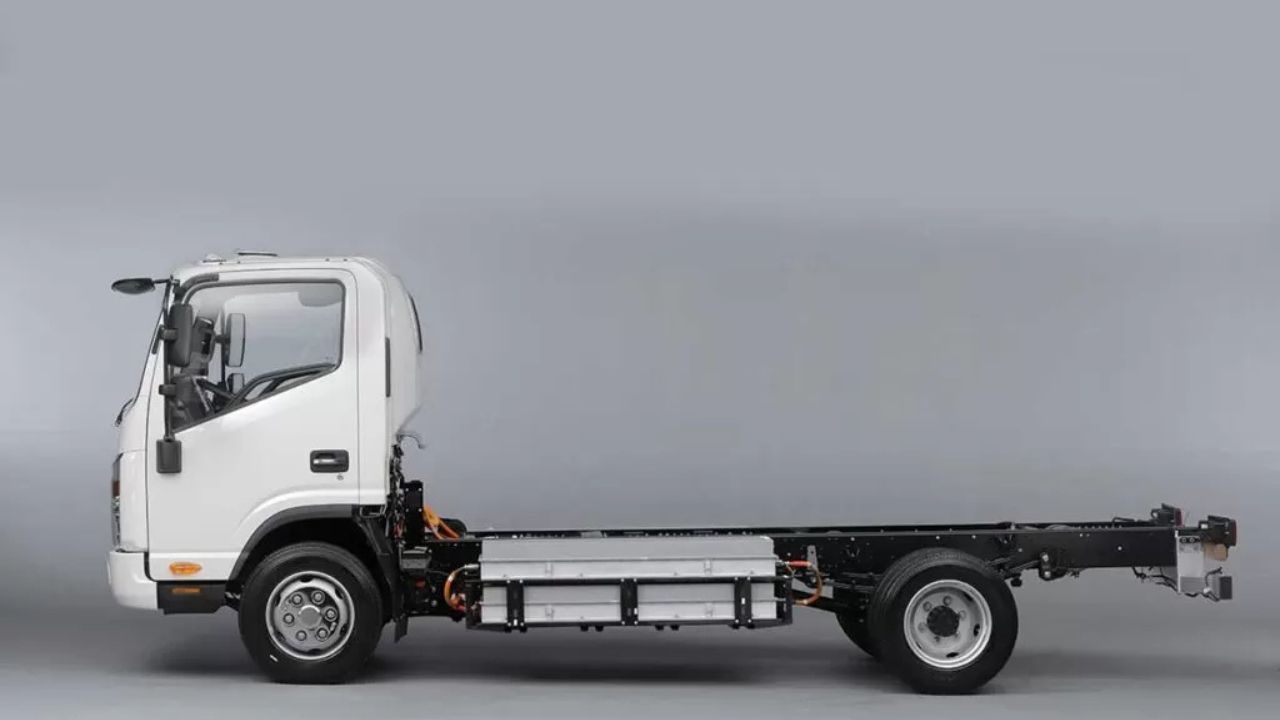
JAC Motors invests in a complete range of ECVs in Brazil. The offering ranges from urban cargo vehicles (UCVs) to medium and heavy trucks.
- JAC E-J T3.5 (UCV): Suggested price of R$ 299,900. Designed for urban operations. Engine with 150 hp and 30.6 mkgf of torque. Battery of 64 kWh offers up to 230 km of range. GVM of 3,495 kg and payload capacity of 1,695 kg. Can be driven with category B driver’s license. Fast DC charging in 1 hour and 15 minutes.
- JAC E-JT 12.5 (Medium Truck): Launched in August 2022, priced at R$ 699,000. GVM of 12.5 tons and payload capacity of 8.6 tons. Engine with 235 hp and 103.5 kgfm of torque. CATL battery of 107 kWh, range of 150 km (full load) to 250 km (empty). Fast DC charging in 55 minutes. Includes dual airbags, ABS, traction control, and stability control.
- JAC iEV1200T (Light Truck): Suggested price of R$ 349,900. GVM of 7.5 tons and payload capacity of 4 tons. Range of 200 km (NEDC). Engine with 177 hp and torque of 122.4 kgfm. Batteries of 97 kWh. Slow charging in 11 hours, fast in 2 hours. It features regenerative braking i-Pedal. Clients such as PepsiCo Foods and Ambev have already purchased units.
JAC also offers vans (E-JS1 CITY CARGO, E-JV 5.5, E-JV 7L, E-JV 12, E-JV 12 VIP) and other trucks (E-JT 9.5, E-JT 18.0). This diversity meets the varied needs of urban transport. Acquisition by large corporations such as Ambev and Mercado Livre validates JAC’s technology.
JAC’s Electric Advantage
The main advantage of ECVs is the reduction in operating costs. This compares to diesel vehicles. The analysis focuses on “fuel” (electricity versus diesel) and maintenance.
For 2025, the average cost of electricity is R$ 0.30729/kWh. The projected diesel cost is R$ 6.16 per liter. The claim of a “5 times lower” cost is validated by the JAC iET 1200 model. However, the savings factor varies between models.
| JAC Electric Model | Electric Cost/km (R$) | Diesel Cost/km (R$) | Savings Factor (Diesel/Electric) |
| E-J T3.5 (UCV) | 0.08604 | 0.616 | 7.16x |
| iET 1200 (Light) | 0.15 | 0.75 | 5.00x |
| E-JT 12.5 (Medium) | 0.46 | 1.78 | 3.87x |
Advantages of Electric Vehicles
Electric trucks have “considerably lower“ maintenance costs. The absence of complex components, such as gearboxes, reduces expenses. Maintenance is about “six times lower” than that of an equivalent diesel truck. Data from JAC Motors indicates a maintenance cost of R$ 90.00 for electric vehicles versus R$ 380.00 for thermal vehicles. This represents a savings of 4.22 times.
Annual savings projection (fuel and maintenance)
| Characteristic | JAC E-J T3.5 (UCV) | JAC iET 1200 (Light) | JAC E-JT 12.5 (Medium) |
| Total Monthly Operational Savings | R$ 2,674.82 | R$ 2,090.00 | R$ 4,250.00 |
| Total Annual Operational Savings | R$ 32,097.84 | R$ 25,080.00 | R$ 51,000.00 |
Charging Infrastructure and Support Policies
Charging infrastructure is crucial for EVs in Brazil. In February 2025, the country reached 14,827 public and semi-public charging stations. This represents a 22% increase in three months.
The ABVE points to the expansion of fast charging. Companies like BR SUPER CARGA contribute. Corporate initiatives drive the development of dedicated infrastructure. TB Green installed chargers for Heineken, Ambev, Martin Brower and BBM Logistics. Ambev and Raízen installed a fast charging station in Rio de Janeiro.
The challenge is the unequal geographical distribution. There is concentration in the South and Southeast. The North and Northeast still have insufficient coverage. Large corporations invest in their own infrastructure. This reduces dependence on the public network. Anfavea projects an investment of R$ 14 billion in infrastructure by 2035.









Seja o primeiro a reagir!