





 Portuguese
  English
  Spanish
  5 min of reading
  0 comments


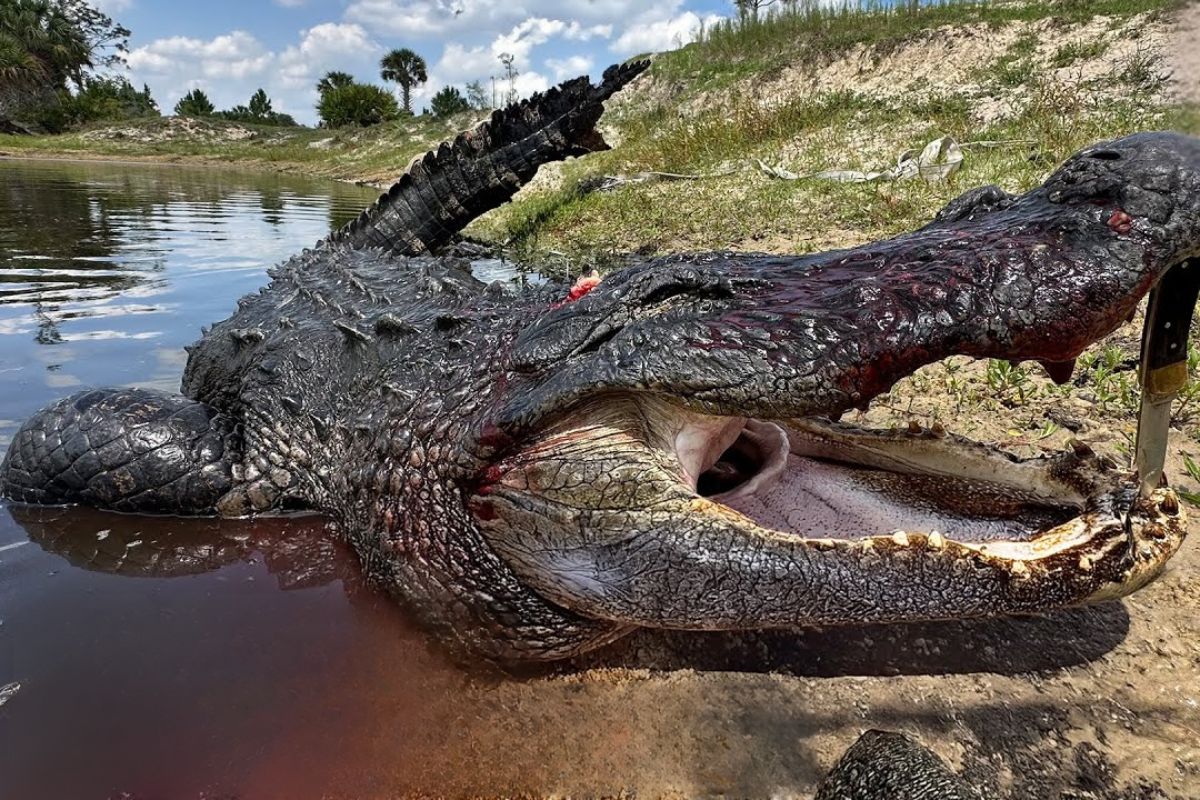
The Monster Alligator Was Removed from a Pond on a Private Farm During State-Authorized Hunting at the Peak of Mating Season and Amid Drought, When Animals Seek Water. The Operation Culled Two Males Measuring 2.95 M and 3.33 M to Reduce Conflicts, Protect Herds, and Maintain a Stable Ecosystem
The monster alligator that appeared in a cattle farm pond in Florida became the center of a state-approved legal hunt, with clients following a management operation that sought two males during their breeding period. The scene grabs attention because it mixes rural routine, real risk, and an animal of rare dimensions.
In practice, the incident exposes how alligator management operates outside urban areas, on private properties with multiple ponds, rules, authorizations, and technical oversight. In the context of severe drought, the concentration of water in cattle ponds increases encounters, pressures the ecosystem, and raises security alerts.
What Happened on the Farm and Why It Became a Topic

The operation took place on a private farm with several ponds scattered across the property, a typical setting where alligators can roam throughout the year.
-
Could the Titanic have been saved if it had collided head-on with the iceberg? The theory that has resurfaced 113 years later changes everything that many people have always believed about the sinking.

-
Rare document reveals surprising age of Brazilian and investigation could change official records.

-
Health issues urgent alert for flu and calls for the vaccination of the elderly, children, and pregnant women this Saturday with Day D and drive-thru in Curitiba.

-
What is it like to live inside a $13 billion aircraft carrier where 5,000 military personnel eat 17,000 meals a day and spend months sleeping in cramped bunks?


The group reported that they were working with state biologists and the owners to “manage” the population and set out in search of two males, taking advantage of the animals’ greater movement in search of water.
While moving between ponds, the team found the first specimen measuring 2.95 meters, considered a solid start for the day’s goal.
Next came the highlight: a second animal that surprised the group by measuring nearly 3.3 meters, solidifying the image of the monster alligator as a high-impact event even in a planned activity.
How Management Works on Private Property and the Role of Authorizations

The central point of the narrative is that the removal was not improvised.
The farm receives a set number of “tags” per property, issued after a biologist evaluates the local population, in a targeted management approach.
This detail changes the framing: it is not a casual encounter but rather population control with defined parameters.
The argument presented is that the management serves three fronts simultaneously: to maintain a “healthy” population, sustain the balance of the surrounding ecosystem, and reduce risk for residential areas that might receive stray animals.
In this scenario, the monster alligator becomes a symbol of a larger problem: when very large individuals circulate in human-use environments, the conflict tends to be more dangerous and harder to manage.
The Monster Alligator and the Measurements That Became the Most Cited Data
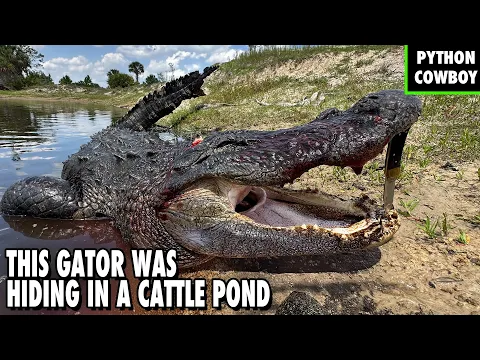

The second animal was described as a surprise, partly because it had an old injury on its snout, which visually shortened the head and could mask its true size.
On the tape, the measurement was recorded as 3.33 meters, also mentioned as “almost 3.35 meters,” a difference compatible with rounding and field reading methods.
The objective fact is that the capture exceeded three meters and drew attention even from those who were already there waiting for a large male.
Another relevant detail is the age profile.
The monster alligator was described as “very old,” with heavily worn teeth and accumulated scars, signs that usually appear in individuals that have spent years competing for territory and reproduction.
This helps explain why the appearance occurred during the mating season, a time when large males tend to move more and adopt behaviors of greater exposure.
Drought and Mating Season: Why the Encounter Becomes More Likely
Two factors have been treated as triggers for the increase in sightings.
The first is the mating season, noted as a time when alligators “are on the move.”
The second is the severe drought: with fewer water bodies available, farm ponds become concentration points, which can increase the chance of close encounters with people, boats, and domestic animals.
The account also shows how these movements can occur in sequence, in the same location.
After the removal of the first alligator, a second animal was observed approaching “sneakily,” interpreted as a female with nearby offspring, with bubbles in the water suggesting closeness.
This type of dynamic reinforces that the environment is not static: where there is water, there is flow, competition, and unexpected encounters.
Rural Safety, Leather, Meat, and the Logistical Side of a Removal
Aside from the size, the case draws attention for the operational component.
It was mentioned that leaving the alligator out of water and in the sun can cause peeling of the skin and damage to the leather, in addition to compromising the meat, so the animal was kept for a period “back in its habitat” before the management proceeded.
This observation shows that the process involves practical decisions, not just the capture itself.
The rural context also appears when the group mentions “another dead cow” and a cow’s head found on the property, reinforcing the climate of vulnerability typical of large farms with bodies of water.
In this context, the monster alligator becomes more than just an image: it represents the type of risk that owners want to reduce when they accept population control programs.
What the Monster Alligator Reveals About Coexistence and Control
The episode raises an uncomfortable question at its center: when a monster alligator appears in a farm pond during drought and reproduction, the line between nature and human infrastructure becomes thinner.
The narrative itself insists that it is not an invasive species, but rather a population that needs to be managed to avoid dispersal, accidents, and local imbalance in areas where people work and animals circulate.
Now, the most interesting point is how you view this type of management on rural properties. If a monster alligator were seen near where you live or work, would you advocate for more control, more monitoring, or let nature take its course without intervention even with increased risk during drought?








-

-

-

-

-

-

85 pessoas reagiram a isso.