





 Portuguese
  English
  Spanish
  4 min of reading
  0 comments


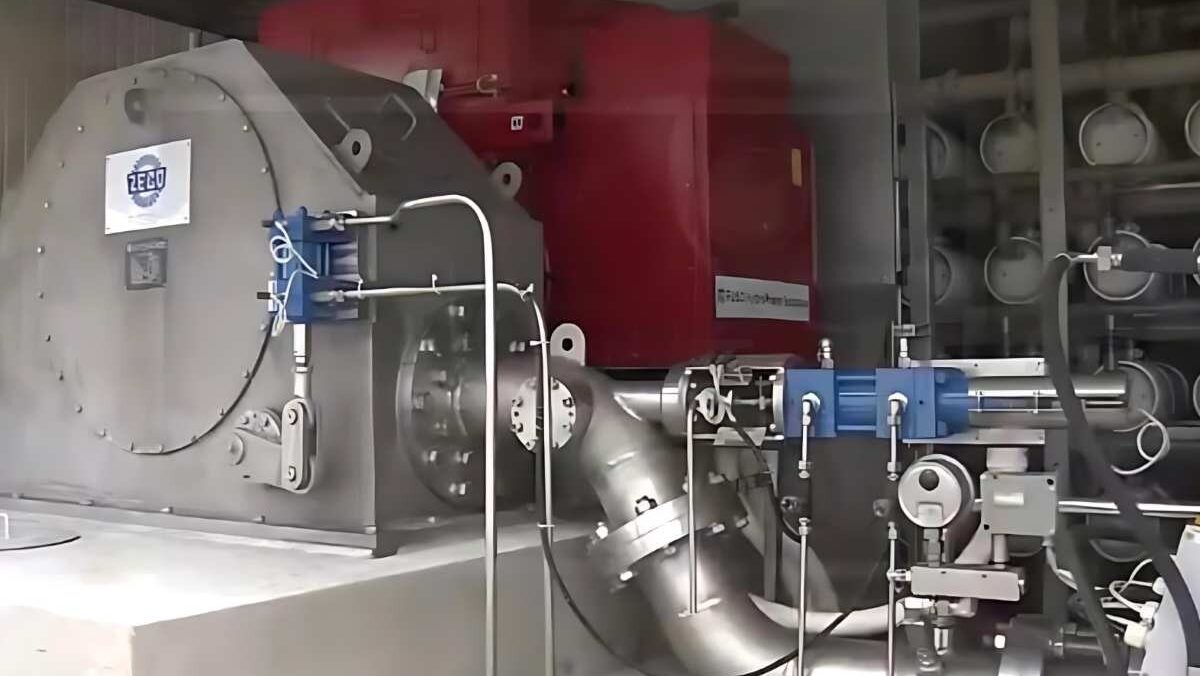
Japan Took An Unprecedented Step In Asia By Opening Its First Osmotic Energy Plant In Fukuoka. The News Places The Country On The Route Of The So-Called Blue Energy, Which Transforms The Difference In Salinity Between Waters Into Clean And Continuous Electricity Without Relying On Sun Or Wind.
Japan has opened its first osmotic energy plant in Fukuoka, becoming the second country in the world, after Denmark, to operate this technology on a large scale.
This achievement represents a milestone not only for Asia but also for the expansion of the so-called blue energy, which is beginning to leave laboratories and gain practical application.
The plant was promoted by the Fukuoka Water Agency and started operations on August 5.
-
End of the stove: new technology from Xiaomi promises to retire the old stove with a smart pot that prepares up to 16 servings in 24 minutes and has 10 automatic levels controlled by an app.

-
If Ormuz closes, the world freezes: the 1,200 km Saudi Petroline transports oil from the Gulf to the Red Sea, operates near 7 million barrels/day, and becomes a geopolitical weapon in the crisis with the US.

-
Scientists restore seagrass meadows in the open sea.

-
Scientists find about 1 million giant live eggs hatching in an active underwater volcano, discover a natural furnace on the ocean floor, and reveal one of the most unlikely nurseries ever seen in the ocean.

The plant is expected to produce about 880,000 kilowatt-hours per year. This energy will be directly supplied to a desalination facility that serves Fukuoka and neighboring regions, ensuring clean, stable, and carbon-free electricity supply.
Japan, therefore, paves the way for the use of a virtually inexhaustible resource: the difference in salinity between freshwater and saltwater.
How Osmotic Energy Works
Osmotic energy is based on a simple principle: the difference in salt between two bodies of water. In the case of the Japanese plant, a semipermeable membrane separates treated water from a sewage station from concentrated seawater.
When freshwater passes through the membrane towards the saltier side, pressure occurs. This pressure is sufficient to move a turbine and generate electricity continuously, without relying on sun or wind.
Unlike solar and wind energy, osmotic energy works 24 hours a day, seven days a week, with stable operation.
The process is still under development but already shows significant advances. Therefore, experts point to the technology as a viable complement to existing renewable networks.
Obstacles And Technological Advances
One of the biggest historical challenges of this energy source lies in the membranes. They need to have a large surface area and are sensitive to friction and pressure losses. This reduced the efficiency and economic viability of the projects.
In recent years, however, companies like the Japanese Toyobo have developed more robust solutions. In Fukuoka, direct osmotic hollow fiber membranes were used, designed to maximize water flow and reduce energy losses.
Another important advance was the adoption of residual brine from desalination plants instead of conventional seawater. This solution increases the salinity gradient and, therefore, the osmotic pressure available for conversion into electricity.
The International Experience
The Japanese plant follows the inauguration, in 2023, of the first commercial osmotic energy plant in Mariager, Denmark. Before that, Norway and South Korea had tested pilot projects.
In addition to these countries, universities and startups from Spain, Qatar, and Australia are developing prototypes. Among the highlights is the French Sweetch Energy, which bets on the so-called Ionic Nano Osmotic Diffusion (INOD). This technology uses bio-based materials and nanometric structures to improve ionic selectivity and reduce losses. Still in the validation phase, it promises positive economic and environmental impact.
Potential For Expansion
Despite the current modest capacity — the Fukuoka plant could supply approximately 220 households per year — the global potential is substantial. Estimates indicate that deltas, estuaries, and coastal regions could generate up to 2,000 terawatt-hours annually. This amounts to nearly 10% of the world’s electricity demand.
Another advantage is the possibility of integration with existing structures, such as water treatment stations and desalination plants. This strategy can reduce costs, increase efficiency, and provide clean electricity directly to local communities.
Environmental And Strategic Advantages
Osmotic energy does not rely on fossil fuels, does not generate direct emissions, and has a low environmental impact. Its constant operation makes it ideal for supporting the energy transition in areas where solar and wind have limitations.
In addition, its implementation in coastal urban areas offers the chance to decentralize electricity generation, strengthening energy security and reducing dependence on large power plants.
By adopting the technology, Japan signals to the world its pursuit of alternatives that reconcile sustainability and supply stability.
Paths For The Future
For osmotic energy to become competitive, experts point to three main fronts. First, continuous investment in research and development of more efficient and affordable membranes.
Second, forming partnerships with water operators to install plants in already available structures. And third, creating regulations that officially recognize osmotic energy as strategic for the renewable matrix.
Pilot projects in urban river areas and regions with high brine production are also seen as opportunities to accelerate commercial validation.
Therefore, even if it is still in its early stages, osmotic energy shows significant potential. If given adequate support, it could become a key element in diversifying the global energy matrix and reinforcing sustainability on a large scale.








-

Uma pessoa reagiu a isso.