





 Portuguese
  English
  Spanish
  4 min of reading
  0 comments


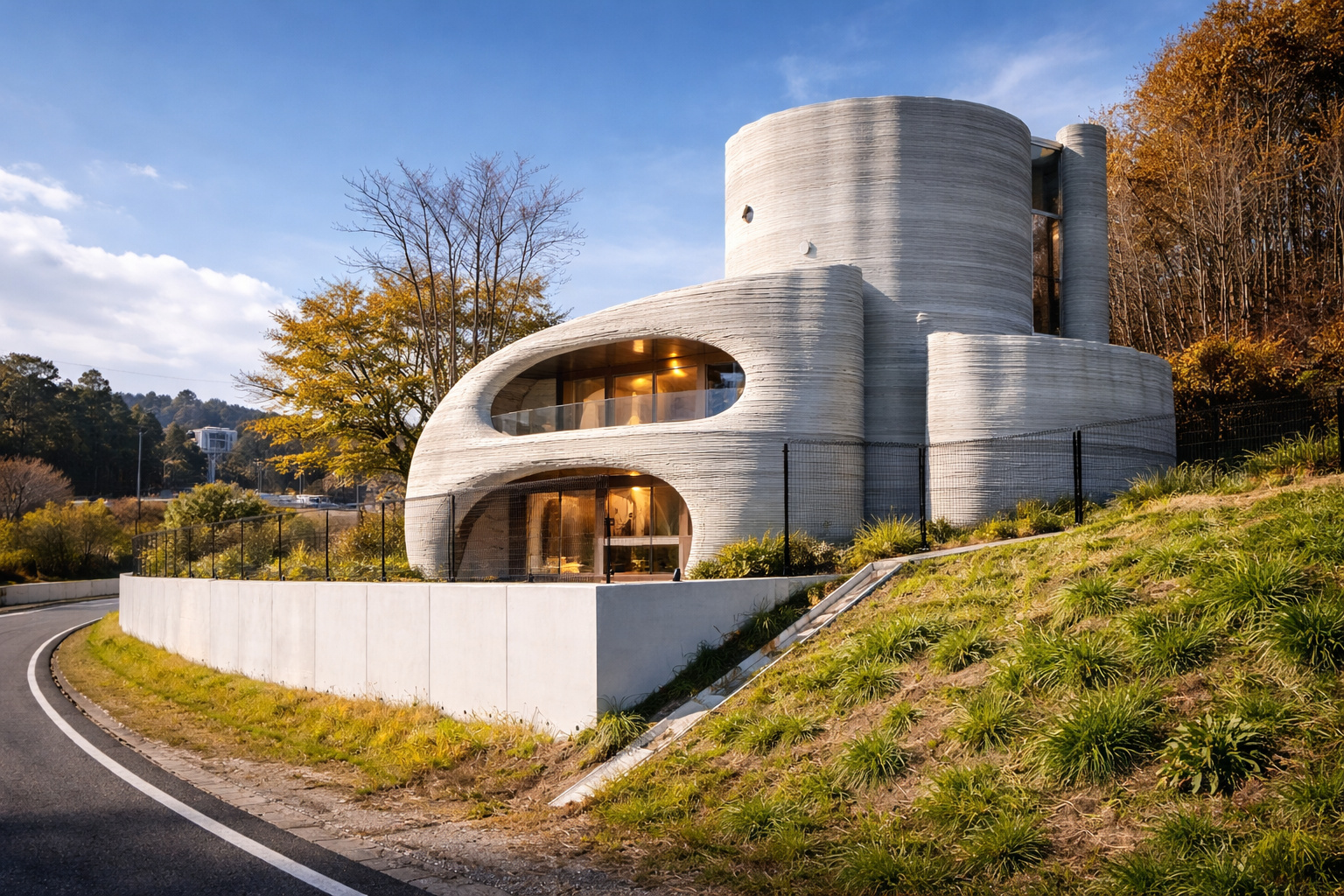
Pioneering Project in Japan Combines 3D Printing, Reinforced Concrete, and Advanced Seismic Engineering to Erect Two-Story House Approved Under One of the Most Stringent Legislations in the World
A two-story house made by 3D printer has just passed one of the world’s toughest tests: the seismic requirements of Japan. This is not a fragile prototype or laboratory model. The structure has been approved under one of the planet’s most stringent building codes.
And the intriguing detail is not just the technology. It’s what this could provoke in the construction sector.
The so-called O House has 50 square meters distributed over two floors and bets on a geometry inspired by natural caves to withstand earthquakes.
-
With 74% of companies facing difficulties in hiring, technicians and engineers in renewable energy are becoming scarce in Brazil and are essential to support the expansion of solar, wind, and green hydrogen projects.

-
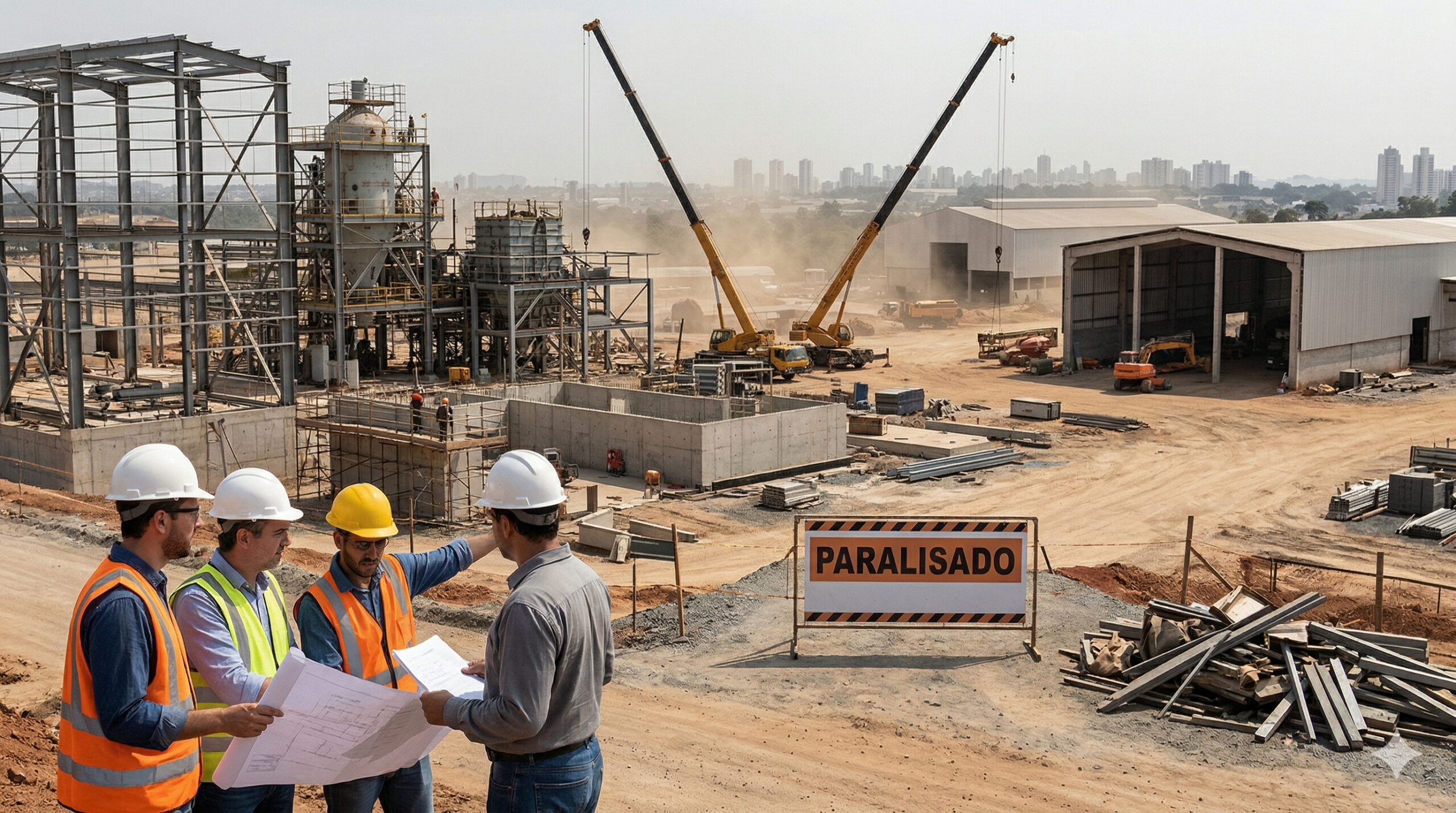
The lack of welders, electricians, and operators becomes a structural threat in 2025, with the construction industry and manufacturing already suffering from delays, cost pressures, and labor shortages in Brazil.
-
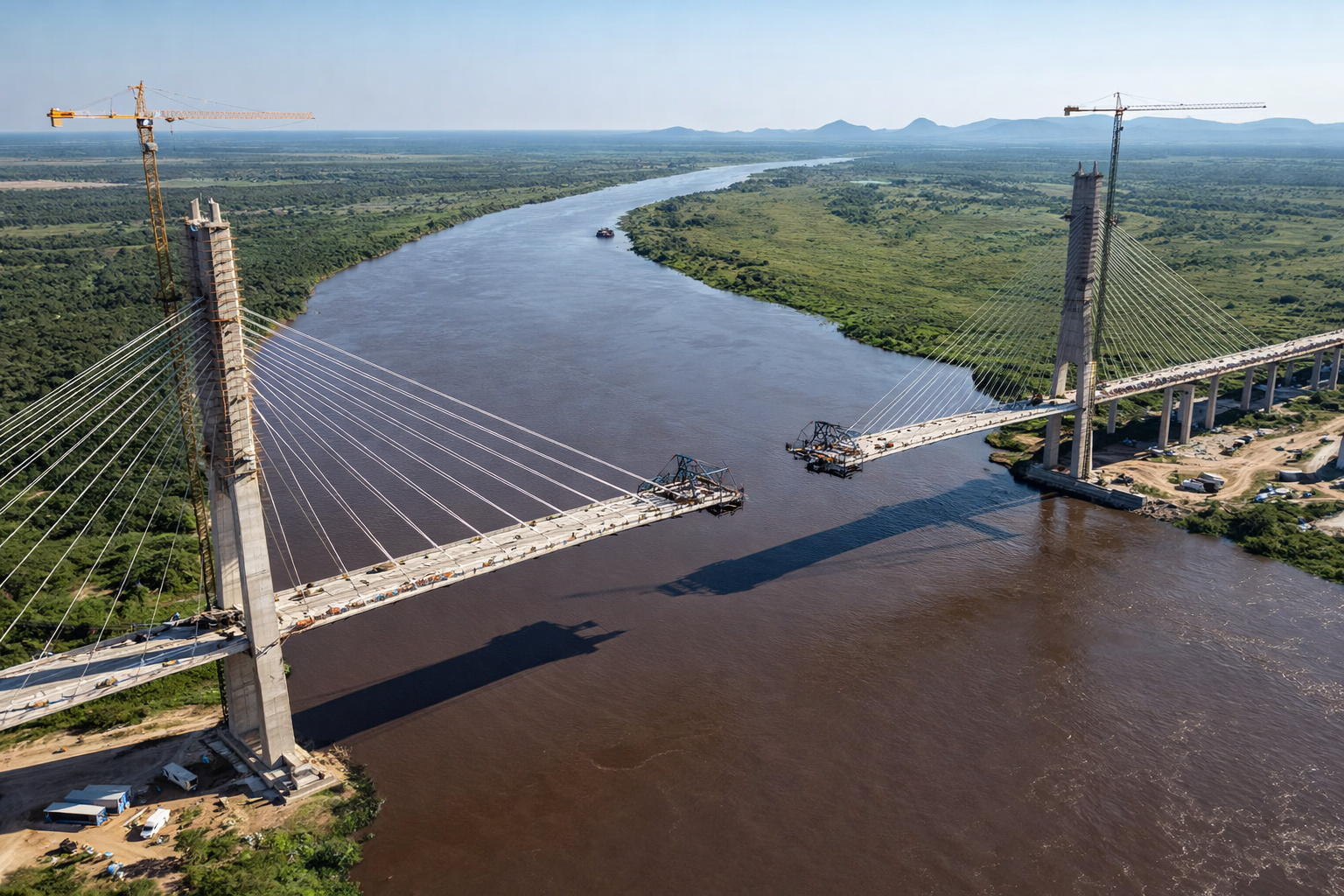
Brazil and Paraguay are just 46 meters away from a historic union on the bioceanic bridge that promises to revolutionize trade between the Atlantic and the Pacific.
-
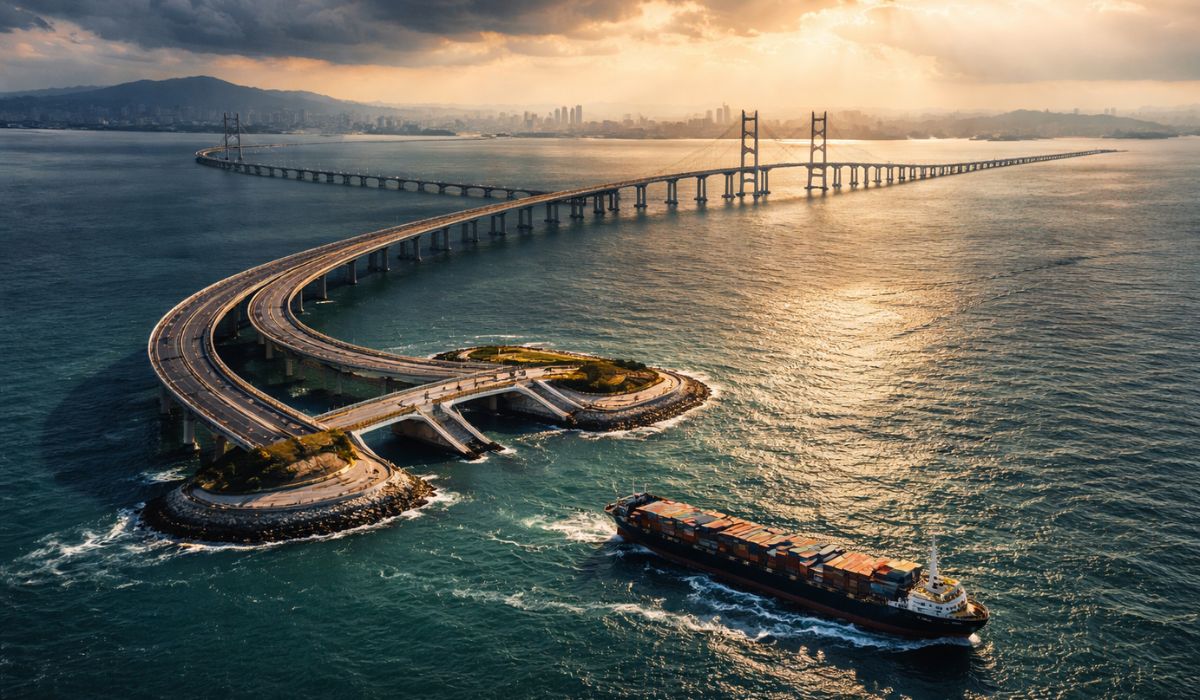
With 55 km over the sea, a cost of US$ 20 billion, and enough steel to build 60 Eiffel Towers, China’s largest project has connected Hong Kong, Zhuhai, and Macau in a colossal bridge that defies the logic of engineering.

The Structural Challenge That Has Always Increased Construction Costs in Seismic Zones and Pressured Global Engineering
Building in Japan has never been a simple task. The country deals with frequent earthquakes and imposes extremely rigid technical standards.
Any structural failure can mean billion-dollar losses and a real risk to the population.
Therefore, erecting a two-story house using 3D printing on Japanese soil is not just an aesthetic innovation. It is a testament to industrial resilience.
According to representatives of the technology used, the government approval indicates that 3D printing has already reached a level of precision and quality compatible with seismic areas.
This changes the game.

The Secret Behind the Structure That Starts Half a Meter Below the Ground and Reaches 7 Meters in Height
The house was not simply “printed”. It combines traditional methods with heavy robotics.
A 3D printer from the company COBOD extruded a cement-like mixture in successive layers, forming curved walls, flooring, and roofing.
The construction began underground, 0.5 meters below the ground, until reaching 7 meters in height.
But the real asset lies in the reinforced foundation, anchored by soil improvement piles, in addition to a conventional reinforced concrete structure that serves as the main support system.
The printed walls are integrated within this structural skeleton.
This combination of traditional concrete and 3D printing ensures stability in the event of tremors.
It is not just visual technology. It is heavy engineering applied with precision.
Design Inspired by Natural Caves Transforms Structural Resistance into Architectural Concept
The rounded shape is not just futuristic aesthetics.
The curved geometry helps to better distribute seismic forces, something that straight and rigid structures cannot always achieve with the same efficiency.

The interior follows this proposal.
Few conventional windows and a greater use of skylights reinforce the concept of shelter.
The arrangement is also surprising: the social area is on the upper floor, while the master bedroom with an en-suite bathroom occupies the lower floor.
The furniture has been adapted to the curves of the walls, showing that the technology goes beyond the structure and into the finishing.
3D Printing Advances Over Traditional Methods and Puts Construction in a Silent Competition
The construction sector is one of the most conservative in the world.
Manual processes, long timelines, and high material waste have always been part of the equation.
Now, projects like the O House are putting pressure on the traditional model.
A team of just four people operated the printer.
Some elements were produced on-site, while other components came pre-made.
If this methodology gains scale, the impact could reach from labor costs to the project delivery timeline.
Experts observe that technologies like this could become strategic in post-disaster reconstructions, where speed and structural resilience are decisive.
What This Approval in Japan Could Mean for Strategic Works, Reconstruction, and Even Defense
The project was presented as a demonstrative model, but the plans go beyond.
The team involved signals interest in expanding the application of 3D printing to new residences and also to areas such as defense and reconstruction after natural disasters.
In a country marked by earthquakes, typhoons, and climate emergencies, quick and resilient solutions gain strategic value.

If this technology proves efficient on a larger scale, it could redefine how entire cities are rebuilt.
And this does not only concern Japan.
The global engineering community is watching closely.
A 50 square meter house may seem small. But the potential impact of this approval is enormous.
The 3D printing in construction has just reached a new level in one of the most challenging regions on the planet, and the sector knows that nothing will be ignored after this.
Would you live in a house made by a 3D printer in an area with frequent earthquakes? Do you believe this technology could reach Brazil in the coming years? Share your opinion in the comments.








-

-

-

-

-

12 pessoas reagiram a isso.