





 Portuguese
  English
  Spanish
  7 min of reading
  0 comments


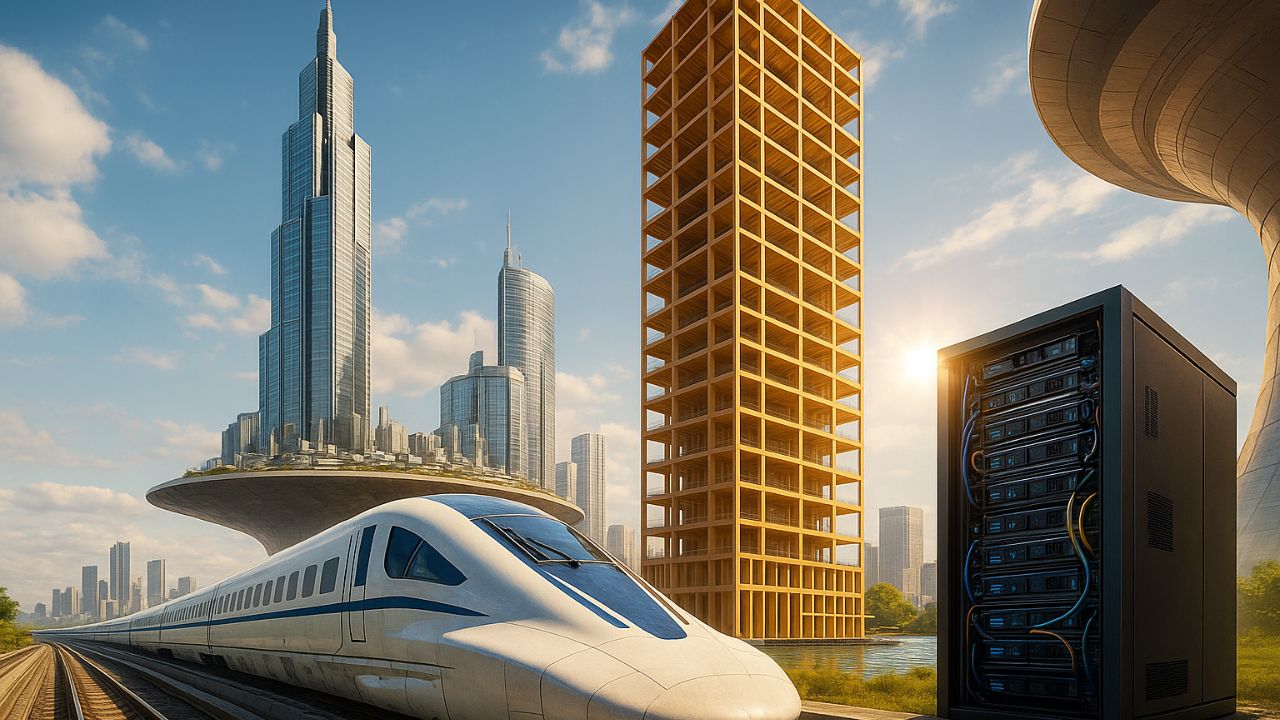
How Japan Builds The Future With Japan’s Mega Constructions, Trains At 500 Km/h, Wooden Skyscrapers And AI Supercomputers That Are Redesigning Cities, Transport And Technology.
The Japan Builds The Future before our eyes, with a set of Japan’s Mega Constructions that unite tradition, technology, and ambition on a scale that’s hard to imagine. From trains at 500 km/h that shorten the country to a wooden skyscraper that challenges the traditional way of erecting giant buildings, the country transforms bold ideas into very real works.
Far beyond science fiction, AI supercomputers already help plan energy, mobility, smart cities, and even the next generation of digital infrastructure, showing how Japan Builds The Future on multiple fronts at the same time. In the following lines, you will see how Japan’s Mega Constructions, trains at 500 km/h, the wooden skyscraper, and AI supercomputers point to a new era in the way of living, working, moving, and producing technology.
Japan Builds The Future Transforming Cities Into Living Laboratories
When it is said that Japan Builds The Future, Toyota Woven City is almost the definitive proof. At the foot of Mount Fuji, the automaker decided to build an entire city from scratch to test, in a real environment, everything that would normally be trapped in a research center.
-
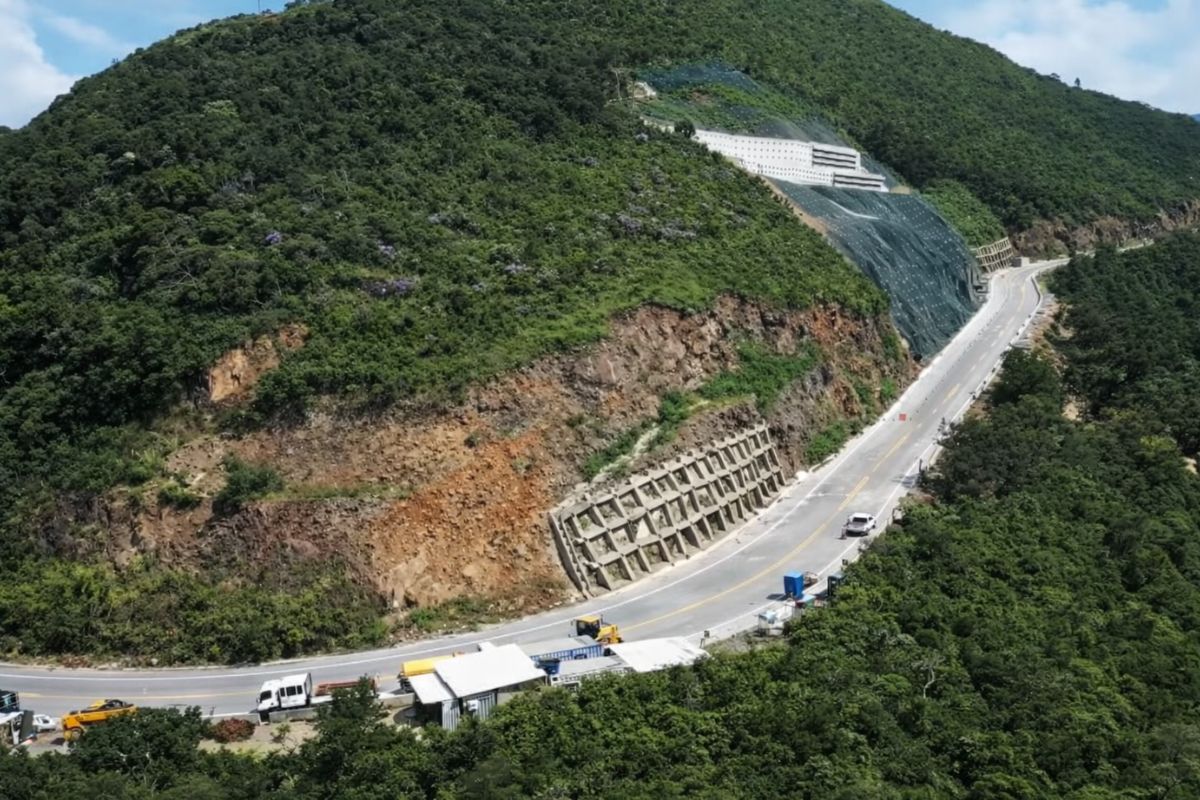
The section of Serra da Rocinha on BR-285 is now open in Timbé do Sul: 50 m tensioned curtains and top-down technique stabilize the slope, with a stairway duct controlling the water.
-
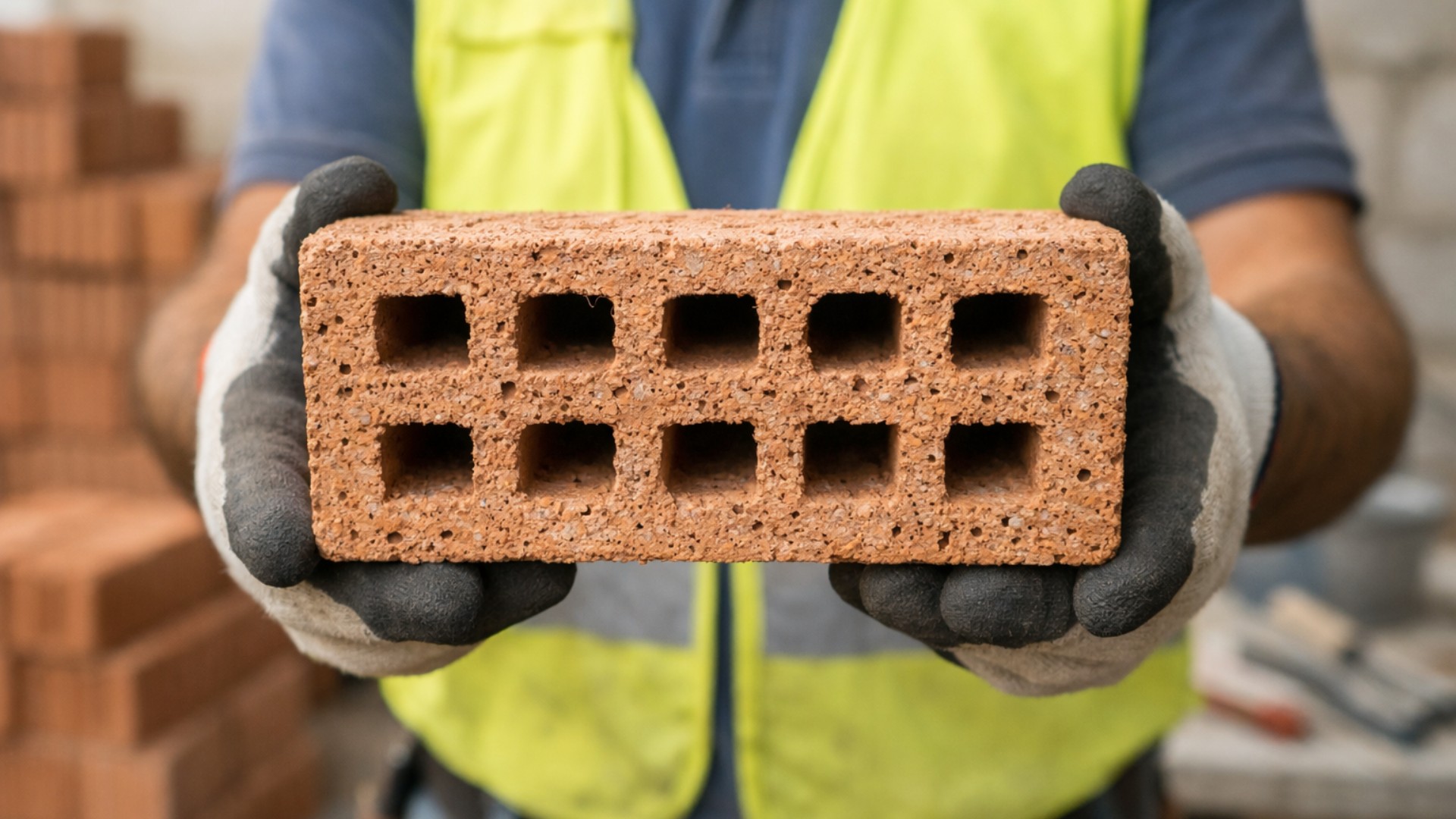
Scientists use sawdust mixed with clay to create a lighter brick, promising efficient thermal insulation and impressing by transforming waste into a solution for construction.
-
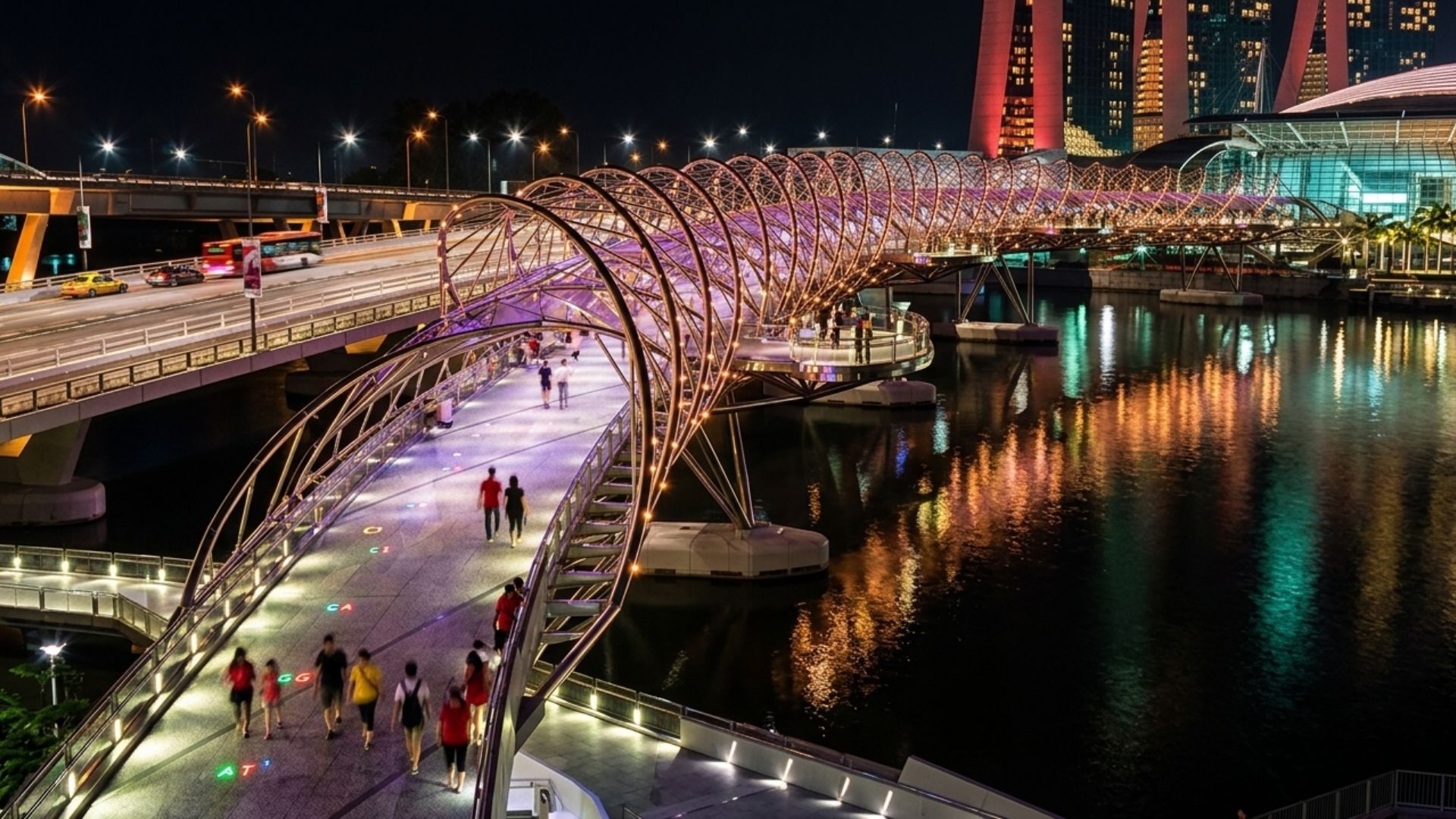
With a DNA shape, this bridge in Singapore draws attention in modern architecture and surprises tourists by transforming a simple crossing into an unforgettable visual experience in the urban heart.
-
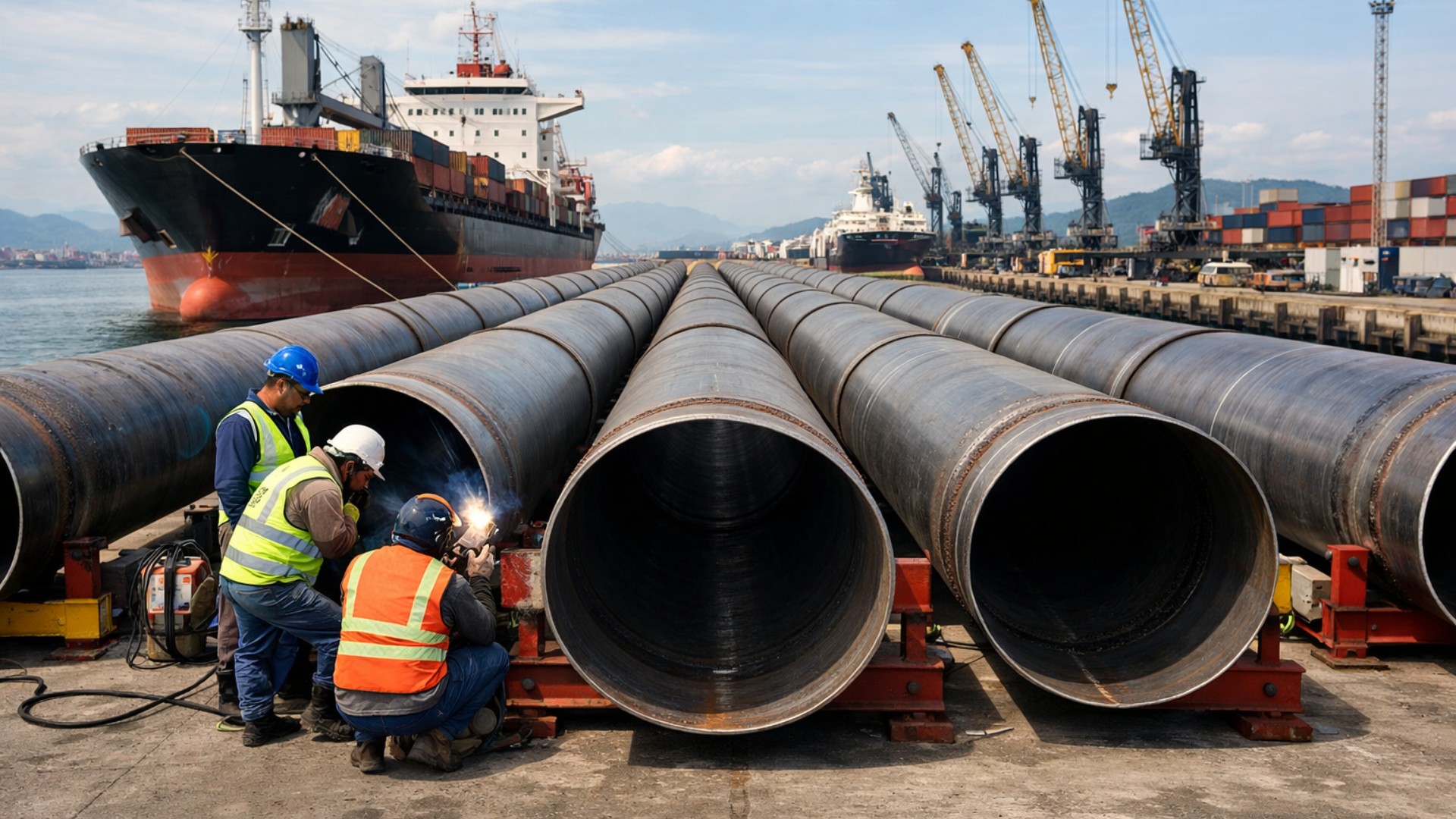
Giant underwater pipeline begins to take shape with a R$ 134.7 million project at the Port of Santos: the 1.7 km structure uses 12-meter and 700 mm pipes to supply water to 450,000 people in Guarujá.

In this urban laboratory, Japan’s Mega Constructions are not just large structures, but integrated systems.
Streets separated for autonomous cars, bicycles, and pedestrians, houses full of sensors monitoring health, consumption, and security, artificial intelligence managing the functioning of the city in real time. Japan Builds The Future literally street by street, deepening everyday data to understand how to live better in the coming decades.
The same logic appears in the heart of Tokyo, where projects like Torch Tower and the new Tokyo Torch district reimagine the financial center as a more open, illuminated, and human space.
More than a building of almost 400 meters, the tower is a symbol of hope and reconnection of the city with its residents, with large public areas, views of Mount Fuji, and communal spaces that break away from the standard of cold concrete.
In Harajuku, the Haraco complex brings together fashion, gastronomy, art, and business in an angular and eye-catching architecture. It is not just a shopping center, it is a living cultural hub that shows how Japan’s Mega Constructions also function as a stage for creativity and not just as blocks of offices.
And when it comes to overcrowding and rising sea levels, the Next Tokyo 2045 plan takes everything to another level. Instead of stacking buildings on solid ground, Japan Builds The Future on an artificial archipelago in Tokyo Bay, designed to house hundreds of thousands of people. There, interconnected islands, urban farms, and giant towers form a true floating city, designed from the ground up to face extreme weather and population growth.
Trains At 500 Km/h And New Routes That Shrink The Map

No image explains better how Japan Builds The Future in mobility than trains at 500 km/h. The Maglev Chuo Shinkansen is not just another bullet train, it’s a machine that levitates over tracks by magnetic force, eliminating friction and allowing speeds that seem like that of an airplane.
With trains at 500 km/h, the promise is to connect Tokyo to Nagoya in about 40 minutes and then extend the route to Osaka.
Tunnels through mountains, underground stretches beneath densely populated areas, and complex technical solutions make the project one of the largest Japan’s Mega Constructions in the 21st century. Each kilometer of track is a reminder of how Japan Builds The Future without fear of facing difficult engineering and long timelines.
The revolution doesn’t stop there. The new access line to Haneda Airport promises direct connections between the terminal and major Tokyo stations, with tunnels specifically designed to bypass surface chaos.
The idea is simple: reduce connections, shorten routes, and deliver the efficiency expected from the country symbolizing rail transport.
In the meantime, the country is testing electric autonomous taxis with level 4 driving systems, capable of operating alone in controlled conditions.
In a Japan that is aging and facing a shortage of drivers, combining trains at 500 km/h with autonomous vehicles and underground cargo solutions is a clear way to show how Japan Builds The Future of mobility with decades in mind, not just elections.
Wooden Skyscraper And Sustainable Vertical Cities
Among Japan’s Mega Constructions, few attract as much attention as the wooden skyscraper W350. Planned to rise 70 floors with a hybrid structure of engineered wood and steel, it seeks to prove that it’s possible to build high, beautiful, and with a lower environmental footprint.
The wooden skyscraper is expected to use thousands of cubic meters of treated wood, taking advantage of the material’s ability to store carbon while providing sufficient strength for a country known for earthquakes. Apartments, offices, shops, and green terraces will make the building a kind of vertical forest in the middle of Tokyo. This is how Japan Builds The Future of civil construction, uniting woodworking tradition, technology, and sustainability.
This concept of verticalizing and protecting the city also appears in urban resilience projects, such as Tokyo’s major plan to defend against floods, typhoons, and earthquakes.
Drainage tunnels, reinforcement in dikes, buildings designed to sway without collapsing, and high-tech alert systems create a kind of invisible shield around the metropolis.
Alongside the wooden skyscraper, even bolder ideas emerge in projects like the Sky Mile Tower, integrated into the Next Tokyo concept.
A mega tower envisioned as a vertical city with residential spaces, internal farms, and self-sustaining water systems, showing that Japan Builds The Future with solutions that are not only tall but also self-sufficient.
Clean Energy And Infrastructure That Almost Nobody Sees
There is no way to say that Japan Builds The Future without looking at energy. Part of Japan’s Mega Constructions is offshore, in the form of offshore wind farms operated by large companies like Mitsubishi.
Giant turbines installed far from the coast harness strong winds, creating a powerful renewable source in a country with little land space.
In the field of biomass, plants like the Tomato plant in Hokkaido show how wood and agricultural waste can turn into electricity for tens of thousands of homes.
All with renewable fuel and a local supply chain, reducing dependence on imported fossil fuels. It’s another example of how Japan Builds The Future with an eye on energy security and climate at the same time.
At the same time, underground roads with automated conveyor belts for cargo are being studied to connect Tokyo to Osaka with electric platforms transporting goods without the need for trucks traveling thousands of kilometers.
Less emissions, less traffic, less noise. These infrastructures, almost invisible to anyone on the surface, are as important as any monumental work.
AI Supercomputers And Japan’s New Digital Base
Behind many of these projects are AI supercomputers. At the supercomputing center in the Kashiwa region, the infrastructure known as ABCI was created specifically to meet the demand from companies, startups, and researchers who need to train advanced artificial intelligence models without investing in their own structures.
These AI supercomputers process trillions of operations per second, simulating mobility scenarios, optimizing energy consumption, analyzing large volumes of urban data, and accelerating industrial research. It is an invisible layer of Japan’s Mega Constructions, but it supports much of the innovation that reaches the city streets.
In addition, the country is receiving large private data centers, such as the Cirus Oni complex in a specialized scientific city.
With tens of megawatts dedicated solely to information technology, advanced cooling systems, and disaster protection, these data centers form a true digital fortress.
It is there that AI supercomputers and other critical systems operate, and it is from this base that Japan Builds The Future technological future that fuels banks, industries, smart cities, and large-scale AI applications.
In a world where data becomes as vital as energy, these projects show that Japan Builds The Future not only with concrete and steel but also with processing, algorithms, and cloud infrastructure designed to last.
When Japan’s Mega Constructions Become The General Rehearsal Of Tomorrow
The set of these works makes it clear that Japan Builds The Future in a coordinated way. Japan’s Mega Constructions do not appear in isolation: laboratory cities, trains at 500 km/h, the wooden skyscraper, clean energy plants, and AI supercomputers communicate with each other and form an ecosystem that pushes the country forward.
By looking at these projects, we can see trends that go far beyond the Japanese archipelago: more connected cities, faster and cleaner transportation, sustainable buildings, and data as a new critical infrastructure. In other words, what Japan is testing today could be the world standard tomorrow.
And you, among all these Japan’s Mega Constructions, which project impresses you the most and why do you think it best represents how Japan Builds The Future?









-

-

-

5 pessoas reagiram a isso.